Through The Waves Of Time

By Jun Asuncion

Dear Asuncion Family, young and old, near and far,

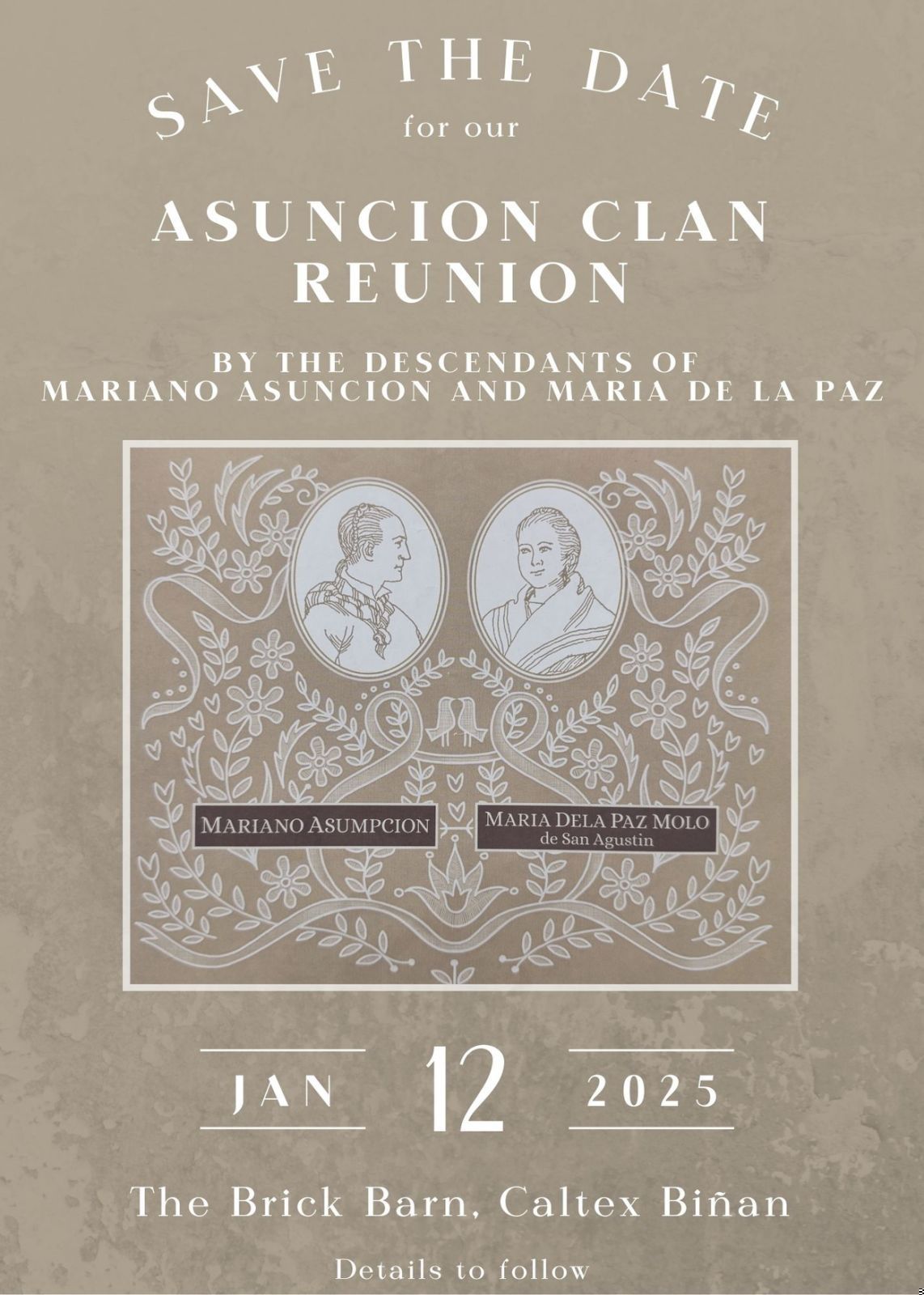
As we come closer to this beautiful day of our reunion, I invite you to pause and reflect with me—not just on what we will be celebrating, but on who we are, and where we came from,- and what we would possibly become.

The story of the Asuncion Clan begins not in modern cities or schools, but in the crossing of cultures and the quiet power of love and resilience. It began with the union of Mariano Kagalitan and Maria de La Paz, whose father,a wise apothecarist from ancient Middle Kingdom, sailed across oceans to the Philippines—perhaps not knowing then that he would also be involved in planting the roots of a family that would one day grow into the remarkable Asuncion clan. And in marrying Anastacia Michaela, a native Filipina, he did not just form a union—but became one of those who sparked a legacy.

That legacy carried through the Spanish colonial times in Manila, where our ancestors painted and sculpted, taught and healed, fought and led. In narrow alleys and open plazas, in homes filled with music and prayer, they planted the seeds of who we are today: a family of artists, of thinkers, of builders, of dreamers.

To our younger Asuncions: you are the next bearers of this rich legacy. Know this: you carry within you more than just a surname. You carry centuries of courage, creativity, sacrifice, and honor. You walk with the quiet strength of Mariano Asuncion, Sr.and those who came before him, the grace of Maria De La Paz and those who came before her. When you sing, paint, write, teach, lead, or love—you are echoing their spirit.

But with legacy comes responsibility.

This reunion is not just a celebration. It is a call to unity—a reminder that no Asuncion, from any corner of the Philippines or abroad, should ever feel forgotten or disconnected. We are one great tree with many branches, and it is our duty to reach out, to listen, to include, and to reconnect.

As we prepare for this reunion, let us carry with us the words of The Asuncion Hymn—which you can find on the Bulan Observer—a hymn where I tried to capture in words (and hopefully soon in music) the soul of our journey:

“Through the waves of time, you sail,
Connected souls, your bond won’t fail.
With fortune’s blessing and love’s embrace,
Asuncion clan, your legacy we embrace.”

Let us indeed embrace that legacy—with pride, with humility, and with love.

To our forebears, we say: thank you.
To the present generation, we say: stand proud.
And to the young, we say: carry the flame forward—together.

Mabuhay ang Pamilyang Asuncion!

One in Bulan, one in Appenzell

November 9, 1920, my father’s birthday, Andres Sus Asuncion,Sr., son of Adonis Ramirez Asuncion. He was a public school teacher, the last assignment being in Barrio Magsaysay, Bulan, Sorsogon.

He left this world last November 3, 2005, six days before his birthday. However  I have always considered that dying is a form of being born in another world that we don’t see. So death anniversary is actually a birthday anniversary at the same time. It may sound not realistic in our normal terms, but my intution tells me so.

But there could be in this simple reflections of mine on life and death a deeper philosophical insight: the idea that death might be not an end, but a transition—a birth into another state of existence. This perspective captures the continuity of life, framing both birth and death as gateways, linking one existence with another in ways that may transcend our understanding. By viewing death as a “birth” into an unseen realm, my thoughts actually resonate with philosophical and spiritual traditions that interpret existence as cyclical or interconnected across multiple planes.

Imagine the moment of birth: it is a sudden entry into a vast, mysterious world, a place unknown to us prior to arriving. In that sense, death might be seen similarly—a moment of passing into a reality beyond the grasp of our current senses and intellect. In this framework, just as our physical birth brings us from the unknown into a tangible, visible life, our death could similarly carry us from this visible world into an unseen realm, one with its own mystery and potential for being.

This perspective challenges the conventional view of death as a final cessation of existence. Instead, death becomes a pivotal transformation, a return to the unknown or the unseen, and even the beginning of something new. We often consider life to be defined by physical presence, sensory experience, and measurable events. But if death is a “birth” into another world, then existence may not be limited to the visible and measurable. My  father’s passing might then be perceived as both an end to his physical journey and the beginning of a different journey—one that remains invisible to us but might be just as real within a broader sense of life.

In this light, a death anniversary could indeed be thought of as a kind of birthday—a day marking not only loss but the possibility of rebirth. This view offers comfort by suggesting that life, in some form, continues, and it aligns with beliefs that life and death are part of an ever-ongoing cycle. Celebrating a loved one’s “birth” into the next realm could add meaning to the day, honoring both the life they led here and the continuation of their journey beyond.

In expanding on this idea, we might ask: if birth and death are both transitions, what is the nature of the soul or essence that crosses between worlds? What does it mean to live if every end is a beginning and every beginning an end? This perspective suggests that life is a series of transformations, connected by an unseen thread. To contemplate death as a birth is to trust in the enduring mystery of existence, to hold that every threshold may lead to another—an endless journey through different expressions of being. In that sense, the essence of a person might persist beyond the visible, offering a comforting view that, though unseen, they are never truly absent…

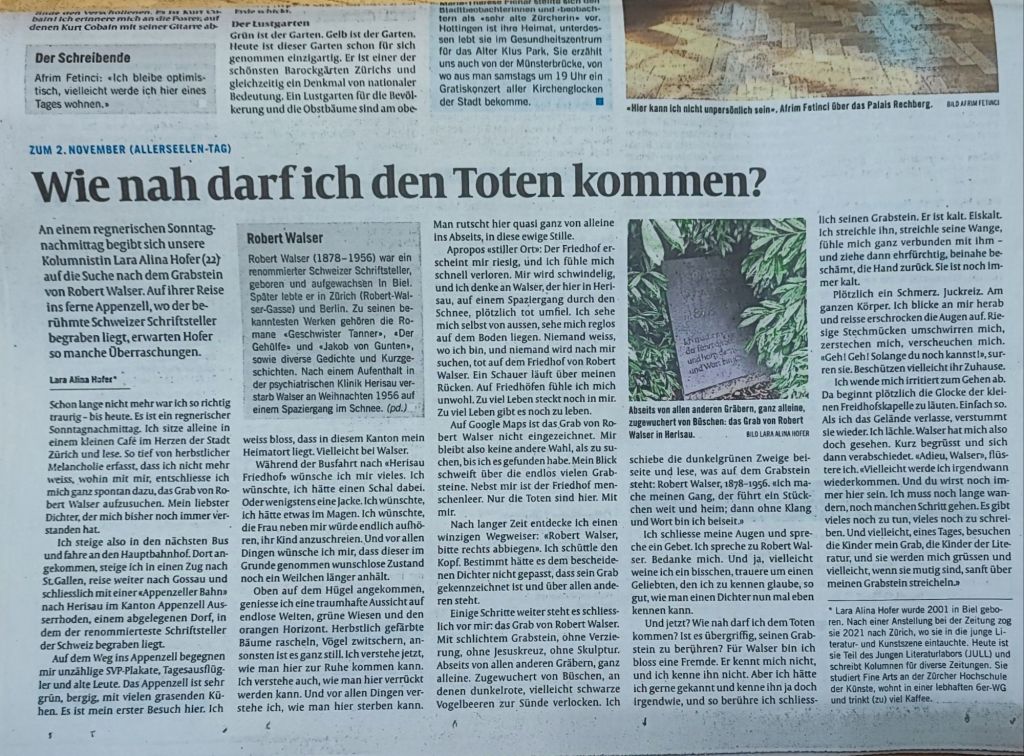
The second gravestone below belongs to the Swiss writer Robert Walser (April 15, 1878- December 25, 1956). The newspaper article was written by a 22-year old Swiss columnist Lara ALina Hofer. Here, she describes poetically her difficult search for the grave of Robert Walser which resonates perfectly with my search for my father’s gravestone last year when I was in Bulan with my wife Mila. Like Lara, we went through bushes and lots of other graves and help from some people around to locate our father’s resting place, overgrown with bushes, grass and trees. It  was a touching moment whe we finally found him.

Happy Birthday, Sister Marissa

A song for our one and only Sor Marissa Asuncion

(Verse 1)

On this special day, we sing with joy,

For Sister Marissa, our hearts employ.

A life of love and kindness, so bright,

Spreading God’s message, day and night.

(Chorus)

Happy birthday, Sister Marissa dear,

Your laughter and love, we hold so near.

For all your care and the joy you bring,

With love and gratitude, we sing.

(Verse 2)

You’ve kept our family, strong and true,

With every reunion, love shines through.

A beacon of hope, in times of strife,

You’ve blessed us all, with your light in life.

(Chorus)

Happy birthday, Sister Marissa dear,

Your laughter and love, we hold so near.

For all your care and the joy you bring,

With love and gratitude, we sing.

(Bridge)

In your gentle ways, we see God’s grace,

A precious soul, in every embrace.

We celebrate you, on this special day,

With hearts united, we all say:

(repeat Chorus)

Ang ating Dasal

(words & music jun & mila asuncion. Ito ay handog namin sa darating na Asuncion Clan reunion)

Intro:

Ihanda ang sariling mabuhay ng tahimik

Sa piling ng Maykapal, ang buhay ay kayamanan

Pagkat may patutunguhan.

Bridge:

Malayo man at mahirap ang daan

Ito ay tahakin, lumakad ka kaibigan.

Chorus:

Likas ng tao ang matakot sa daan

Hindi alam kong saan patutungo.

Huwag mabahala, kaibigan

Pagkat ika’y hindi nag-iisa

Kung tatanggapin mo siya

Ng buong puso’t kaluluwa.

Outro:

Siya ang may-alam

Daang ating patutunguhan

Hawak Niya ang ngayon, bukas at kahapon.

(repeat Chorus and Outro /… End )

Warrior’s Blues

(words and music: jun asuncion)

I
I’ve been through the fire and the rain,
Lost some friends, gained some pain.
But I’m stll standing, I’m still here,
This loneliness is nothing to fear.

II
I’ve been through the ups and downs,
Lost my parents’ other children along the way.
But I’ll walk this lonely path with my head held high
For I carry my father’s name, my solid pride.

Chorus:

If it be my fate that I stand alone one day,
I’ll embrace with grace this destiny.
I’ll face this truth and no one else I’ll blame,
The warrior in me keeps me stronger ever more.

III
Here today, gone tomorrow, they say.
The truth that all must face at the end of day.
But I find solace in the memories of my parents so dear,
For, be it in deeds or in thoughts, never had I betrayed them, that’s clear.

IV
My destiny is here to stay, so let it be,
In this moment I live, so I flow with it.
Sorrows and pain they journey with me,
They will be my best friends by the break of day.

(repeat chorus)

Childhood Song

It came to my mind in a moment of reflection how inspiring and life-strengthening it is indeed to have spent my childhood and teenage years in our Asuncion Family compound in Canipaan, Bulan, Sorsogon with my grandparents, uncles aunties plus a host of relatives and friends coming in and out all those years. I realized how blessed I was then to have shared my young life with all those loving people in the compound. I cherish those memories and sometimes wished to turn back the hands of time and be there again. The truth is, this is possible only mentally. The song below is proof that I was there. I dedicate it to this Asuncion Family compound which I so dearly love. / jun asuncion

(Verse I)

In the fields of youth, we roamed so free,

Unburdened hearts and dreams in our sleeves.

Our laughter echoed through the golden sun,

A time of innocence, where dreams had begun.

(Verse II)

But as the years passed, the world turned gray,

With challenges and hardships in our way.

Yet, deep within, a spark remains,

A light from childhood that forever sustains.

(Chorus)

Oh, the beauty of childhood, a precious sight,

An inspiration in the darkest night.

Through the trials we face, we’ll find our way,

For the spirit of our youth will never fade away.

(Verse III)

With every stumble and fall we endure,

The echoes of our past keep us secure.

Imagination’s wings still carry us high,

As we spread our dreams beneath the endless sky.

(Verse IV)

In moments of doubt, we’ll look back and see,

The fearless child that once danced freely.

The memories ignite a fire so bright,

Guiding us through the toughest fight.

(Bridge)

In the tapestry of life, both joy and sorrow blend,

But our inner child reminds us, our strength has no end.

With wonder in our hearts, we’ll journey through the storm,

For the lessons from our youth will keep us safe and warm.

(Verse V)

Let’s cherish the magic that once we knew,

When dreams were born and skies so blue.

In the face of struggles that may arise,

We’ll hold onto the innocence in our eyes.

(Verse VI)

For every heartache, we’ll find relief,

In memories of games and boundless belief.

With the spirit of our youth by our side,

We’ll embrace life’s journey with arms open wide.

(Chorus)

Oh, the beauty of childhood, a precious sight,

An inspiration in the darkest night.

Through the trials we face, we’ll find our way,

For the spirit of our youth will never fade away.

(Outro)

So, as we walk this road, let’s never forget,

The child within us is a constant asset.

With the essence of youth, we’ll overcome strife,

And bask in the hope that reignites our life.

/

Asuncion Paintings at the National Museum of Art

The Bangko Sentral Ng Pilipinas has loaned its collection of the Asuncion Artists’ Paintings to the National Museum of Art and are now available for viewing until December 2018.

This is a sensation as it includes the portrait of our patriarch Ming Mong Lo, also known us Jose Molo, a Chinese immigrant whose daughter, Maria de La Paz, became the wife of Mariano Asuncion, Sr. Ming Mong Lo is the common ancestor of the Paterno and Asuncion families of today. This portrait was done by Severino Flavier Pablo (1805- 1875), a contemporary of our own Justiniano Asuncion (1816-1896).

Here is the pdf. list  artworks to be showcased in this exhibition as provided to us by REGINA MERCEDES C. CRUZ ,Special Services Group Corporate Affairs Office
Bangko Sentral ng Pilipinas A. Mabini Street, Malate, Manila 1004
Philippines.

BSP Coll Asuncion paintings at NM

‘Ownership’ of the Hacienda de Angono

This is a repost of an article containing the researches of the blogger debrwall. This article was discovered by our cousin Christine Eustaquio, an Asuncion cousin coming from Romana Asuncion line, daughter of Antonio Asuncion (born 1794) , an older brother of Justiniano Asuncion (born 1816). Romana was married to Andres Trinidad Carrillo of Binãn. This is part of the interesting finds of my increasingly passionate cousins who work day and night as ancestry investigators. It’s nice to have such cousins. This article is to help us understand Antonio Asuncion, a painter, who married Remigia Sta. Ana whose family is mentioned in this article. We give our thanks to debrwall for this very valuable information. / jun asuncion
Posted on  by 

General Don Domingo Antonio de Otero Bermudez consolidated a number of properties, the Hacienda de Angono[1], along with other lands and estancia (farms) of Binangonan and the lime quarries of San Guillermo. Señor Don Juan de Ozaeta y Oro, special judge of the Land Commission in 1699, pronounced the documents produced by Don Domingo as ‘good’. He was a member of His Majesty’s council, oidor (Associate Justice) of the Real Audiencia of Philippine Islands.  He also saw the record of proceedings instituted by the natives of the town of Binangonan before the Superior Government, claiming that some of the lands allegedly belonging to the estancia were theirs.

The original objection to the townspeople’s claims was that no one said or did anything to the contrary when the tape passed through their town that marked its boundaries. It was argued that no one pointed out a different stream or river from Mabalan. Rivers or streams separated the lands and traditional practice often used the stream as an unwritten kind of boundary. The people who revolted were subsequently forbidden to work the lands that they occupied without Don Domingo Bermudez, the owner’s consent. Otherwise, they were subject to penalty:  the gobernadorcillo officials and cabezas de barangay  (local native government leaders/heads) were to be deprived of their offices and to be confined with hard labour in the Cavite prison on ration and without salary.

The oidor favoured the claims made by Bermudez and approved the titles and the boundaries of the property based on the demarcation and survey that had just been made.

As an expression of gratitude for his blessings, Don Domingo formed ‘four capellanías (pious trust funds) with a capital of 2,000 pesos each ‘between 1733-1736. Three of these were offered to the Archdiocese of Manila and one to the Order of Preachers. Santiago (2002:30) wrote that ‘all four foundations are still extant.’ Professor Ligaya G. Tiamson Rubin pointed out that Justice Calderon Enriquez found a fake survey in Silang, Cavite that was undertaken in 1743, claiming that the lands belonging to the Binangonan townspeople were already given to the Dominican Order. The Clerk of Court of the Audiencia, Juan Monroy was suspended for two years and asked to pay a penalty of P2,000.[2]

The Royal approval was issued on the 16th December 1749. A comment associated with the issuance of the title was: it was issued ‘without prejudice to third persons who might show a better right’. I interpret this comment to mean that Don Andrés Blanco Bermudez’s (Don Domingo’s nephew) ownership and possession were not ‘absolute’. In 1745, the natives of Binangonan led by their town officials occupied the lands belonging to the hacienda by force of arms —  ‘several towns mutineed and revolted.’  Special Judge Don Pedro Calderón Enriquez, Ozaeta’s successor investigated the Binangoneños’ grievances.

In 1745, the following were recognized as the owners of Hacienda Y Estancia de Angono: General Don Domingo de Otero Bermudez; Alferez Don Andres Blanco Bermudez; Josep Blanco Bermudez; Don Miguel Cacho of Manila. According to Santiago, Don Andrés presented the certificate of the title issued by Judge Ozaeta in 1699 and thereupon, a re-measurement of the dimensions and retracing of the hacienda’s boundaries as described in the certificate were apparently painstakingly undertaken. The landmarks (natural — e.g. huge trees and boulders, and man-made — boundary stones) were still in place. Hence, in 1749, the judge declared the documents ‘genuine and legitimate’.

Don Pasqual de Sta. Ana of Pasig, after two years of negotiation, bought the Hacienda y Estancia de San Clemente de Angono y Lagundi measuring over 3,000 hectare on 14 September 1818 from Don Miguel Cacho of Manila for 12,000 pesos.

Don Pasqual, by oral tradition, belonged to the pre-hispanic nobility of Caintá and Pásig. Santiago referred to the Jesuit chronicler, Chirino who pointed out that at the time of the conquest, Caintá was one of the rare vast towns ruled by a rajah (Sanskrit root: ‘to rule’ — referring to ‘king’, ‘Chief’). During Don Pasqual’s growing up years, his family had ‘gone down in the world’ apparently as a result of the ‘devastation wreaked in these parts by another invader, the British military (1762-64)’. The Sepoy (from India) soldiers in the British army decided to settle in Cayntá, and Don Pasqual and his descendants employed them and their children with native women, in their farms. Although Don Pasqual’s grandfather lost their ancestral lands and his own parents were unable to redeem these lands, through hard work and entrepreneurialship, he and his wife were able to buy back the lands his grandfather lost. Don Pasqual bought two haciendas: Isla de Talim and Hacienda y Estancia de San Clemente de Angono y Lagundi.

As experienced by the other hacenderos, Don Pasqual ‘inherited from his predecessors the wearisome problem of tenants refusing to pay the customary fees (terrasgo) for their houses and fruit-bearing trees inside the estate (Santiago 2002: 32).’ On 22 December 1819, Don Pasqual filed a suit against the tenants at the Royal Audiencia. The outcome of the case was not available.

Don Pasqual’s granddaughter (a Spanish mestiza), Doña Dominga de Sta. Ana Lara of Pasig inherited the Hacienda. Doña Dominga’s father, Don Jose de Sta. Ana married a Spanish lady from an illustrious criollo clan of the city, Doña Maria Escalante, daughter of Don Mariano Escalante and Doña Clara Miranda. Doña Maria Escalante was the young widow of Don Jose Matheo de Rocha, son of Don Luis de Rocha, the owner of the Malacañang estate (the future site of the presidential palace). She was first married in 1842 to the Licenciado Don Benancio Gonzalez de Lara, a lawyer from Toledo, Spain. They had a son, Don Eugenio Gonzalez de Lara (1844-1896). When Don Benancio died, Doña Dominga and her son, returned to Angono to live in the casa hacienda for good. In 1852, the hacendera next married Capt. Francisco Guido, another Spaniard who hailed from Villafranca del Berzo, Leon Province, Spain. Doña Dominga and Don Francisco Guido were my great-great-great grandmother and grandfather, and the next owners of the Hacienda.

The State granted absolute ownership through the real cédula (certificate) on 15 October 1754 to those who legally acquired the estate under the Spanish regime: Don Domingo Antonio de Otero Bermudez, Don Andres Blanco Bermudez and their successors: Don Miguel Cacho, Don Pasqual de Sta. Ana, Doña Dominga de Sta. Ana and Don Francisco Guido.

The boundaries of the property were formed with important towns: in the South were with the town of Binangonan; in the Southeast, with the town of Antipolo; and in the North, with the town of Taytay (where my grandfather, Hermogenes Guido and his wife, Aquilina brought up their ten children — Esperanza, Alfredo, Eufronia – my mother, Gliceria, Priscilla, Rosa, Profetiza, Buenaventura, Buensuceso and Carlos).[3]

Based on the outcome of a court case [4] in relation to the Hacienda de Angono between Justo Guido et. al., plaintiffs and appellees and Agustin de Borja et. al. (defendants and appellants),  the de Borjas were tenants of the Hacienda until 1903. A judgment of the Court of First Instance of Rizal supported their claim that they were the owners of the Hacienda. The Guidos (Justo, Buenaventura and Juliana and others) appealed against that judgment and won their case. Consequently, the de Borjas were asked to return the property to the Guidos, pay the legal cost and pay in money and paddy (rice field) as owed them, considering that the fruits, crops and plantings on the Hacienda were not theirs. Justo Guido of Singalong, Manila, who had the Hacienda de Angono titled in his name under the Torrens System in 1909; Joaquin, Victoria, and Benito, children of Justo Guido who had the Hacienda subdivided and sold to different owners.

According to Professor Tiamson Rubin, it wasn’t clear whether the entire territory of Hacienda y Estancia de Angono owned by the heirs of Dona de Sta. Ana had been declared ‘Public Lands’ that, in due course, were given to various people who had constructed under their own names their titles through the Torrens Title System. She speculated that due to the scarcity of documents pointing to legitimate Deeds of Transfers concerning the estate, it could be construed that the heirs of Doña Dominga had not shown sufficient interest in asserting their ownership of the property.


[1] Santiago distinguished the hacienda from an encomienda. The hacienda formed boundaries with entire towns and ‘comprised a whole barangay or barrio or a combination of barrios and sitios which eventually developed into a town itself.’ An encomienda was a royal grant of the tributes (not the land) ‘of a particular locality’. The encomenderos’ privilege lasted for two or three generations of the beneficiary’s family (see Santiago, L.P.R.1990.‘The Filipino encomenderos’, Philippine Quarterly of Culture and Society 18: 162-84)

[2] Tiamson Rubin, L.G. 2003. Angono Rizal: Mga Talang Pangwika at Pagkasaysayan. Espana, Manila: UST Publishing House, p. 63.

[3] Santiago, L.P.R. ‘Don Pasqual de Sta Ana (1762-1827): ‘Indio Hacendero.’ Philippine Studies, Vol 50 (2002): 23-49 First Quarter, Ateneo de Manila University Press, p. 29

[4] Philippine Reports, Vol 12, February 4, 1909; case no 4013

Old Master found again: He had fun

by: Eric Torres

from The Times Journal, Sunday, October 26,1975


Any one who wants to study the works of early Filipino painters will find a small if lacklustre collection in our National Museum to start with. The real glories, unseen by many and unknown even to connoisseurs, hang in ancestral homes – or are kept in the garages – of some of the premier families of Manila and neighboring provincial towns. Just to see these masterpieces in a house –to-house quest is a matter of such Odysean resourcefulness and frustration to make one imagine that a camel’s passage through the eye of a needle simpler.

The relative obscurity today of painters born in the early decades of the 19th century is undeserved though explainable. Perhaps the cultist attention to those late 19th-century laureates who made it to the fashionable salons of Europe, Juan Luna and Felix Resurrection Hidalgo, has made many lose sight of the genuine, and no-less-brilliant, achievements of such artists who stayed home and contributed to the development of a native aesthetic tradition as Antonio Malantic, Lorenzo Guerrero, Simon Flores, and the legendary Justiniano Asuncion, alias Capitan Ting.

At the peak of his creative life Capitan Ting enjoyed a reputation matched only by that Master of Tondo, Malantic. A work done in his prime, which has been in the possession of the Castrillo sisters of Biῇan, Laguna, for generations, is an oil portrait of his grandniece, Romana Asuncion Carrillo, dated 1870 and signed “J.A.” is a florid script. It is as sophisticated as one could ask for, in late Renaissance style characteristic by a mirror-image illusionism, classical clarity of outline, and veristic modelling. It is certainly more full-fleshed than any portrait by Damian Domingo, the mestizo who directed the first school of fine arts in Manila; by comparison, Domingo’s portraits look like whimsical dolls or mannequins.

Idealized Rendering

The portrait of Romana tells us much about the conventions of portraiture at that time. The subject is idealized: forehead, nose and mouth are rendered with pearly smoothness; no trace of epidermal imperfection is allowed to appear; eyes peer at the beholder in a manner piercingly limpid and alive; not one strand of the well-combed hair is out of place.

One convention demanded that the appearance of the sitter be impeccably correct, in unimpeachable taste, for the portrait was meant not merely to decorate the growing expanse of the walks in the house of Indios whose wealth derived from trade and commerce. It was also a cachet of status for the rising ilustrado class eager to win the respect of everyone and to perpetuate an image of superior education and breeding in the best possible light.

As in Renaissance icons of European nobility, the portrait of a lady was calculated to show the comfort and leisure of her class, and to show these by her putting on the finest and most expensive clothes – fulsome panuelo and camisa of piῇa, billowy skirt of brilliant silky stripes and such accessories as perfumed lace handkerchief and ivory fan. Sitting for a portrait also provided a splendid excuse to deck herself with the treasures of her jewel box, and these consisted of comb, petache (a hair ornament), earring, tamburin (pendant) or rosary – all studded with pearls and diamonds – and rings on most fingers (three for each hand was a standard number). Each exquisite detail of rococo embroidery and filigree was delineated with a virtuoso precision designed to astonish.
Above all the artist was expected to capture an ambience of decorum and highmindedness, which among other things meant keeping the sitter’s mouth shut.

Delicate tension

What gives pictorial clout to early portraiture by painters of Capitan Ting’s calibre was a certain delicate tension created between the exuberant linear and textural details of finery on one hand, and the rather plain Pilar expression of the face on the other – and again between the stiff transparent planes of dress and the roundly sensuous modelling of the face, hands and sometimes forearms, if shown at all. Evident in Capitan Ting’s best portraits is a wide-eyed, provincial curiosity about the status-seeking attitudes and material splendour of his ilustrado patrons, whom he saw at their Sunday best – a curiousity mixed with just the right measure of enthusiasm and detachment, which accounts for the crisp sentimentality in the portraits he did of the women in the Paterno family of Quiapo.

Capitan Ting was born in Sta. Cruz, Manila, on September 23, 1816 to a family of Chinese extraction. (In a double portrait he did of his parents, his father strikes a pose which clearly displays his Chinese queue.) He was second to the youngest of 12 children. Five of his brothers were all-around painters and sculptors, the most gifted of whom was Leoncio, who carved fine religious images in ivory and baroque furniture as well.

Barrio captain

About 1855 he served as barrio captain for Santa Cruz, and was well liked for his worldly wisdom and congeniality. That he had a stone house built on Calle Quiton is a sign that he enjoyed some measure of economic prosperity from commerce. There he lived most of his long life, raised six children, and supported a number of relatives. In his late years, he retired to Bulan, Sorsogon, where two of his sons, also painters, had settled down. In his Bicol retirement, he raised some of the best fighting cocks in the region. He died in Bulan in 1896 at the age of 80.

A self-taught artist, he painted for pleasure rather than for money. Like the other masters of his time, he applied his prodigious skill to all kinds of art work, including colourful genre illustrations depicting such local types as a mestiza cooling herself by the river, a vendor of mats, an aficionado of the cockpit coddling his gamecock, and so on, which must have delighted foreign visitors.

Miniatures, too

He did works of monumental scale as well as miniatures no larger than the size of one’s palm. His one magnum opus of imposing dimensions depicting bigger-than-life figures of four saints, Jerome, Agustin, Gregory, and Ambrose, painted on the pendentives of the Santa Cruz church, was destroyed by fire, before World War II.

But the miniatures have survived as heirlooms among fourth generation Asuncions. These are portraits in oil or watercolour on thin, flat pieces of ivory whose texture was used to enhance the luminescent quality of his hues and to give the superfine rendering of the skin and hair the highest degree of verismo.
A branch of the Asuncion family tree, the Gomezes of Ongpin street, has a few examples which clearly reveal the miniaturismo method. This consisted of first polishing the surface of the ivory to a fine sheen and then drawing the outlines of the figure in pencil. The last stage, the most painstaking, called for the application of paint by means of a tiny brush (which appears for all intents and purposes to have had no more than three or four hairs) in a pointillistic system of dots, or points.

The result was a pellucid illusion of the model which no mere photography could possibly achieve.
“He must have had a sense of humor,” comments one of his descendants, Mrs. Corazon Galang of Cubao, Quezon City. Compared to Capitan Ting’s, Malantic portraits look glum, somber and unsmiling. A quiet cheer or optimism pervades the canvases of the Master of Santa Cruz, especially when he painted women of all ages, of which the portrait of Dolores Paterno, the composer of the languid “Sampaguita,” in the Carmen Gabriel collection, is a fair example.

Good cheer

This optimism radiates with an inspired luster in a portrait of a favourite niece, Filomena Asuncion, a moon-faced beauty whom he painted with a robust sensuousness and a discreet smile ready to break out from her moist lips – a relief from the general uptightness of portraits by his contemporaries. This one, signed “J.A.” and dated 1860 carries a matter-of-fact notation, “A los 22 aῇos y 10 dias de edad,” as if to twit the vanity of human wishes, especially for recuerdos of one’s youth. In doing her portrait, perhaps the best he ever did, Capitan Ting raised the quality of lifelikeness to the level of trompe l’oeil.

His facility for the fool-the-eye lifelikeness was once put to a severe test when he chose for a model the image of no less a celebrity than Our Lady of Antipolo. The final version he did, now in the possession of a descendant who lives in Paco, is in pencil and opaque watercolour. Earlier versions were dismal failures. Each time he painted her the trompe l’oeil turned out gloriously for the rich gold embroidery of the cape and gown and the numerous diamonds that studded her apparel and the gold jewelry she wore from head to fingers. But he just could not get the cool, aristocratic face right. Somebody suggested the reason why she was so elusive was that he was not approaching her properly enough. He had better paint kneeling down, he was told. And that was how he painted the face in the final version, on his knees.

Two anecdotes show Capitan Ting’s humor to advantage, and both deal with his reputation as a magician of visual effects.

Gasps and giggles

He used to hang an oil painting on a wall in his house facing the street and visible to pedestrians (through an open door). Its purpose? To gull the unwary passerby into seeing a baby falling off a split-bamboo bed, or papag, as much as to draw gasps of amazement from the unsuspecting witness of the “accident” – and giggles from the painter and his household who were in on the joke, of course.

Another Capitan Ting fool-the-eye steals a leaf from the Zeuxis, that hyper-realistic painter of ancient Greece who was said to have painted a bunch of grapes so accurately that birds came to peck at them. For want of something better to do in his late years, he painted on the flat top of a wooden trunk, or baul, a scattering of coins painted with such finicky fidelity to the real thing that house guests would try to pick them up.

Did he leave any self-portrait?

Mrs. Galang recalls one which he painted of himself as a gaunt-looking old man with thinning gray hair, deep-set eyes, and mouth unceremoniously open. The children of her sister, who inherited the autoretrato, used to play with it as a means of scaring other kids in the neighbourhood with cries of “Mamaw!” When last heard of, it lay in the basement of her house, a rolled-up piece of canvas gathering dust. And now this sister thinks it might have been inadvertently thrown away.

Tracking them down

One of these days, a great grandnephew of Capitan Ting, Rafael Asuncion, a painter in his own right (whose father, Jose Asuncion, a painter of prewar renown, was the grandson of Leoncio Asuncion), intends to carry out an ambitious plan: a family reunion of all living Asuncions in an attempt to track down and recover extant works by their illustrious ancestor. “None of Lolo Ting’s relatives ever paid very much attention to his paintings,” confesses Mrs. Galang. “None of us ever imagined he would be historically important someday.”

What might yet turn up, if ever the project pushes through, is that missing self-portrait of an artist who is all but forgotten in our time and who, in his peak years, painted masterpieces which now deserve to be declared National Treasures.

A tale likely to be recounted in this planned grand reunion has to do with the last years of Capitan Ting in his Bulan retirement, the best I have heard yet.
His fighting cocks proved to be such persistent winners in the pit that in time (so the story goes) nobody wanted to put up a fight against his champions, as though they had charmed lives. So he decided to employ a little cunning. He changed the colors of his champions by dyeing (one version says “painting”) their feathers so nobody could recognize them, and this way managed to con his fellow cockers – a master of illusion, or deception, to the very end.

……………………………..

Transcribed from the clipping by Anna Rojas, September 28, 2017.

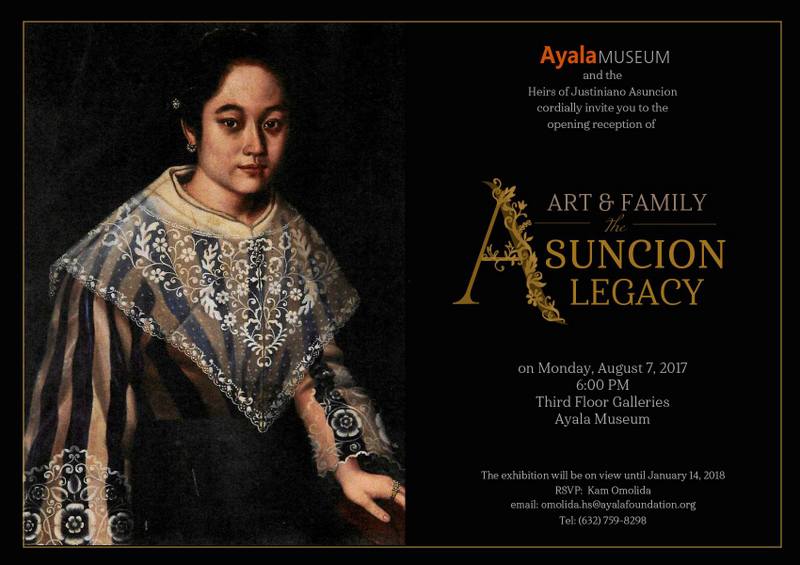
Art & Family: The Asuncion Legacy

Ayala Museum, with the support of Bench, DivinaLaw, Araneta & Faustino Law Offices, and AuraStrat, will be presenting an exhibition of 19th century paintings, illustrations, and sculptures by preeminent Filipino artists of the time, the brothers Justiniano, Leoncio, and Mariano Asuncion.
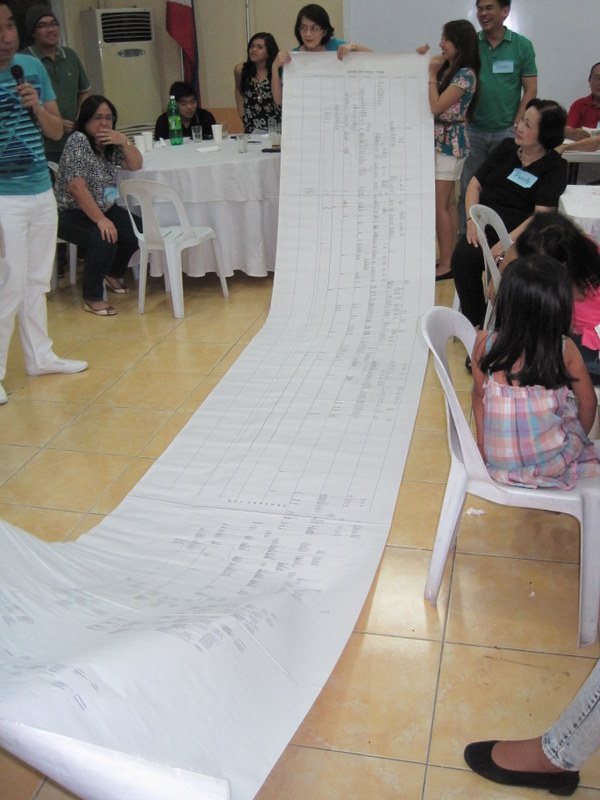
Entitled Art and Family: The Asuncion Legacy, the exhibition will be on display at Ayala Museum’s Third Floor Galleries and will run from 8 August 2017 to 14 January 2018.

Justiniano Asuncion
Portrait of Filomena Asuncion
Villafranca
Oil on canvas
81 x 61.5 cm.
Dr. Eleuterio Pascual Collection

Selected works include paintings and sculptures, miniatures, medallions, portraits, and watercolor illustrations by the aforementioned artists loaned from both private and institutional collections.  Many are commissioned by the artist’s patrons and families and showcase both popular religious and secular motifs of the time.


The union of Mariano Asumpcion and Maria dela Paz Molo de San Agustin of Manila produced 12 children: Manuel (born 1732); Antonio (1794); Victoria (1796); Mamerta (1789); Justo (1800); Mariano(1802); Epifanio (1806); Ambrosio (1808); Pascuala (1811); Leoncio (1813); Justiniano (1816); and Canuta (1819),  who had devoted their lives to the arts through paintings and sculpture.  As a big family, art kept them a closely knit clan. Many of the original works of the Asuncion family have been lost through fire, earthquakes, floods, and wars.

The descendants hold regular meetings and reunions and have initiated this exhibition to honor the memory and legacy of the Asuncion family, whose works are held in high esteem in Philippine art history.

Mariano Asuncion (1802-1888) is the eldest of the featured artists and enjoyed a wide patronage of religious clientele. His subjects were mostly about the miracles of saints, the Passion of Christ and images of the Virgin Mary. His works are compared to Italian painters of the 13th – 15th centuries. Leoncio Asuncion(1813-1888) is considered as the Father of Modern Religious Sculpture. He is remembered for his santos made of ivory and wood. Justiniano Asuncion (1816-1896), fondly remembered as Kapitan Ting after having served as cabeza de barangay of Sta. Cruz, Manila, in 1853, was a painter known for his portraits. Aside from exposure from practicing artists in his family, he also received artistic training under Damian Domingo (1796-1834) noted painter of portraits, miniatures and religious imagery, who established an art school in Tondo in 1821.

Additional support for this exhibition was provided by Via Mare. Talks and activities will be scheduled during the exhibition run and will be announced through Ayala Museum’s website and social media channels.

For more information, visit www.ayalamuseum.org or call (632) 759 82 88 or email hello@ayalamuseum.org.

Art and Family: The Asuncion Legacy

THE Ayala Museum presents an exhibition of 19th century paintings, illustrations, and sculptures by the pre-eminent Filipino artists of the time, the brothers Justiniano, Leoncio, and Mariano Asuncion. Entitled Art and Family: The Asuncion Legacy, the exhibit will be on display at the museum’s 3rd floor Galleries from Aug. 8 to Jan. 14. Selected works include paintings and sculptures, miniatures, medallions, portraits, and watercolor illustrations. Talks and activities will be scheduled during the exhibition run and will be announced through Ayala Museum’s Website and social media channels.

asuncion legacy

Otilia Olica Gustillo.. an Asuncion

Asuncion Clan’s Affair

posted by jun asuncion

The meaning of the Asuncion clan’s surname

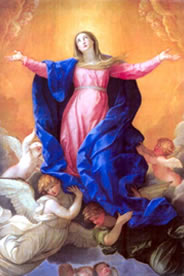
asuncion-mariaThe clan’s name comes from the mystery called “La Asuncion De Nuestra Senõra” or the Assumption of our Lady both body and soul to heaven. This mystery express Mary^s indissoluble bond to Christ (John Paul II’s Encyclical Redemption Mater 25-11-1987). We, the Asuncion’s are invited to praise God for the honor and blessings we received; likewise, fulfill with joy our mission in life as we aspire with tender love to bind our relatives forever, overcoming differences so that this tradition of being together may endure through generations.

 Asuncion Clan’s:

Vision: That ike Mary, our lady of the Assumption, we, the Asuncions strive to discover and fulfill with joy our respective mission in life, pray for each other’s sanctification and be channels of grace to others.

Mission: Inspired by Mary, our blessed Mother’s indissoluble to Christ, we are moved to cherish and support one another as we endeavor to praise God and serve others in whatever state of life we are in.

Feast Day: August 15

Color: Blue

Prayer: (by Fr. Raul M. Asuncion, Ph.D.)

” We fly to your patronage O Mary, Nustra Senõra de la Asuncion, so that each one of us and the succeeding generations in the Asuncion clan, may grow in our love for one another by imitating the enduring love of your son, which took you, His Mother, into heaven. May we always be united, striving together for the common good and if need be, sacrificing anything that threatens the special grace of our common ancestry. Through your powerful motherly intercession, may the Lord Jesus Christ hear and answer our petitions. Amen!”

P1210155-001

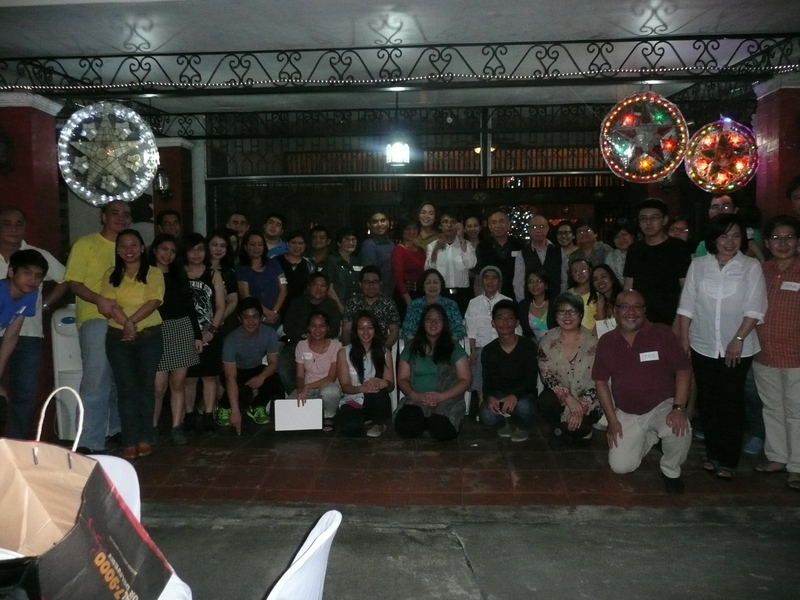
Group Photos of the Reunion last January 4, 2015

P1210039

P1210030-001
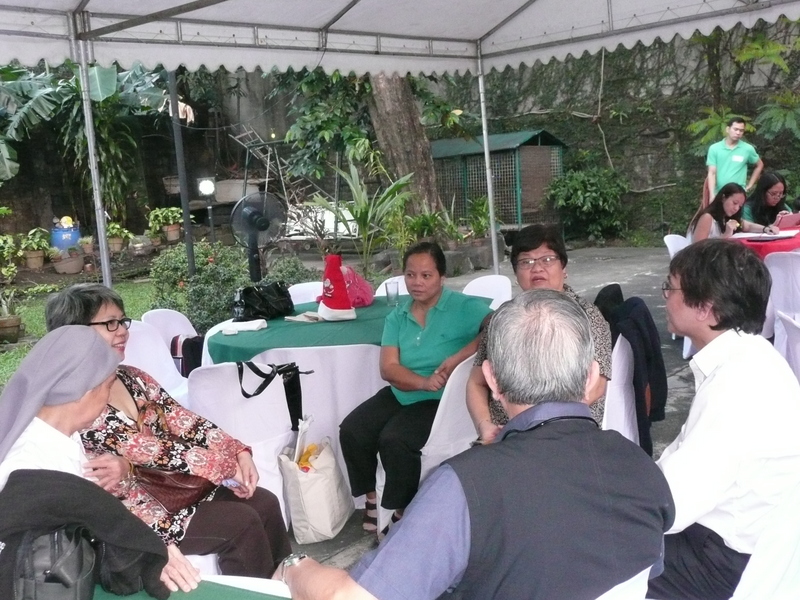
Happy to be together and talk about plans for the next gathering.

P1210075
Jun showing to a relative some possible links as we trace who belongs to whom.

IMG_2249
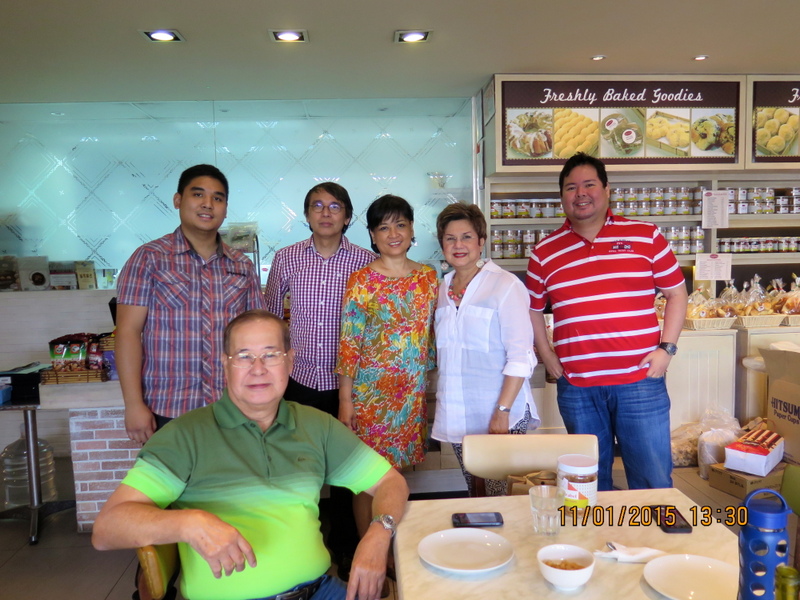
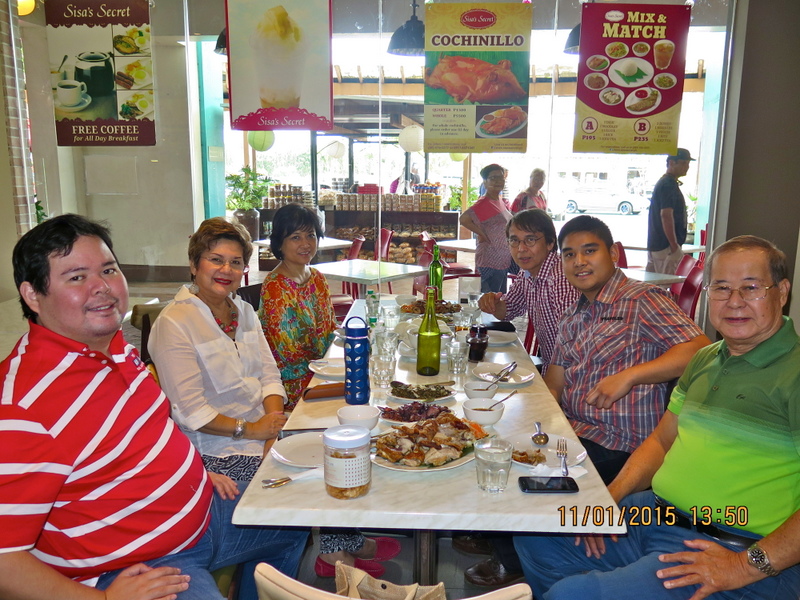
After the grand reunion, another mini reunion in Sisa’s Secret Resaurant (Laguna) with the descendants of Antonio Asuncion (brother of Justiniano Asuncion, 1816) Dr. Ruben Yatco (seated in front), Christopher Yatco (in red shirt, son of Ruben) and Christine Eustaquio. Christine, the lady in white blouse, is a great, great granddaughter of Romana Asuncion (daughter of Antonio Asuncion and portrayed by Justiniano  who later married a Carillo-Trinidad in Binän, Laguna). Her daughter, PATRICIA PEREZ EUSTAQUIO, is also a visual artist represented by Silverlens Galleries in Manila.

IMG_2255

(to be continued..)

Asuncion Treasures at the Central Bank Museum and Metropolitan Museum Of Manila

Posted by junasun

The following photos of the works of Rafael Asuncion, Justiniano and Mariano El Major (or maybe of El Minor) were provided to us by Sonny Asuncion Rayos during his last visit  to Manila. Only very few of our relatives are aware of the existence of some valuable works and masterpieces of our forefathers in these museums and in private collections. We owe a lot then to relative like Sonny for his untiring hunt for our  lost treasures.

Here is Sonny:

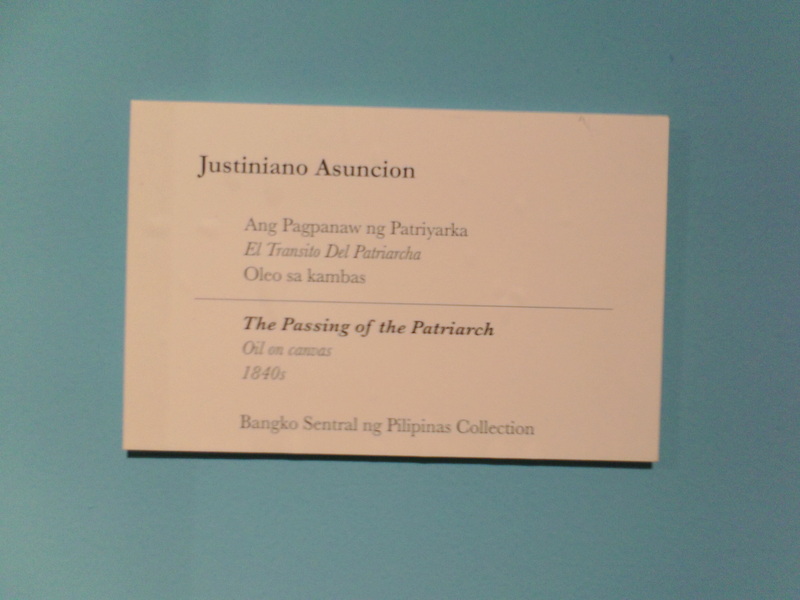
“The Asuncion and Paterno art and historical pieces are sought after by museums in Manila. Here are some of the art works of Mariano and Rafael Asuncion from the Central Bank Museum.  The Metropolitan Museum of Manila has, in its collection, an oil painting of Justiniano Asuncion entitled “Ang Pagpanaw ng Patriyarka…. I am excited to see these important historical and art pieces and I am just as thrilled to share these pictures with Bulan Observer readers.”


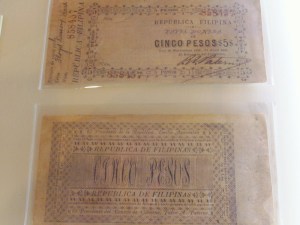
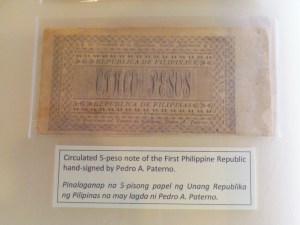
Rafael Asuncion and his Peso designs


SAM_0288

SAM_0289

SAM_0267

———————————————–

Pedro Paterno and the Five and Ten peso note of the first Philippine Republic

SAM_0271

SAM_0270

SAM_0269

———————————————————-

Justiniano Asuncion’s The Passing Of The Patriarch


SAM_0296


SAM_0305


——————————————————————–

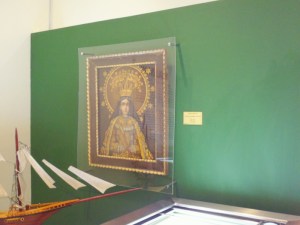
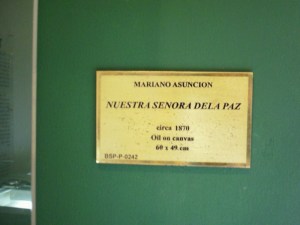
Mariano Asuncion’s Nuestra Senora De La Paz


SAM_0279


SAM_0278


———————————————-

Asuncion kin reunion

by jun asun*

To all Asuncion relatives:

There will be a reunion on August 15 at 24 Times Street as requested by Sor Marissa Asuncion to celebrate the Feast of La Asuncion de Nuestra Seniora.

There will be a 6:30 pm mass followed by dinner. It will be a potluck.

For more Info, please contact Ed Rojas or Malou Asuncion.

*Thanks Ed and Malou for the Info! I wish you all a happy get-together.- jun asun

Atty. K. Digno M. Asuncion

by Eduardo C. Rojas 

Today at 8:36 AM
My fellow Asuncion relatives, just saw this post of cousin Elcee’s FB.  Elcee is our second cousin (my generation though Elcee and her sibling Architect K Digno are younger).  Their dad K. Digno Asuncion is the first cousin of our mom (generation of Gracia Asuncion Carrillo Rojas & Corazon Asuncion Carrillo Galang).  Atty K Digno’s dad, Kenerino (married to Leonor Manas) is the sibling of our grandmother Guia Asuncion Carrillo (same generation as Consuelo Asuncion Intengan, Adonis Asuncion, Jacobo Asuncion, Rodolfo Asuncion, ..).  Malou & brother Andres “Jun”Asuncion’s line comes from Adonis, Sor Marissa Asuncion & sis Sor Naty come from Jacobo, Grace – Ann Grey – Monina – Ronivic – Rollie came from Dr Ronnie Asuncion, whose dad Rodolfo (married to Monica Gerona) is the brother of our grandmother Guia Asuncion.


Elcee Asuncion Villa

14 hrs ·

Our father, Atty. K. Digno M Asuncion, passed away peacefully in Manila today, May 12th – just as his wife and 5 children were taking Leone Giulio to the crematorium in Italy. He was surrounded by his loving in-laws and grandchildren. It is bittersweet that we lost 2 people we love within a week of each other. But now we know that we have 2 angels in heaven who are toasting us right now with their fav beer. We love you Dad. You taught us so much. You loved us so much.


To Elcee,  Ding and Families:

We would like to express our sincere  condolences on the passing away of your father Atty. K. Digno Asuncion. Tears on earth, joy in heaven.

jun asuncion + Family and Bulan Observer


———————-


April 2013 – A Blessed Month For Reunions

by Sonny Asuncion Rayos
IMG_5220-001
Sometimes plans go awry and dreams of reunions, even years in the making, do not materialize. Blame it on unfavorable timing, exorbitant plane fare or just plain and simple: flights are fully booked. Legitimate excuses. The reality is Asuncion family reunions are scheduled in late December or January are tough for travelers.
From out of nowhere, I received an email from Lota about an Asuncion family reunion on April 6. It was meant to be! This is perfect timing. I already have my plane tickets for travel to Manila in late March. Maybe I was trying to mask and contain my excitement because the only reply I sent was “I will be able to make this reunion.”
An old cliché comes to mind – “Pictures are worth a thousand words” and “To make a long story short,” here are some of the pictures taken during the Asuncion reunion.
IMG_5141 IMG_5166IMG_5137IMG_5152
IMG_5158IMG_5159
But wait! There’s more!! Attached is a photo with Manong Gabriel Asuncion with daughter Jo Anne. Manong Gabby has been my source of almost anything Asuncion . I must admit, this is my first time I’ve met Manong, although we talked often via telephone or email. Gabby’s brother the late Eugenio was  instrumental in reminding me that I am an Asuncion . I knew vaguely of this fact (other than it being the surname of my maternal grandmother) and the historical importance of what it meant – so thanks Eugene and may you rest in peace. Manong Gabby’s lineage is Leoncio Asuncion, then Hilarion Asuncion, then Jose Maria Asuncion.  My maternal grandmother, Feliza, is the youngest sister of Jose Maria.
IMG_5217
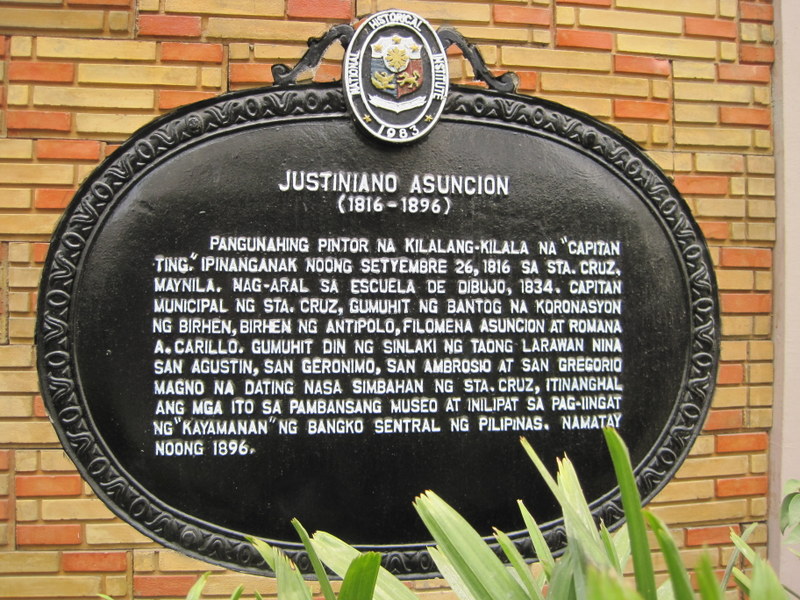
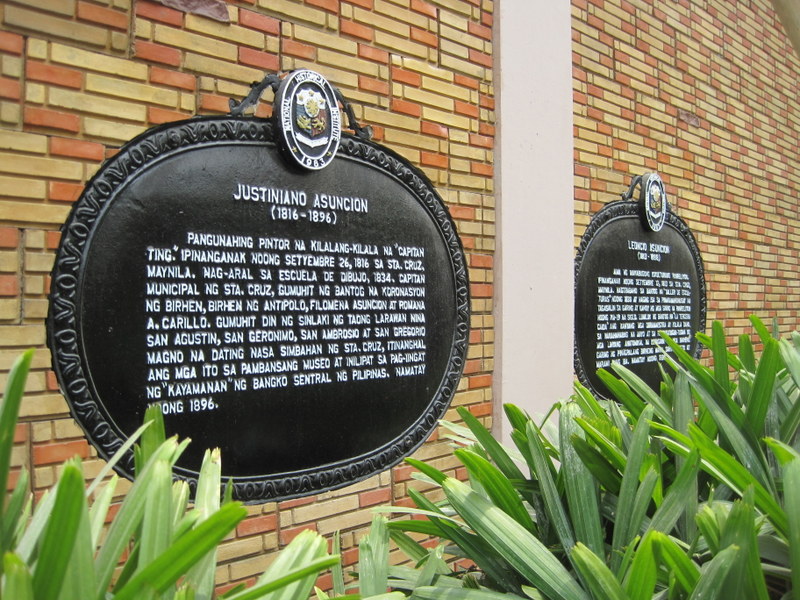
A reunion with Santa Cruz Church ?  Could one consider this a reunion? I must say YES. I am getting reunited with the two commemorative plaques of my great, great, (how many more great?) uncle and grandfather Justiniano and Leoncio Asuncion. These are located on the west side of the SC church (on your right hand part if facing the façade of the church). Herewith are the photos of each marker
IMG_5182IMG_5184IMG_5185
It can’t be better than this: Asuncion-Paterno reunion! Our common ancestry starts with a china man named Ming Mong Lo. He is considered a sanglay; a spanish colonial term for pure chinese immigrants who are in the Manila to conduct commerce.  It comes from the Chinese word “Seng-Li” meaning business. Family records described him as an “apothecary of Mandarin descent.” He had his named changed to Jose Molo when he was baptized. It is well documented in archives that Jose Molo is the progenitor of the Paterno family – with one of the sons, Paterno Molo de San Agustin, eventually changing the surname Molo (and those of his siblings following suit) to Paterno. One of the daughters of Jose Molo is Maria de la Paz Molo de San Agustin. Maria de la Paz married Mariano Cagalitan. The Cagalitan surname was later changed to Assumpcion then finally to Asuncion .
The reunion and reunification of blood siblings of Ming Mong Lo – the Asuncions and the Paternos is considered one of the highlights of April. This is about seven or eight generations of pinsans from the progenitor Ming Mong Lo. Attached are photos of this event. The setting for this historic event couldn’t be more perfect – at the Orchid Garden Suites – a beautiful hotel (excellent staff, wide choice of food, clean and wholesome hotel) across the Century Park Sheraton in Vito Cruz St. Malate, Manila .
IMG_5219IMG_5220
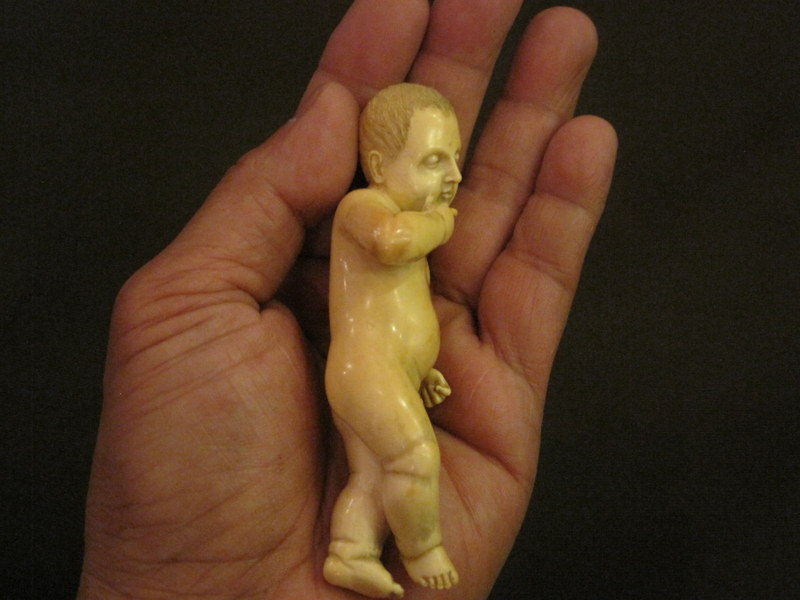
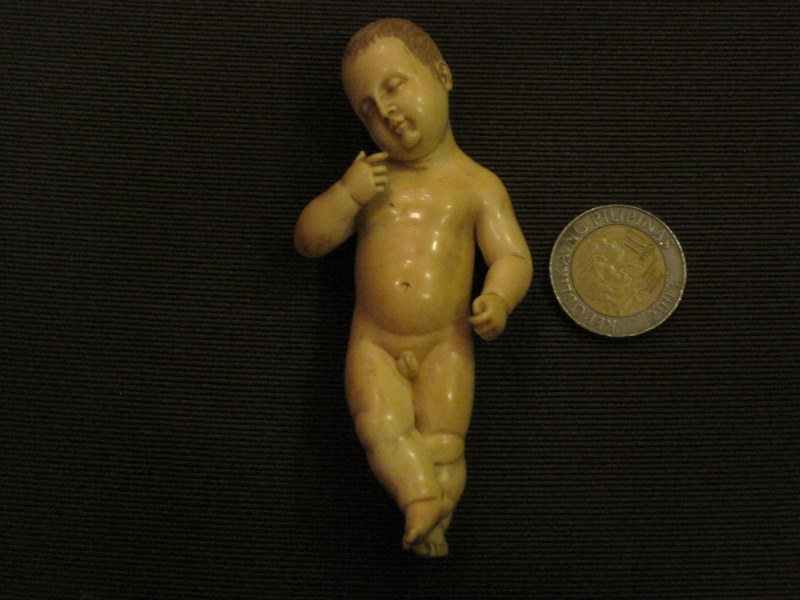
The last reunion for this blessed month of April is the most special and personal. This is my reunion with the ivory sculpture of baby Jesus by Leoncio Asuncion. Attached are several photos. This sculpture is the one that my mother, Juanita Asuncion-Palileo, takes out during Christmas and New Year for all of us kids to kiss. This is a known work of Leoncio with good provenance – a hand me down from generations.
IMG_5253 IMG_5257 IMG_5261 IMG_5264 IMG_5269
I hope you’ve enjoyed my Asuncion family stories and photos. Until the next Asuncion reunion or better yet a joint Asuncion-Paterno reunion.
——————————

Asuncion Clan Reunion 2013

“Kita Kits Muli Tayo”

“ASUNCION TOGETHER FOREVER”

WHEN:      April 6, 2013 @ 4:00pm onwards

WHERE:   #18 Collins ST. Dona Faustina I

                  Culliat, Quezon City

                  Atty. Godofredo Asuncion‘s

                  Residence and  Clubhouse                    

Pls. call :     

Lota  Asuncion Abella-  

Atty. Nina Asuncion- 

Atty. Edgar Asuncion- 

Mary Anne  Asuncion Gray-

Pls. coordinate with  Lota A. Abella for the Food

Pls. bring gifts for the raffle and games.

 ———————————————

From Sta. Cruz to Binãn: The Asuncion- Yatco- Carillo Lineage

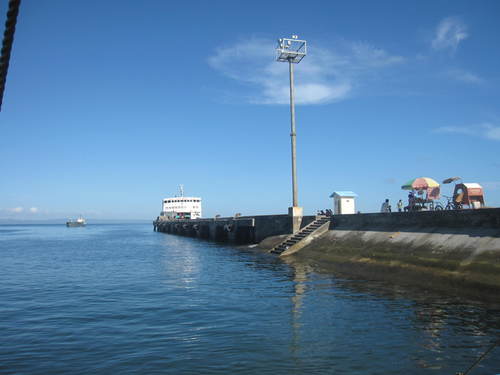
Bulan
Bulan Pier

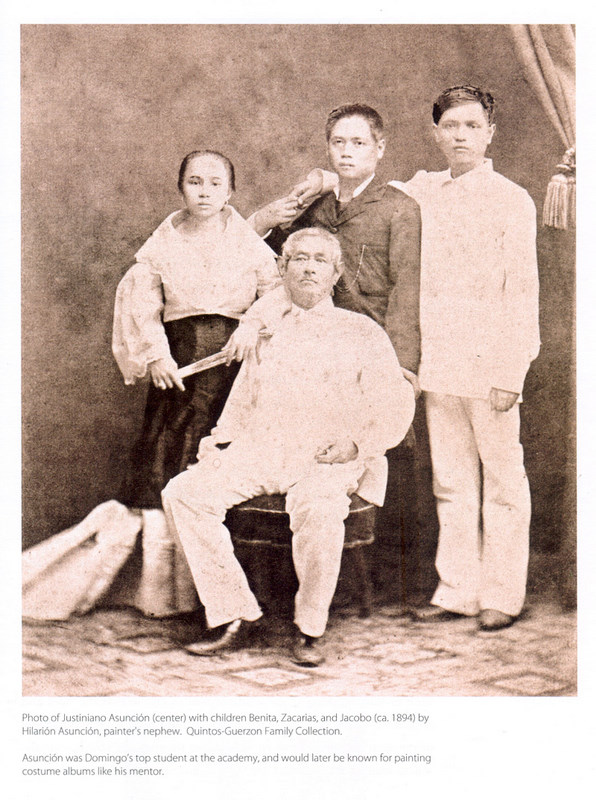
Bulan. The picturesque coastal town of Bulan was one of the first migration destinations of the Asuncions of Sta. Cruz. The spirit of the time of transition had already been felt in the Asuncion household. The master painter Justiniano was the first to realize that it was no more his time. Styles had changed and so was the taste of the artistic consumers. New names like Luna and Hidalgo were in everyone’s tongue  as they had just brought home the bacon from Europe. It was this existential uncertainty that drove Justiniano to follow his son Zacharias in Bulan who had already successfully established himself being a grocery store owner and his political  engagement in the community. The ageing Justiniano for sure did not travel alone but in the company of somebody – probably Benita.

justiniano asuncion from damian domingo book, 2010 (5)
Dolores Paterno
ca. 1870 by Justiniano Asuncion

Binãn and Pasig. Perhaps around this time, those pretty nieces of Justiniano, once his favorite models for his portrait works, also moved southwards of Manila, namely, Binãn, Laguna, hence, making Binãn the second known migration place of the Asuncions. These women, Romana and Valentina Asuncion were the daughters of Antonio Asuncion (born 1794), (Justiniano’s brother) whose wife was Remigia Sta. Ana of Pasig. The third place where an Asuncion migrated was Pasig with Antonio Asuncion, a known artist and where he also became Gobernadorcilo in his time – true to this rare mixture of politics and arts in the Asuncion  blood. This migration to Binãn resulted ultimately into the blood fusion with Yatco, Carillo-Trinidad and Yaptinchay – all prominent Binãn families.

P1170361
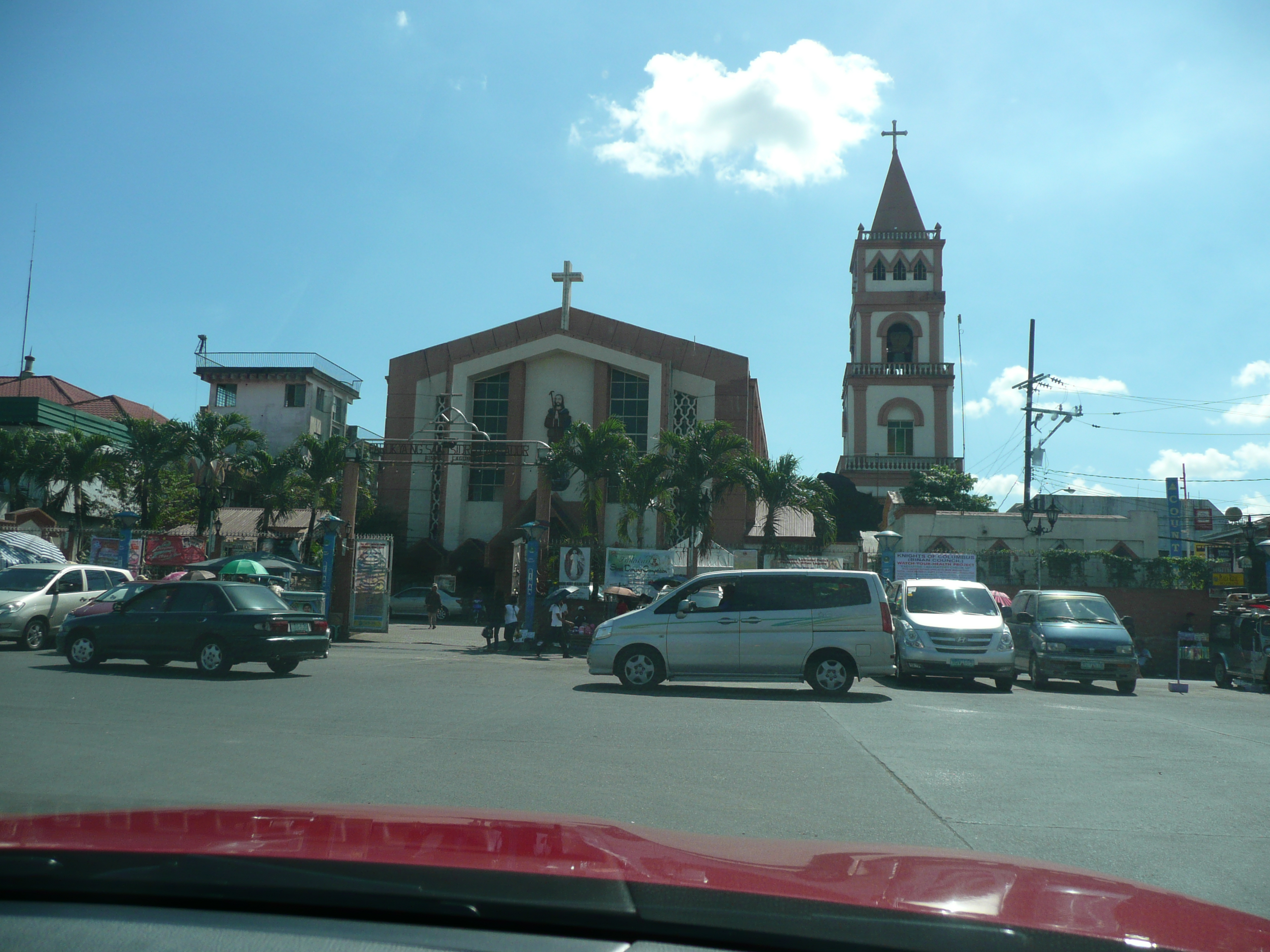
The Binãn Church

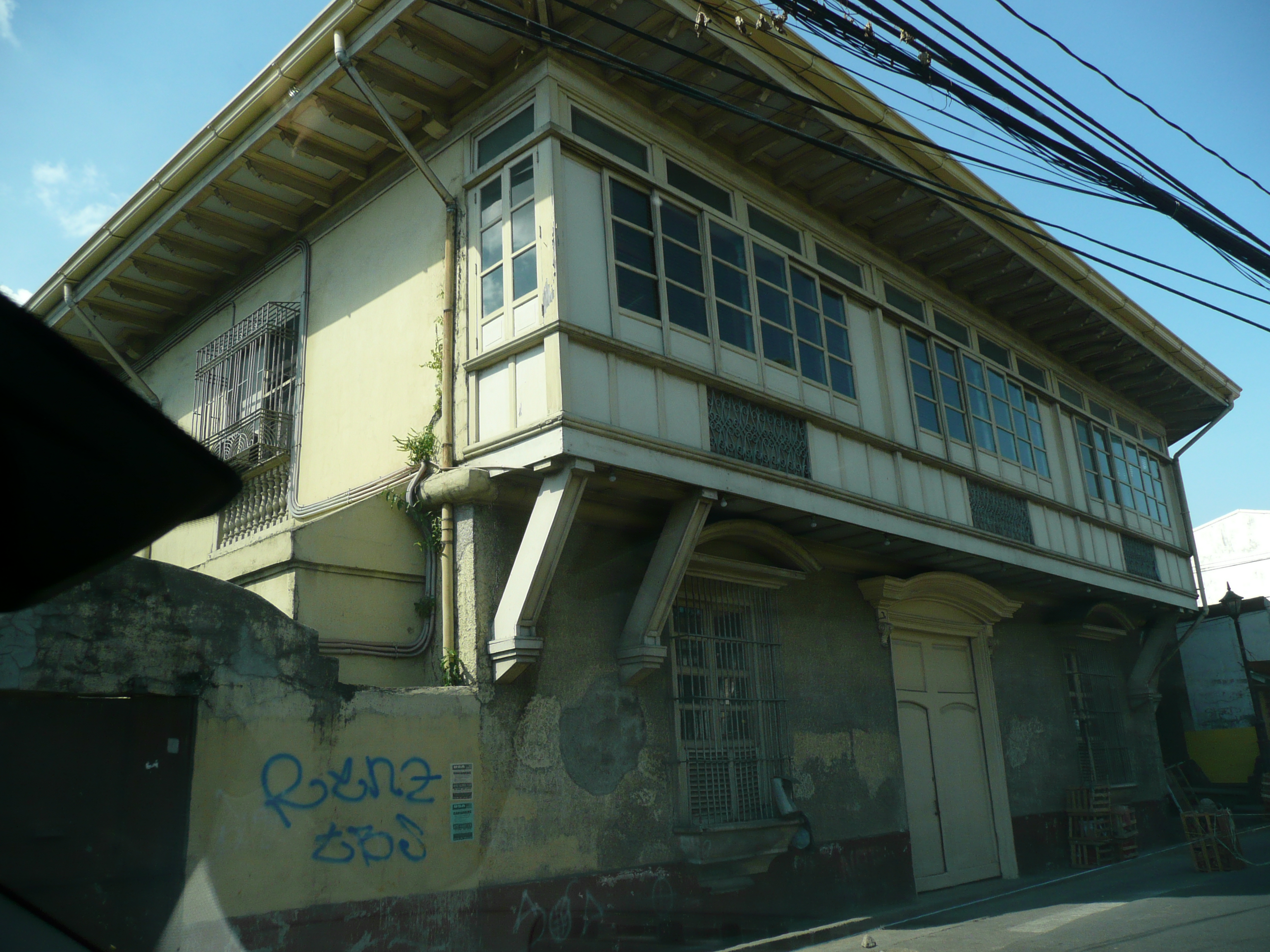
We were toured around the center of Binãn by my relative Christopher Yatco where he showed us the houses where  the Yatcos, together with Romana and Valentina Asuncion, once lived. A nostalgic mini tour, shooting pictures of these old spanish houses as I tried to imagine how they lived there at that time. Romana and Valentina were my first cousins, me being three generations younger.

P1170380P1170374

P1170389P1170373

P1170377P1170390

Valentina Asuncion married a Yatco which is one of the oldest gems of  Binãn. His name was Ignacio.  His brother Gregorio was the father of Ysidro Yatco, the progenitor of the “Tres Marias de Yatco” of Binãn. The merchant’s Ysidro Yatco wife was Bonifacia Mercado, sister of Jose Rizal’s father, Fransico Mercado. The Tres Marias- Salud, Leonila and Paz- were Jose Rizal’s first cousins. (The young student Jose Rizal did not use his  family name Mercado upon the advice of his brother Paciano to avoid being linked to Father Gomez who was executed by the Spaniards).


asuncion legacy
Filomena Asuncion Villafranca

Valentina Asuncion and Ignacio Yatco’s children were Eleuterio, Jose, Leoncio and Filomena [ married to Eugenio Alzona]. (Note: There are two other Filomenas: One Filomena [married to a Castrillo] , daughter of  Romana Asuncion Carillo and another Filomena [married to a Villafranca], daughter of Leoncio Asuncion [born 1813] , Justiniano’s older brother. )

According to Christopher Yatco (born 1974), Eleuterio Yatco y Asuncion had a son in the name of Francisco whose wife was Asuncion Belizario (here the name Asuncion is a first name).Their children being : Josefina Yatco (married to Andy Francia),  Digna Yatco (married to Momoy Concepcion),  Thomas Yatco (married to Florinda Sabater), Ruben Yatco (married to Adelaida Ponce) and Ernestina Yatco (a spinster) .

P1160596
Jun, Christopher, Florabel and Mila
November 2012, Felix Restaurant, Greenbelt 5 Makati

Christopher Yatco’s parents are Ruben Yatco and Adelaida Ponce. Christopher is a soft-spoken man, open-minded, friendly, very generous, informed and interested in many things. He and his wife Florabel Co- Yatco run a chain of reputable restaurants in Metro Manila. This photo above was taken at Felix restaurant owned by Chris and Florabel, a great venue with excellent food, service – and a jazzy background music! Indeed, they’re very industrious and successful entrepreneurs. Christopher’s interest in genealogy is amazing at his age despite the work that he has as a businessman – in a true Yatco- Asuncion fashion. He is a first cousin three generations younger of Don Ysidro Yatco, once a prominent business person in Binãn. His great, great-grandfather Antonio Asuncion had not the slightest idea that, 218 years after his birth, one of his “offsprings” in the name of Christopher would meet another offspring of his younger brother Justiniano. We both sensed the significance of that evening, acknowledging that we both are living extensions of them, our ancestors,  and that we have the duty to look back and honor them. Christopher is my fourth cousin a generation younger  and fifth cousin to my sons.

The Yatcos and Mercados are related as in-laws. We may say that Ysidro Yatco, being the husband of Jose Rizal’s aunt Bonifacia Mercado, was Jose’s “uncle in-law” (or Jose Rzal being Ysidro’s “nephew in -law”) and so were Ysidros’ other brothers, as they were the uncles of the Tres Marias. From the surface there seems to be no direct blood relationship among the other Yatcos with the Mercados and that all other Yatcos do not carry the Mercado’s genes, that they are just in- laws. Yet Bonfacia’s next offsprings carry the Yatco genes in themselves, the same copy that Christopher has. And if we would go a little a deeper in the sense that we would forget people and talk of blood as a collective entity then the mixing of these two bloods – the Yatcos’ and the Mercado’s”- through the union of Ysidro and Bonifacia- had ultimately effected a chemical bonding of both bloods which affects all other people carrying these bloods. This is perhaps what we mean when we say ” that person is my distant relative”.

If in-laws are distant relatives, then it goes beyond the common consanguinity relationships from first to seventh cousins. For how distant is a distant relative really? Who and what defines and limits relationships? The western concept of family relationship is very limited to biology. There are cultures and even certain people that regard family relationship beyond this common concept. The English term “next of kin” does not necessarily mean a blood-relative. And a person has the natural right to call somebody to whom he or she feels strong affinity as brother or sister. There is somehow also a spiritual dimension to human and family relationship. I mean, if we would extend the line of Ysidro Yatco as son- in-law of Juan Mercado, the grandfather of Jose Rizal, and Christopher being a great, great grand-nephew of Ysidro Yatco, therefore, Christopher could be Jose Rizal’s three generations younger “first- cousin-in-law”, with Paz, Salud and Leonila being Jose Rizal’s direct (blood) first cousins as seen from Jose Rizal’s family tree and Christopher being Salud, Paz and Leonila’s second cousin by blood, two generations younger as seen from the Yatco family tree.

With Romana Asuncion, the ninth child of Antonio Asuncion and Remigia Sta. Ana, the Asuncions got connected with another prominent Binãn family, the Carillo-Trinidad. Romana married Andres Carillo-Trinidad. Their daughter, Petronilla married a Yatco (as if following the foosteps of her aunt Valentina Asuncion). His name was Fermin Yatco y Yaptinchay, the son of Aniceto Yatco and Simeona Yaptinchay. Aniceto was Ignacio’s brother. Simeona herself was a daughter of a Carillo-Trinidad, Maria, who became the wife of the first Yaptinchay, namely Yap Tin Chay, a migrant Chinese, with Yap as the family name and Tin Chay the first name. However, his descendants adopted the combined names Yaptinchay as their family name (source : Toto Gonzalez). How Andres and Maria Carillo- Trinidad were related to one another is my question to the  Carillos of today.

But you may have noticed by now that Fermin Yatco y Yaptinchay who married Petronila Carillo- Trinidad, actually was a Carillo- Trinidad also through his grandmother Maria Yaptinchay  y Carillo- Trinidad. Hence, Petronila and Fermin were blood relatives.

20776478_10155662263893817_6651737840113576243_o
Romana Asuncion, on the right.

Now, Petronila’s and Fermin Yatco’s son, Macario Yatco y Carillo  (y Asuncion y Yaptinchay!) married Guia, an Asuncion and daughter of Zacharias Asuncion from his first wife Juana Zalvedia. I was informed that Juana Zalvedia was also an Asuncion- being the daughter of Canuta Asuncion, Justiniano’s sister. (Love seemed to be so blind among the first Asuncions). From this union between Macario and Guia was born a daughter named Gracia Yatco (y Carillo y Asuncion y Asuncion). Formally, Guia was three times an Asuncion and her daughter, Gracia, four times an Asuncion. Gracia married a Rojas (hope the mother of Emmanuel Rojas, Sr. was not an Asuncion!) and they gave birth to Ed and Noel Rojas. Hence, although a Rojas, and taking Zacharias as point of reference (common ancestor), Ed and Noel are more Asuncion than an Asuncion because they are five times an Asuncion, formally speaking, through Zacharias- Zalvedia- Macario- Guia- Gracia! And they can count two great, great grandfathers, too: Justiniano Asuncion (through Zacharias) and Antonio Asuncion (through Romana)- two great artists!

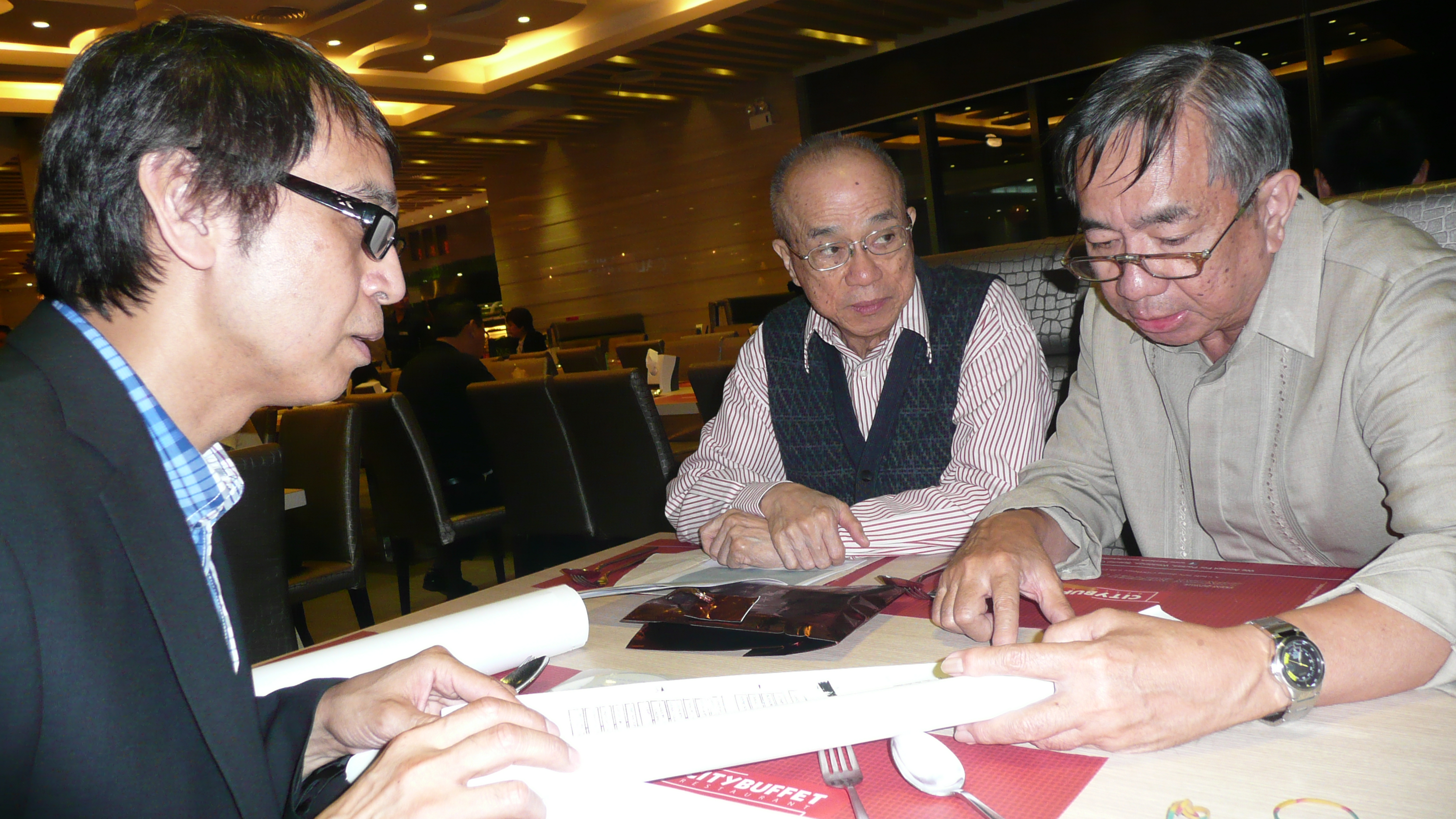
Mini reunion. This explains the intense drive and fascination of Noel and Ed in their search for the Asuncion roots! I met them last November 2012 in a restaurant somewhere in Ortigas, and this  intense discussion shown in this photo is not about the Menu for the dinner but about the family tree that Ed and Noel brought with them. We enjoyed the food, naturally, but we spent more time discussing the tree than eating that evening of November.

P1160551
Jun, Ed and Noel

P1160569
The Asuncion women

P1160581
Noel with daughter Anna

Now, with all this complexity because of internal marriages, how are we related really to one another? Taking Mariano Asuncion as common ancestor,  Juana Zalvedia  (Zacharia’s first wife) would be a niece to Justiniano,  a first cousin to Zacharias, first cousin a generation younger to Adonis;  Andres, Sr. being first cousin two generations younger and me first cousin three generations younger. Her daughters, Consuelo and Guia, formally speaking, were second cousins,- and yet were half-sisters, –  of Adonis, ( half-) aunts of Andres, Sr.  Now, to Guia’s daughter, Gracia, I would be a generation younger third cousin- while I’m a fourth  cousin to Ed and Noel, Gracia’s sons.

This picture would change, however, if we would take Zacharias as the starting point (common ancestor): Guia and Consuelo remaining as Adonis’ half-sisters; I become Gracia’s one generation younger first cousin while Ed and Noel being my second cousins. Making it more simpler, if we follow Macario’s line (remember Macario was also an Asuncion through Petronila) all the way to Antonio Asuncion and finally to the patriarch Mariano Asuncion, then Ed and Noel would appear as one generation younger fourth cousin to me. In truth, I’m younger than them. But why this?

(to be continued) jun asuncion

—————————————-

The Moon Is Not Yet Round

by junasun

Ninong Ronnie just passed away… our thoughts and prayers are with him and may he rest in peace…

With him we have lost another one of the strongest pillars of Asuncion family. But he lives in our memories…

We sustain the family’s stability by being connected ever more. For what’s the use if we took everything for granted and if we kept  secret the things we know about our history? Knowing and appreciating one’s history strengthens identity and connectedness to one’s roots.

And one way of doing this is to continue the work that we have started here which is actually based on the early works of Dr. Ronnie Asuncion, et al.

So, pass around every helpful Asuncion “tidbit” if you have it. The article Tidbits from Sor Marissa was actually an e-mail which I received from my cousin Ed Rojas. I thank Sor Marissa for these tidbits which she shared to Ed. I mean these tidbits must be shared so that they won’t get lost forever. Dr. Ronnie had shared to us what he knew and so I really thank him so much.

With Zacharias, the Asuncions became connected with the town of Bulan. Coming from Sta. Cruz, Manila, I wondered how he must have felt on his first day in Bulan. I suspect well that his motivation in coming to Bulan was not business but his love –  if Zalvedia was a Bulaneña. He must have met  Juana Zalvedia – or any of these three women – somewhere in Manila and went to Bulan after this woman had left Manila for Bulan. Without internet and skype technology at that time, meeting  her in Manila was really the only way possible.

I don’t support the theory that he came to Bulan then in search of business for at that time- and even now- Bulan sounds like a place so far away from civilization. And the enormous exertions to travel with public transportation would surely kill your initial motivation. Unless it’s love- as we all know- for love moves mountains, conquers time and space.

So, if it was love then that explains why we love Bulan that much.

Here again that portion of Ed’s e-mail which I find extremely interesting and with questions posed which show Ed’s deep interest in his family’s history:

“Some tidbits from Sor Marissa:

1) Zacharias had a second wife after Juana Zalvidea & before his wife Remedios Ramirez. Her surname was Loilo. They had a child, but the child died, and in the Asuncion family tree we have, no mention of their names appeared.

2) Zacharias must have done well in Bulan, as he was able to send his children to Manila to pursue higher education. According to Sor Marissa, when Kenerino came back to Bulan after college in UP, he was shocked that his elementary classmates never got to higher education (no high school and no college). That inspired him to establish the Southern Luzon Institute, which later became SLI-KRAMS.

The information is interesting; because we know our great grandparents (generation of the children of Zacharias) got to finish college, so that must have been in Manila . And if there was no high school in Bulan then, they must have been shipped to Manila for high school at an early age and on to college.

In a past family get together, Auntie Nellie Intengan Jocson remembers her mother Consuelo Asuncion and aunt Ghia Asuncion (both daughters of Zacharias with Juana Zalvidea) were brought up by their unmarried aunt Benita, the older sister of Zacharias. Since Consuelo & Ghia knew Bicolano, can we assume they took their elementary schooling in Bulan? Was their aunt Benita also in Bulan during their elementary school days?

Or was Benita the guardian of Consuelo and Ghia when they had to go to Manila for high school? Who took care of their siblings Jacobo, Adonis, Justiniano, Kenerino, Rodolfo when they too had to go to Manila for high school and college?”

If Juana Zalvedia was from Bulan this would explain why her daughters Consuelo and Ghia Asuncion could speak the Bicol dialect and it’s highly probable that Consuelo and Ghia Asuncion grew up and did their elementary schooling in Bulan. Remember that Zacharias- speaking for sure only Tagalog and Spanish- also had to learn the Bulan dialect. So I don’t think he was to be credited much for his daughters’ Bicol language acquisition. Still, it needs to be clarified precisely which kind of Bicol dialect had Cosuelo and Ghia spoken for it would show with certainty the origin of their mother Zalvedia- and if Consuelo and Ghia really grew up in Bulan.

With Benita, the daughter of Justiniano and older sister of Zacharias, I assume she came with her ageing Father and Master Artist Justiniano to Bulan. An unmarried daughter usually looks after her ageing parents and – under favorable circumstances – also becoming a guardian to her own nephews and nieces. Such was the case of Benita – and this information is new to me and I’m really grateful to Benita- and to Consuelo and Ghia-  for probably also looking after my little lolo Adonis when he was a highschool and college student in Manila!

Bulan is such a significant place for the Asuncion of Justiniano’s line. In the meantime so many Asuncions have already left Bulan. For those Asuncions who are still in Bulan, learn to treasure your history and abide by the Asuncion’s heritage of hard work, scholarship, bravery and honest public service. Corruption is not an Asuncion trait.

As I have said, many have left Bulan but who knows how many will be coming back? The moon is not yet round. Goodbye Tio Ronnie…

Addendum (December 18, 2012)

Last November I met two relatives in Manila who came from the Ghia line. They were Ed and Noel Rojas. From them I have learned that Juana Zalvedia (first wife of Zacharias) and Zacharias were cousins! This overturned my assumption that Zalvedia hailed from Bulan. Zalvedia could only come from Manila- unless she and/or her family were already there in Bulan before Zacharias (This would discard then our knowledge that Zacharias was the first Asuncion who came to Bulan!). Or was Zacharias not alone but in the company of Zalvedia when he came to Bulan? Until now I have assumed that Zacharias came to Bulan all alone in search of his beloved. In the light of this new information that they were relatives, I now assume that Zacharias came to Bulan in search not for business opportunities in the first place but for a remote hideaway where he could live with his cousin and wife Zalvedia in peace, away from the Asuncions in Manila. I just assume as I please since this is my privilege being an Asuncion. I would be more than beyond the moon, however, if my assumption would turn out true or not. For that would mean we have moved a step forward again in our search for these tidbits of our past.

—————-

Some tidbits from Sor Marissa

From Ed Rojas

Dear fellow Asuncions,

Last Saturday I picked up Sor Marissa at her sister’s house, Dr Numen Gonzales, we were then to proceed to Noel’s (my brother) place. At Dr Numen’s house I met one of our second cousins Xavier Asuncion (son of Roberto Asuncion of Bulan). Roberto is the oldest sibling of Sor Naty Asuncion, Dr Iluminada “Numen” Asuncion-Gonzales and Sor Marissa Asuncion. The siblings are the children of Jacobo Asuncion (Jacobo married to Trinidad Rosales).

Jacobo Asuncion’s siblings include Adonis (line of Jun Asuncion ), Justiniano (founder of UPSILON), Kenerino (founder of Southern Luzon Institute: Kenerino Ramirez Asuncion Memorial School or SLI-KRAMS) and Rodolfo (married to Monica Gerona and dad of papa Ronnie).

Jacobo, Adonis, Justiniano, Kenerino and Rodolfo are five of the thirteen children of Zacharias with Remedios Ramirez (based on the copy of the Asuncion family tree I have)..

Some tidbits from Sor Marissa:

1) Zacharias had a second wife after Juana Zalvidea & before his wife Remedios Ramirez. Her surname was Loilo. They had a child, but the child died, and in the Asuncion family tree we have, no mention of their names appeared.

2) Zacharias must have done well in Bulan, as he was able to send his children to Manila to pursue higher education. According to Sor Marissa, when Kenerino came back to Bulan after college in UP, he was shocked that his elementary classmates never got to higher education (no high school and no college). That inspired him to establish the Southern Luzon Institute, which later became SLI-KRAMS.

The information is interesting; because we know our great grandparents (generation of the children of Zacharias) got to finish college, so that must have been in Manila . And if there was no high school in Bulan then, they must have been shipped to Manila for high school at an early age and on to college.

In a past family get together, Auntie Nellie Intengan Jocson remembers her mother Consuelo Asuncion and aunt Ghia Asuncion (both daughters of Zacharias with Juana Zalvidea) were brought up by their unmarried aunt Benita, the older sister of Zacharias. Since Consuelo & Ghia knew Bicolano, can we assume they took their elementary schooling in Bulan? Was their aunt Benita also in Bulan during their elementary school days?

Or was Benita the guardian of Consuelo and Ghia when they had to go to Manila for high school? Who took care of their siblings Jacobo, Adonis, Justiniano, Kenerino, Rodolfo when they too had to go to Manila for high school and college?

Hope the other Asuncions can help.

Thanks,

Ed