
jun asuncion
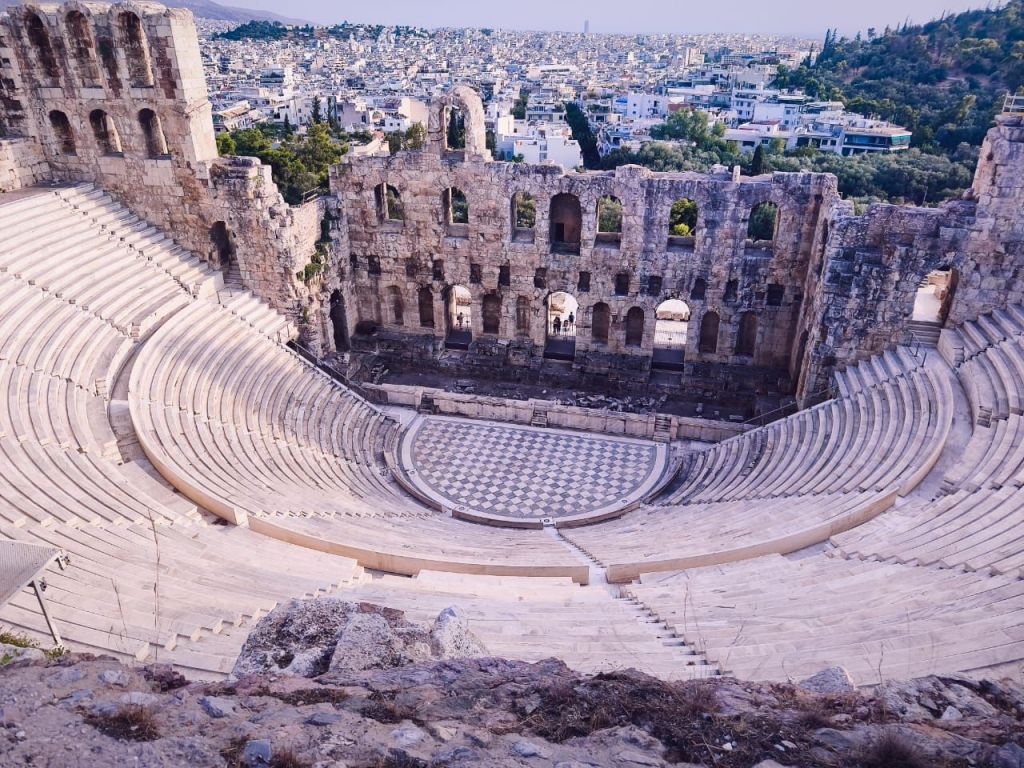
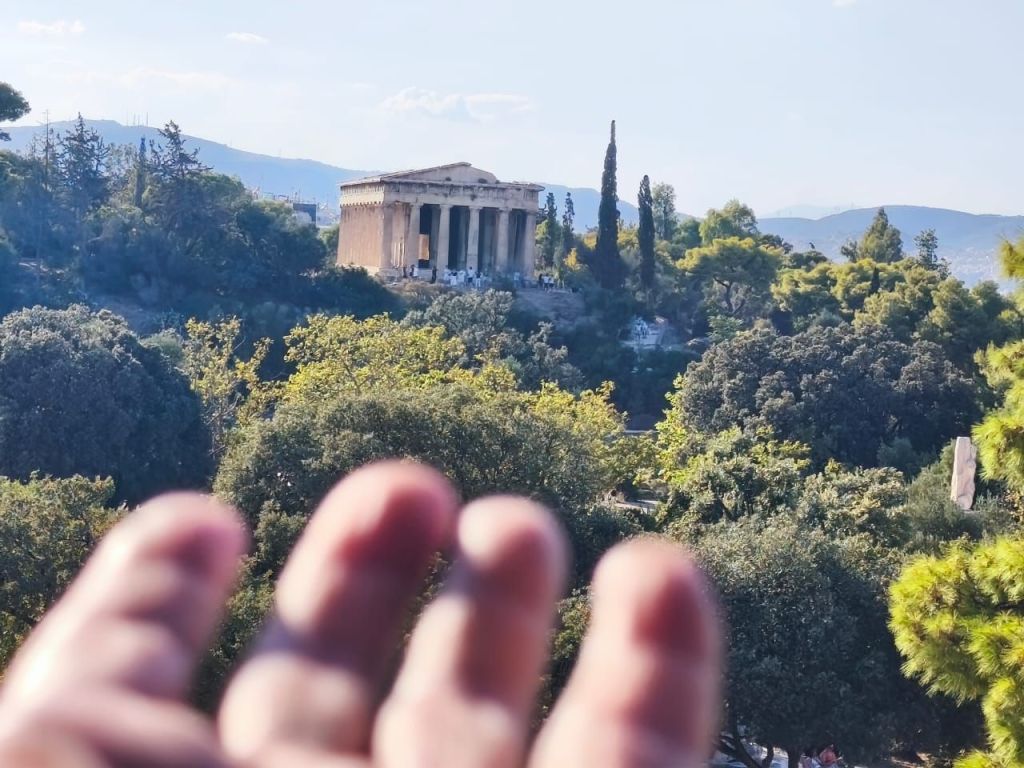
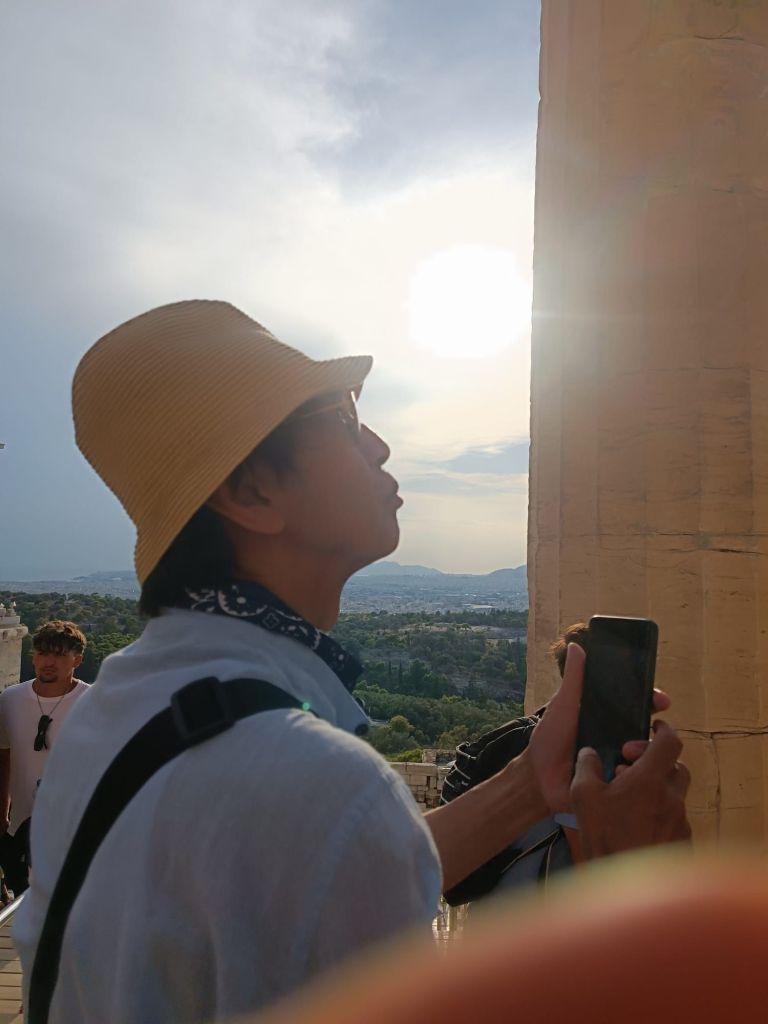
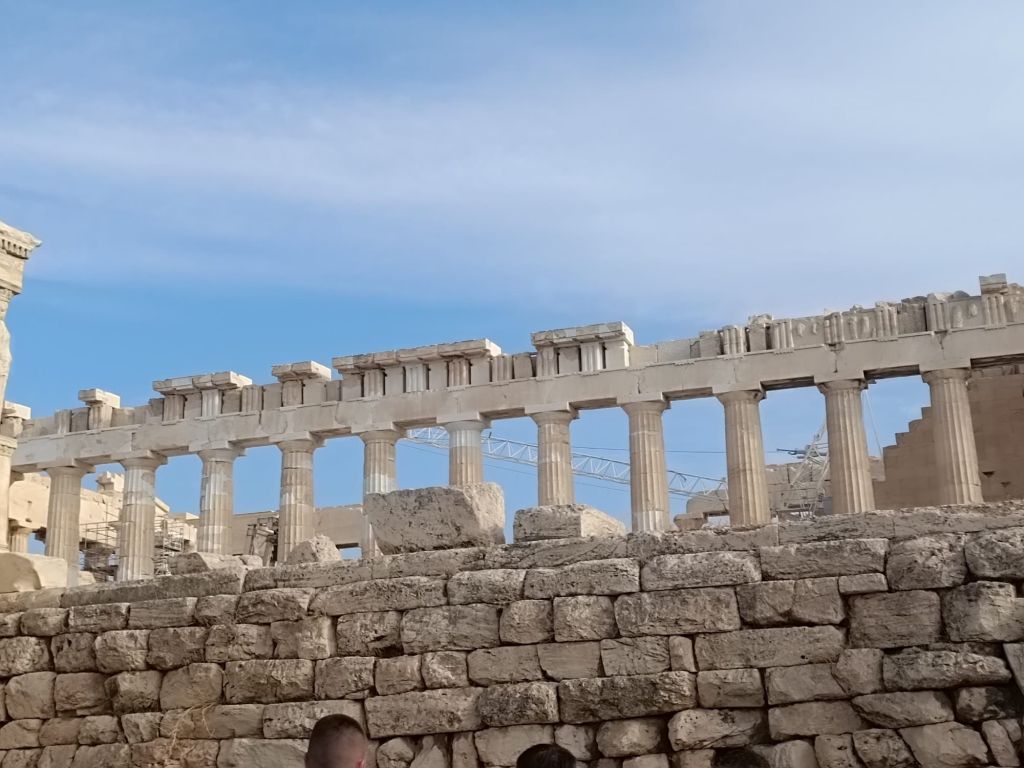
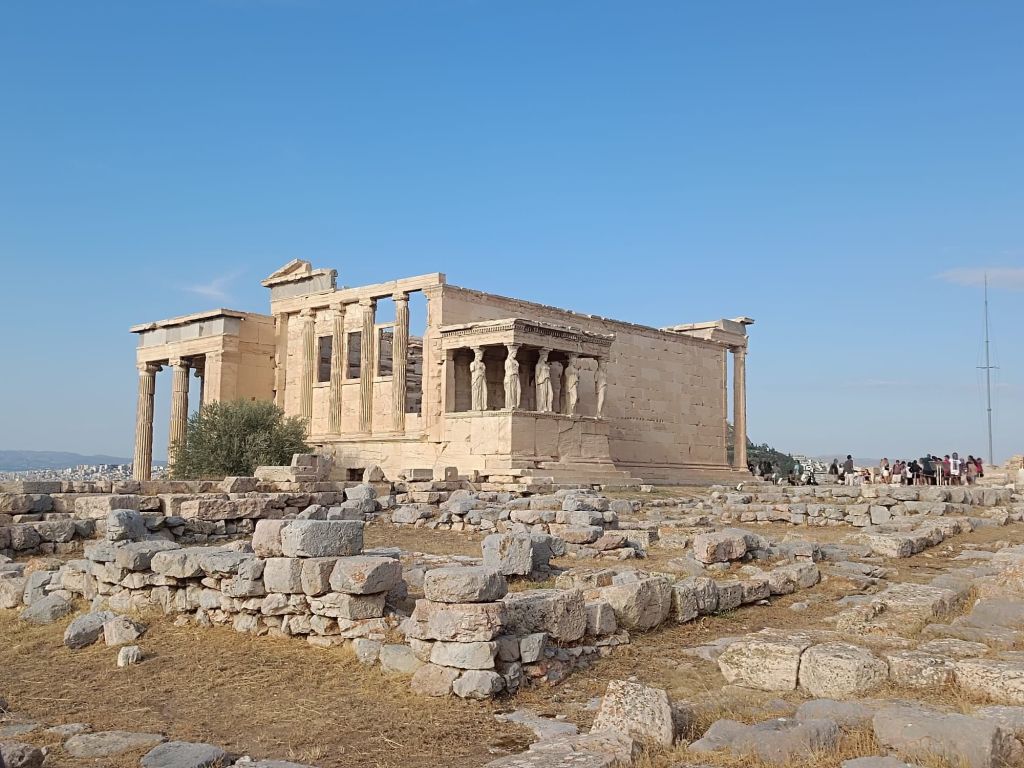
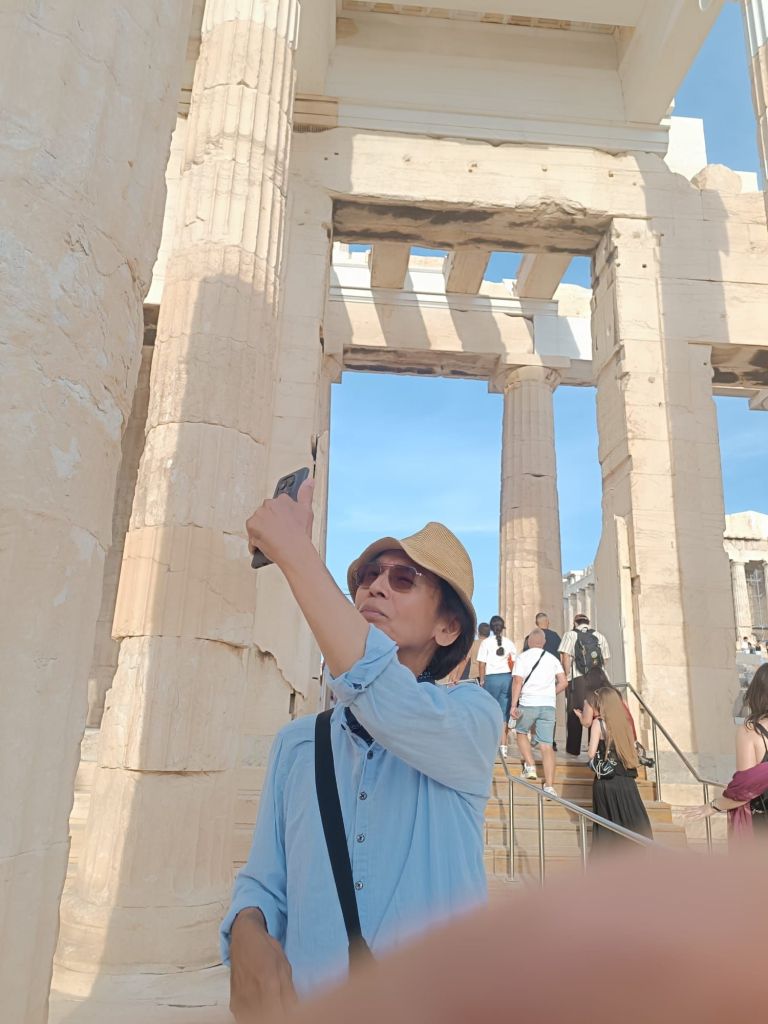
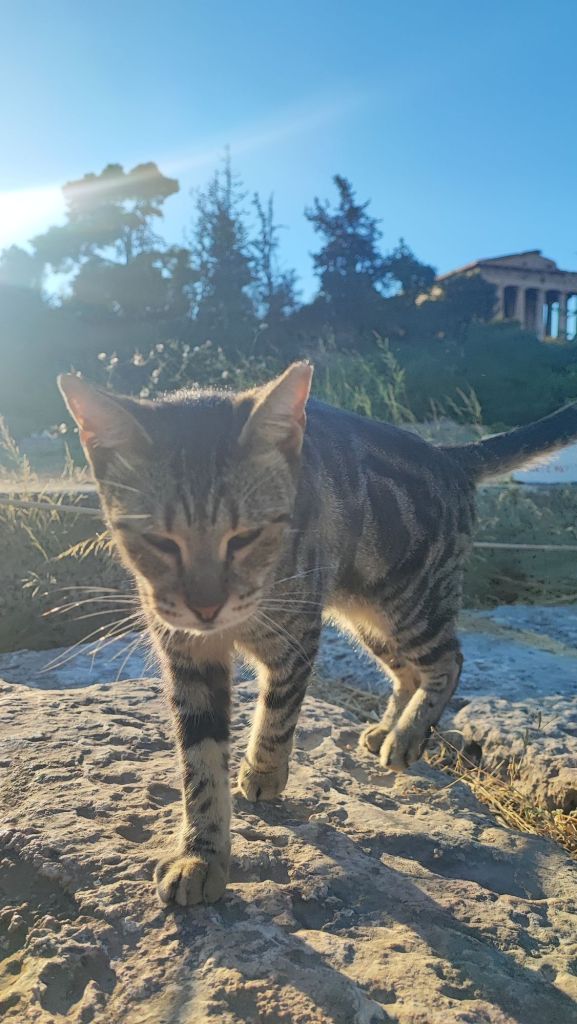
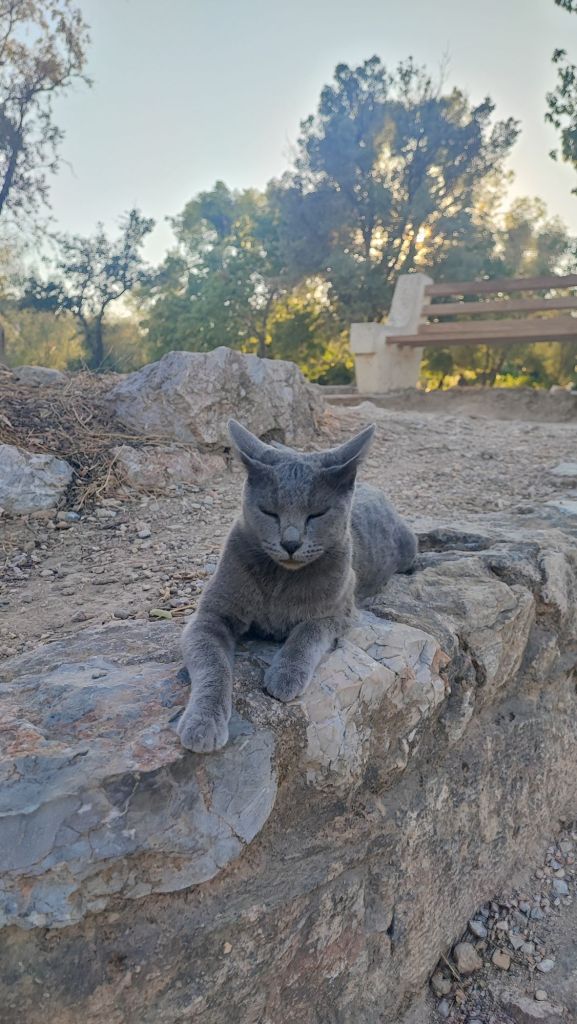
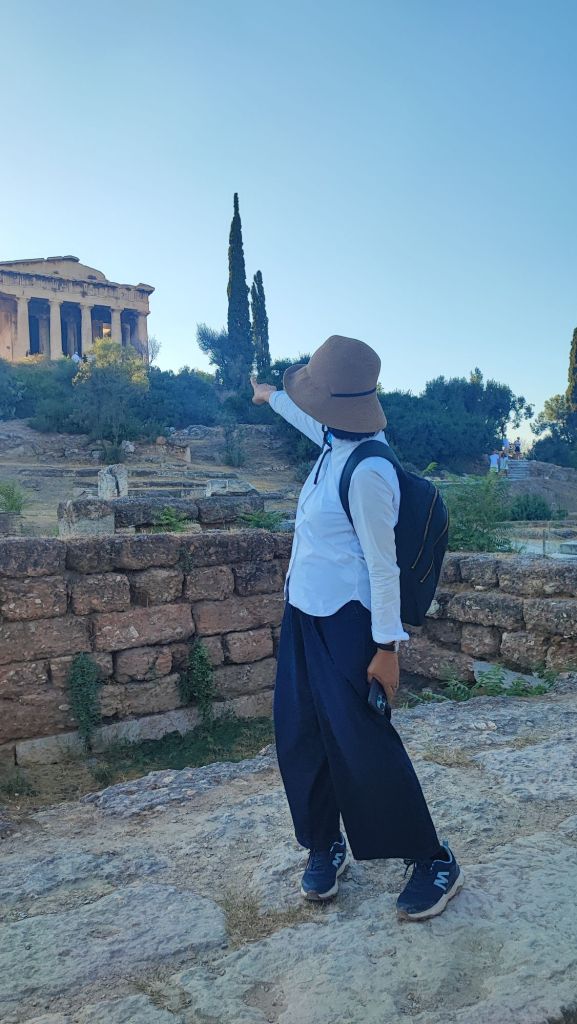
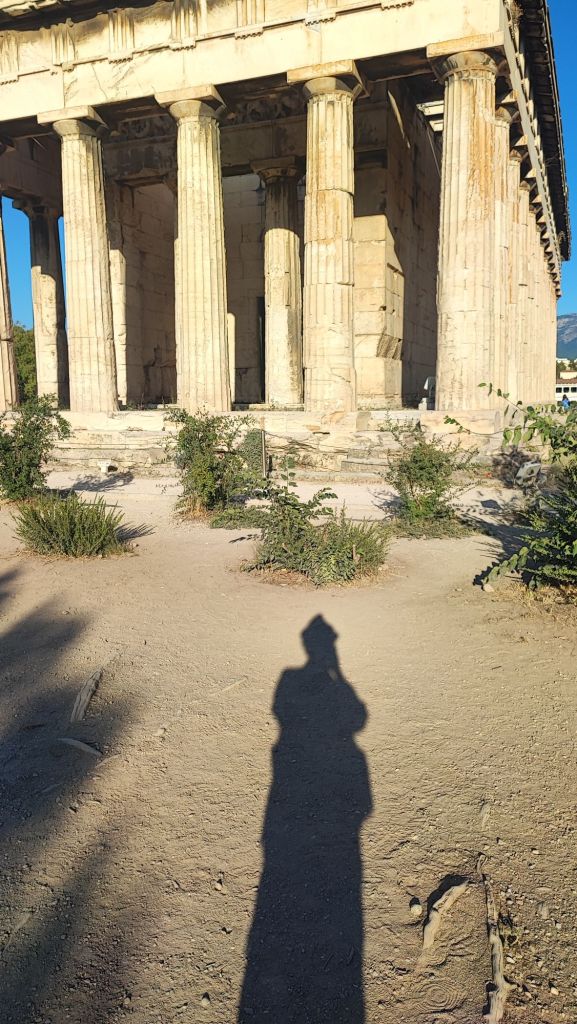
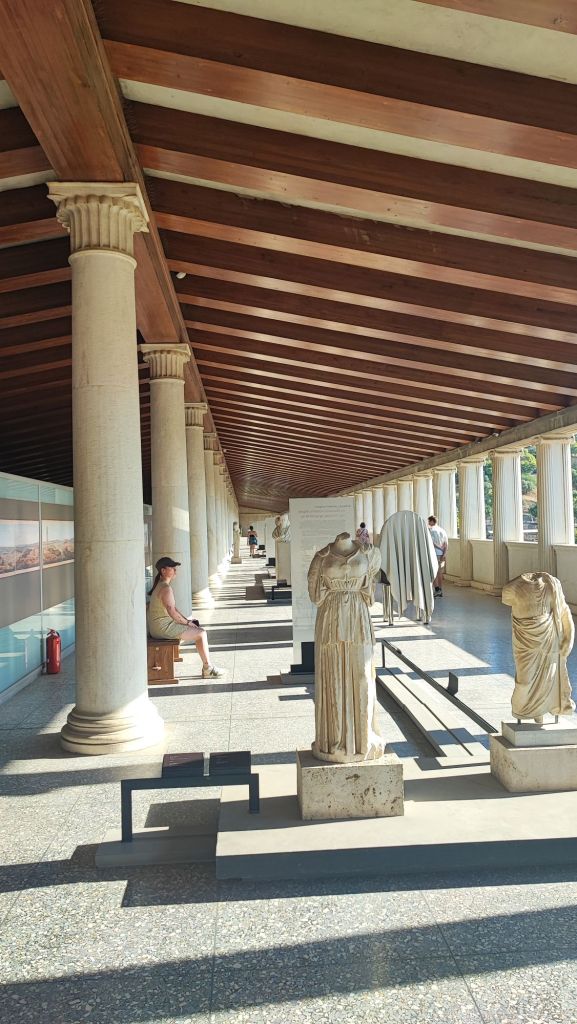
For a month now I have been living in Athens.
At first, I thought I had come to Greece as a visitor—to see its ancient monuments, walk through its streets, visit its museums, sit in its cafés, listen to its music, and perhaps touch, however briefly, the enormous historical presence of this country.
But something unexpected happened.
The longer I remained here, the less I felt that I was merely looking at Greece.
I began to feel that I was somehow inside it.
Inside its landscape.
Inside its mythology.
Inside its questions.
Inside its memory.
And gradually another thought came to me:
Perhaps I am not simply walking through Athens. Perhaps, in some strange way, I am walking through the mind of Athens.
Before philosophy, there was the landscape
Every civilization begins somewhere before it begins to speak about itself.
Before there was philosophy, there was nature.
-And There Was The Sea-
There were mountains rising abruptly from the earth. There was the sea surrounding the islands. There were olive trees, dry hillsides, limestone, sunlight, wind, storms, drought and the relentless Mediterranean summer. There were fertile valleys beside barren mountains, caves, springs, forests and coastlines opening toward distant horizons.
The Greek world was never simply a piece of land. It was a landscape broken into thousands of relationships between mountain and valley, island and mainland, village and sea.
The environment presented human beings with a fundamental condition:
You must learn to live between forces.
Perhaps this is one of the deepest keys to understanding the Greek imagination.
Human beings were never alone in the world. They existed between earth and sky, mortal and divine, order and chaos, reason and passion, fate and freedom, beauty and destruction.
Long before philosophers formulated these oppositions intellectually, human beings had already experienced them bodily.
And this is where I find an unexpected connection with martial arts.
A martial artist also begins not with philosophy, but with the body.
Before I understand balance intellectually, I must experience it through my feet.
Before I understand harmony, I must feel it in movement.
Before I understand tension and relaxation, I must encounter them in my muscles and breathing.
Before I understand the relationship between opposing forces, I must experience pushing and yielding, advancing and retreating, contraction and expansion.
The body knows things before the intellect gives them names.
-From Myth To Meaning-
Perhaps the ancient Greeks knew something similar.
Long before Socrates stood in Athens asking uncomfortable questions, the Greek world had already been telling stories.
The myths were not merely primitive explanations of nature. They were imaginative maps of existence.
Zeus, Athena, Apollo, Dionysus, Aphrodite, Ares, Hermes, Artemis, Demeter, Persephone and the countless figures of Greek mythology were ways of giving form to forces within nature and within the human psyche.
The gods behaved like gods—but they also behaved remarkably like human beings.
They desired.
They competed.
They loved.
They became jealous.
They fought.
They deceived.
They suffered.
They sought power.
They made mistakes.
The mythology therefore became a vast mirror in which the Greeks could contemplate themselves.
And perhaps this is why Greek mythology continues to speak to us.
The gods are not simply out there.
They are also within us.
Athena can become the archetype of intelligence and strategic wisdom. Ares can represent the raw impulse toward aggression. Apollo can embody order, proportion and clarity. Dionysus can represent ecstasy, dissolution and the liberation of instinct.
The ancient Greeks were, in a sense, already exploring the architecture of the human psyche through myth.
And when I look at this through my own martial-arts experience, I recognize something familiar.
Every martial artist eventually discovers that the real opponent is not necessarily the person standing in front of him.
It is also fear.
Anger.
Ego.
Impatience.
Vanity.
Insecurity.
The desire to dominate.
The inability to yield.
The inability to remain calm.
The ancient heroic journey and the martial-arts journey therefore meet at an unexpected place:
the battlefield is ultimately within the self.
-Homer: Humanity Before Philosophy-
Then came Homer—or rather, the Homeric tradition—and with it the great heroic imagination of the Iliad and the Odyssey.
Here we encounter human beings who are neither saints nor philosophers.
They are warriors.
They desire glory, yet they suffer.
They possess courage, yet they experience fear.
They love their families, yet they kill.
They seek honor, yet they are driven by pride.
Achilles is magnificent precisely because he is contradictory.
And perhaps this is another reason why the Greek tradition feels so familiar to me as a martial artist.
The martial arts are also filled with paradox.
The practitioner learns to become strong without becoming brutal.
To develop power without becoming intoxicated by power.
To acquire the ability to fight while cultivating the desire not to fight unnecessarily.
To become capable of violence while learning restraint.
The highest form of martial skill is therefore not aggression.
It is controlled potential.
The sword that remains in its sheath because the warrior possesses the discipline not to draw it is, in a deeper sense, more powerful than the sword constantly being swung.
This reminds me of one of the deepest principles I have encountered through decades of Karate, Tai Chi, Qi Gong and Kobudo:
strength without wisdom is dangerous; wisdom without embodied strength can remain merely theoretical.
The two must meet.
-The Greek Discovery Of The Examined Life-
And then, eventually, something extraordinary happened.
The stories began to turn into questions.
The gods were no longer enough.
The Greeks began asking:
What is reality?
What is justice?
What is virtue?
What is beauty?
What is knowledge?
What is the good life?
What is the nature of the soul?
What is the relationship between appearance and reality?
What does it mean to be human?
And then we encounter Socrates.
Socrates did not simply give answers.
He questioned.
He walked through Athens speaking with people, challenging assumptions, exposing contradictions and turning ordinary conversation into philosophical investigation.
His great revolution was perhaps this:
human beings must examine themselves.
The famous injunction associated with Socratic philosophy—know yourself—could almost be placed above the entrance of a Martial-Arts Dojo.
Because what is martial-arts training ultimately asking?
Who are you when you are afraid?
Who are you when you are tired?
Who are you when you lose?
Who are you when, as a Sensei, your students humiliate you?
Who are you when you possess power over another person?
Who are you when nobody is watching?
These are philosophical questions disguised as physical training.
– Plato: The World Behind Appearances-
With Plato, the Greek inquiry moved still deeper.
The visible world became a doorway toward another question:
Is what we see all that there is?
Plato’s world of Forms proposed that behind the changing appearances of things there are deeper realities toward which our imperfect perceptions point.
Whether one accepts Plato’s metaphysics literally or not, the question remains profound.
The martial artist encounters a similar distinction.
A technique can be copied externally.
Two people can perform the same movement.
Their bodies may appear to be doing the same thing.
But something invisible may be completely different.
One person performs the movement mechanically.
Another embodies it.
One has memorized the form.
Another understands the principle.
One moves the body.
Another moves from the center.
This distinction between appearance and essence is one of the great themes of both philosophy and martial arts.
The form is visible.
The principle is invisible.
-Aristotle And The Wisdom Of Practice –
Then there is Aristotle, whose thinking feels particularly close to the martial artist because Aristotle was deeply interested in how human beings actually develop excellence.
Virtue is not simply something one knows.
It is something one practices.
We become courageous through courageous action.
We become disciplined through disciplined action.
We develop good judgment through repeatedly exercising judgment.
In other words:
character is trained.
This is profoundly compatible with martial-arts philosophy.
A black belt is not simply somebody who has learned a collection of techniques.
The belt is supposed to represent years of repetition, correction, failure, perseverance and transformation.
The body becomes a kind of archive.
It remembers what the conscious mind has forgotten.
Thousands of repetitions gradually transform an intellectual instruction into embodied knowledge.
This is why the dojo can become a philosophical laboratory.
One does not merely think about patience.
One practices it.
One does not merely discuss balance.
One loses balance and learns to recover it.
One does not merely talk about humility.
One gets corrected by a teacher.
One does not merely speak about overcoming fear.
One steps forward despite it.
Philosophy becomes flesh.
Indeed, excellence is not an act but a habit.
-Pythagoras And The Hidden Music Of Existence –
And then there is Pythagoras.
The Pythagorean vision fascinates me because it sees mathematical proportion and harmony as something fundamental to reality.
Here another bridge appears—this time through music!
As a guitarist who loves blues and jazz and every style in between, I have experienced how something apparently spontaneous can nevertheless contain an invisible architecture.
A great improviser does not simply produce random notes.
He listens.
He responds.
He anticipates.
He leaves space.
He resolves tension.
He creates tension.
He returns to rhythm.
He departs from rhythm.
He discovers freedom within structure.
Tai Chi feels similar.
The movement appears effortless, but beneath that apparent simplicity exists an intricate relationship between weight, gravity, breathing, timing, relaxation, intention and structural alignment.
Perhaps this is one reason the ancient Greek idea of kosmos is so evocative.
The cosmos is not merely everything that exists.
It carries the suggestion of order, arrangement and harmony.
The martial artist, the musician and the philosopher therefore meet again:
all three are learning how to discover order within movement.
-The Body As A Temple Of Consciousness-
Walking around Athens, one cannot escape the Greek fascination with the human form.
The sculptures do not merely depict bodies.
They celebrate proportion, movement, posture and potential.
The human being becomes a measure through which the world can be contemplated.
This is especially meaningful to me because my own path has always been fundamentally embodied.
Karate taught me structure and discipline.
Kobudo taught me relationship with an external instrument and the responsibility that accompanies power.
Tai Chi taught me continuity, softness, balance and the possibility that yielding can itself contain strength.
Qi Gong taught me to pay attention to breath, internal sensation and the subtle relationship between body and mind.
These traditions came from another civilization, another geography and another historical experience.
And yet, standing here in Greece, I sometimes feel that they are having a conversation with the ancient Greek world.
Not because Greek and Chinese philosophies are identical—they are certainly not—but because both civilizations understood something that modern life often forgets:
wisdom is not only an idea in the head. It must somehow become a way of inhabiting the body and the world.
– The Warrior And The Philosopher-
Perhaps the deepest connection between Greece and my own path is found in the relationship between the warrior and the philosopher.
Modern people often separate them.
The warrior represents action.
The philosopher represents thought.
But ancient Greece did not always make such a simple division.
The ideal human being was expected to cultivate body, character and intellect.
The gymnasium was not merely a place for physical exercise. It belonged to a larger culture of education and formation.
The Greek concept of paideia involved the cultivation of the whole human being.
And this speaks directly to my understanding of martial arts.
The true martial artist is not merely training to defeat an opponent.
He is training to become a particular kind of human being.
More centered.
More observant.
More disciplined.
More courageous.
More compassionate.
More capable of responding rather than merely reacting.
This is why I have always felt that martial arts, when properly understood, are forms of education.
The body becomes the first teacher.
Experience becomes the second.
The instructor becomes the guide.
And life itself becomes the ultimate dojo.
-Athens As A Living Mandala-
There is another experience I have had during this month.
Athens sometimes feels to me like a gigantic mandala of human consciousness.
At its center stands the Acropolis.
Around it, layers upon layers of civilization have accumulated.
Mycenaean memory.
Archaic Greece.
Classical Athens.
Hellenistic civilization.
Roman rule.
Byzantium.
Orthodox Christianity.
Ottoman history.
The modern Greek state.
And today’s enormous, noisy, contradictory metropolis.
Nothing has completely disappeared.
The ancient and the modern coexist.
A fragment of marble may sit beside a modern apartment building.
An ancient column may rise behind traffic.
A Byzantine church may stand only a short distance from a classical temple.
A philosopher’s question may still be alive beneath the noise of contemporary life.
Athens therefore teaches something that martial arts also teach:
the present is never without a past.
Every movement contains previous movements.
Every posture is the result of countless adjustments.
Every mature practitioner carries his earlier mistakes inside his present skill.
Civilizations are similar.
They do not simply replace one another.
They accumulate.
They transform.
They reinterpret.
They remember.
-The Greek Gift Was Not Perfection-
Yet perhaps we should not romanticize Greece.
The ancient Greek world was filled with slavery, warfare, inequality, political conflict, misogyny and cruelty.
The civilization that produced democracy did not extend democratic equality to everyone.
The civilization that celebrated beauty also knew violence.
The civilization that produced philosophy was capable of war.
And perhaps this makes the Greek legacy even more valuable.
It was not created by perfect people.
It was created by human beings struggling with contradiction.
And this is precisely what makes the Greek inheritance alive.
Greece does not tell us:
“Here is the perfect human being.”
It asks:
“What kind of human being might you become?”
That is a much more powerful question.
-The Greek Lesson And The Martial Way-
After decades of martial-arts practice, I have come to believe that the deepest martial art is not about winning against an opponent.
It is about integration.
The shadow and the self.
The hard and the soft.
The masculine and the feminine.
The active and the receptive.
The conscious and the unconscious.
Strength and gentleness.
Discipline and spontaneity.
Form and freedom.
Silence and expression.
This is why the Greek experience has touched me so deeply.
Here, too, I encounter a civilization constantly negotiating opposites.
Apollo and Dionysus.
Reason and myth.
Athens and Sparta.
Tragedy and comedy.
War and peace.
Body and soul.
Individual and polis.
Human limitation and the aspiration toward excellence.
Perhaps wisdom does not consist in choosing one side.
Perhaps wisdom lies in learning how the opposites can enter into relationship.
That is also the essence of Yin and Yang.
Not the destruction of opposites, but their dynamic interdependence.
And so my encounter with Greece has become, unexpectedly, another stage of my own martial journey.
I did not come to Greece only to study the past
I came here as a traveler.
But somewhere along the way, I became a student.
Not a student sitting in a classroom.
A student walking.
Looking.
Listening.
Breathing.
Touching ancient stones.
Watching the light change over the Acropolis.
Hearing Greek voices and music in the streets.
Walking past statues of gods whose names I learned decades ago.
Sitting in cafés beneath buildings that contain layers of history.
And suddenly realizing that history is not really dead.
It lives inside the questions we continue to ask.
Perhaps this is what it means to enter the mind of a civilization.
Not to memorize its dates.
Not simply to admire its monuments.
But to begin asking some of the questions that its people once asked.
What is beauty?
What is truth?
What is courage?
What is justice?
What is the good life?
What is the relationship between fate and freedom?
What does it mean to know oneself?
And perhaps, finally:
What does it mean to become fully human?
– Returning To The Beginning-
I began with the landscape.
And perhaps I should end there.
Because after all the temples, philosophers, myths, wars, poems and theories, the mountains are still here.
The sea is still here.
The olive trees are still here.
The sunlight still falls upon the stones.
The wind still moves through the same Mediterranean landscape that countless generations once looked upon.
Nature remains.
Human beings come and go.
Civilizations rise and fall.
Ideas are born, flourish and disappear.
But something continues.
Perhaps this is the deepest lesson of all.
– The Greeks Did Not Create Their Civilization Out Of Nothing.-
They listened to the world.
They looked at nature.
They experienced beauty and terror.
They confronted death.
They struggled with one another.
They imagined gods.
They invented stories.
They questioned those stories.
They turned toward reason.
They cultivated the body.
They composed music.
They built temples.
They created drama.
They argued in the marketplace.
They trained athletes.
They fought wars.
They contemplated the stars.
And slowly, through generations of human experience, they created one of the great conversations in human history.
I feel privileged, after so many years of walking my own path through martial arts, philosophy, music and life, to have been able to step into that conversation.
For a month, Athens has not simply been a place I visited.
It has become something more intimate.
A mirror.
A teacher.
A landscape of memory.
A philosophical dojo.
And perhaps that is why I feel such a strange familiarity here.
Because the journey of Athens and the journey of the martial artist ultimately ask the same question:
How can a human being transform experience into wisdom?
The Greeks answered through myth, philosophy, art, mathematics, architecture, politics and poetry.
The martial artist answers through discipline, movement, breath, repetition, silence and awareness.
But beneath these different languages there may be one common human aspiration:
to bring the scattered parts of existence into harmony—and, in doing so, to discover who we really are.
——–::——-

