
My Istan Blues
I
I walked where empires left their shadows,
where stone remembers every name.
An oud was crying somewhere in the evening,
and the Bosphorus was playing the same old blues.
II
Greek feet had walked these streets,
Turkish horses had thundered through,
Saints had watched from ancient walls,
and the muezzin called the morning new.
III
Europe and Asia beneath my footsteps,
two faiths speaking in my heart—
and Istanbul whispered softly:
“Nothing beautiful was ever truly apart.”
——————————————
Istanbul — Walking Inside the Mind of a City
A Journal of Reflections Between Continents, Empires and Faiths
There are cities one visits. And there are cities one enters.
Istanbul was the second kind.
During my stay from the middle of July into the middle of August 2026, I gradually discovered that I was not simply traveling through a historical city. I was walking through layers of human memory.
Everywhere I turned, another civilization seemed to be speaking.
The ancient Greek world. Byzantium. Constantinople. Christianity. The Turkic peoples of Central Asia and Anatolia. The rise of Osman and the Ottoman dynasty. Islam. The great sultans. The architects, musicians, craftsmen, merchants and ordinary people who transformed the city into something neither entirely East nor entirely West.
And beneath all these great names and empires were people whose names history never recorded—fishermen, farmers, craftsmen, traders and families who had lived around these waters thousands of years before today’s Istanbul had acquired its many names.
Perhaps this is what fascinated me most.
History was not dead here. It was layered.
And somehow, the layers had remained visible.
Day One — Entering the City
My first impressions of Istanbul were not those of a historian.
They were those of a walker.
I wanted to feel the city before trying to understand it.
I walked. I watched. I listened. And walked again.
I smelled the food coming from small restaurants and kebab stands. I watched people moving through narrow streets and crowded squares. I saw cafés filled with conversations, merchants calling to customers, tourists carrying cameras, elderly men sitting together, young people passing quickly through the streets.
And above all of this was the peculiar atmosphere of Istanbul—a city that seemed simultaneously ancient and completely alive.
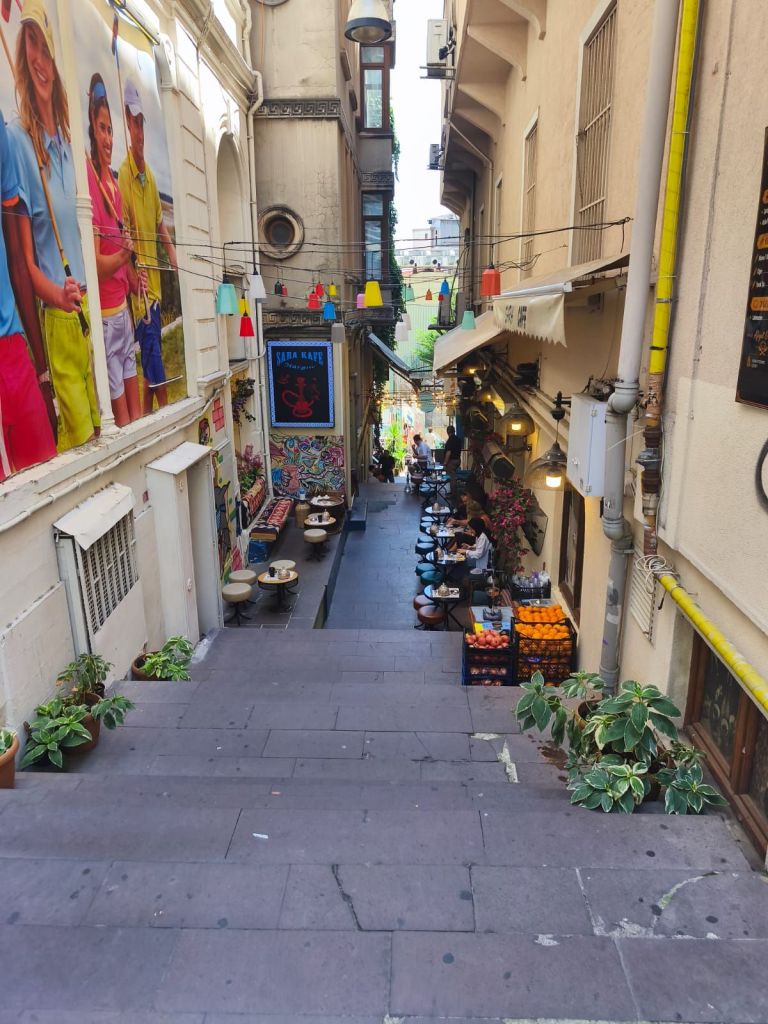
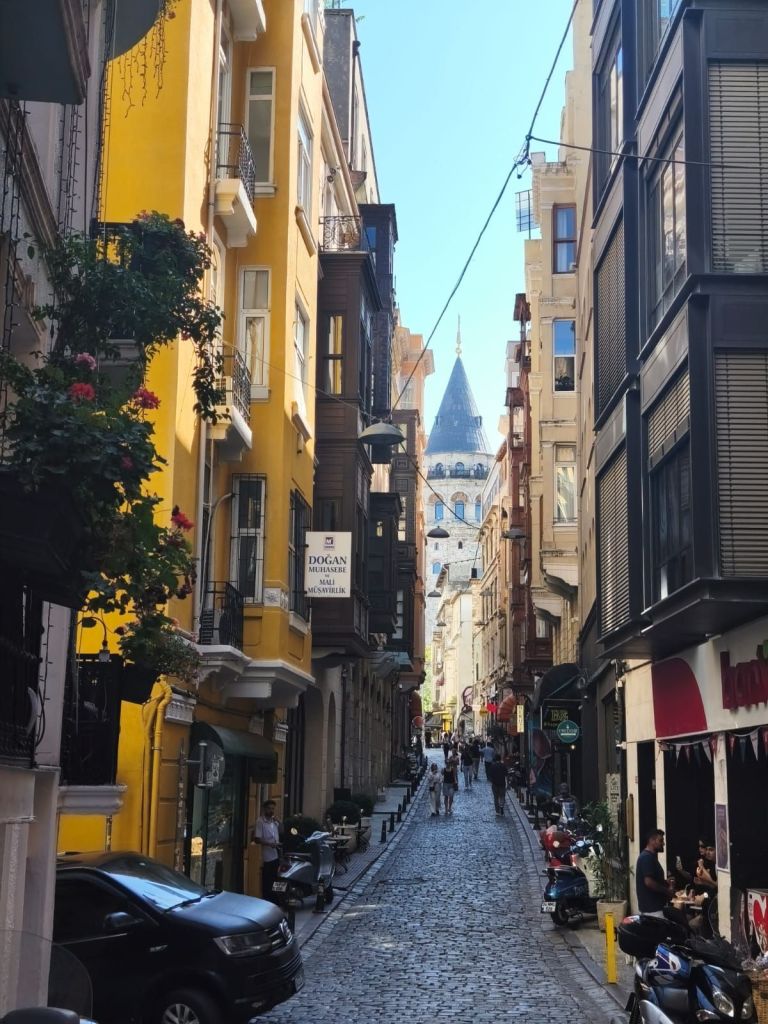
Taksim Square and Istiklal Caddesi, a street that never sleeps, became part of my daily geography.
The great avenue was busy, sometimes overwhelmingly so, yet there was something warm and human about it. Behind the major streets were smaller alleys, cafés and restaurants tucked into old buildings, little shops and passages where the enormous historical city suddenly became intimate.
I began to understand something:
A city is not only its monuments.
A city is also the ordinary life happening between them.
Day Two — The City Beneath the City
The more I learned about Istanbul, the more I realized that its Ottoman identity was only one chapter.
Before the Turks, there was Byzantium.
Before Constantinople became Constantinople, there was the Greek settlement associated with King Byzas.
And before the great Greek city, there were much older human communities living from the land and the surrounding waters.
The Bosphorus itself must have attracted human beings for thousands of years.
Fishing. Farming.Trade. Migration.
The movement of peoples, ideas, gods, armies, languages…
I began to imagine Istanbul not as a city built once, but as a human palimpsest—one civilization writing upon another while never completely erasing what came before.
Perhaps this is why walking through Istanbul felt different from walking through an ordinary modern city.
The ground itself seemed to remember.
Day Three — Discovering the Turks
My historical curiosity carried me backward into the story of the Turkic peoples.
I found myself following a long and complicated movement—from the early Turkic tribal worlds through Central Asia and Anatolia, eventually toward the emergence of Osman and the Ottoman state.
At first I had thought of the Ottoman Empire almost as something that suddenly appeared in history.
But history rarely happens that way.
Empires have childhoods.
They have ancestors.
They inherit languages, military traditions, religious ideas, artistic forms and political institutions.
Osman’s small principality eventually developed into something immense.
The Ottoman Empire would become one of the great imperial formations of world history.
But standing in Istanbul, I became less interested in the empire as an abstract political structure.
I became interested in the human beings who built it:
Warriors.
Sultans.
Scholars.
Architects.
Calligraphers.
Musicians.
Craftsmen.
Farmers.
Merchants.
And millions of ordinary people whose lives created the civilization we now call Ottoman.
Day Seven — The Sound of the Oud
Then Istanbul began speaking to me through music.
The oud.
I had heard the instrument before, but hearing it in Istanbul was different.
Its sound seemed to contain something ancient.
Its voice was intimate rather than monumental. It did not seem to announce itself.
It seemed to remember.
There was something bluesy in it.
That surprised me.
As a blues guitar player, I am accustomed to the sound of an instrument carrying human emotion through a few simple notes. The blues does not need many notes.
Neither did the oud.
Its melancholy seemed to belong to no single nation.
It was the melancholy of humanity.
Perhaps this is why it touched something in me.
The oud seemed to say:
We have all lost something.
We have all searched for something.
We have all loved.
We have all departed.
And suddenly the distance between Istanbul and my own musical world became very small.
The oud and the blues were separated by geography and history.
But emotionally?
They were cousins.
Day Ten — The Mosques
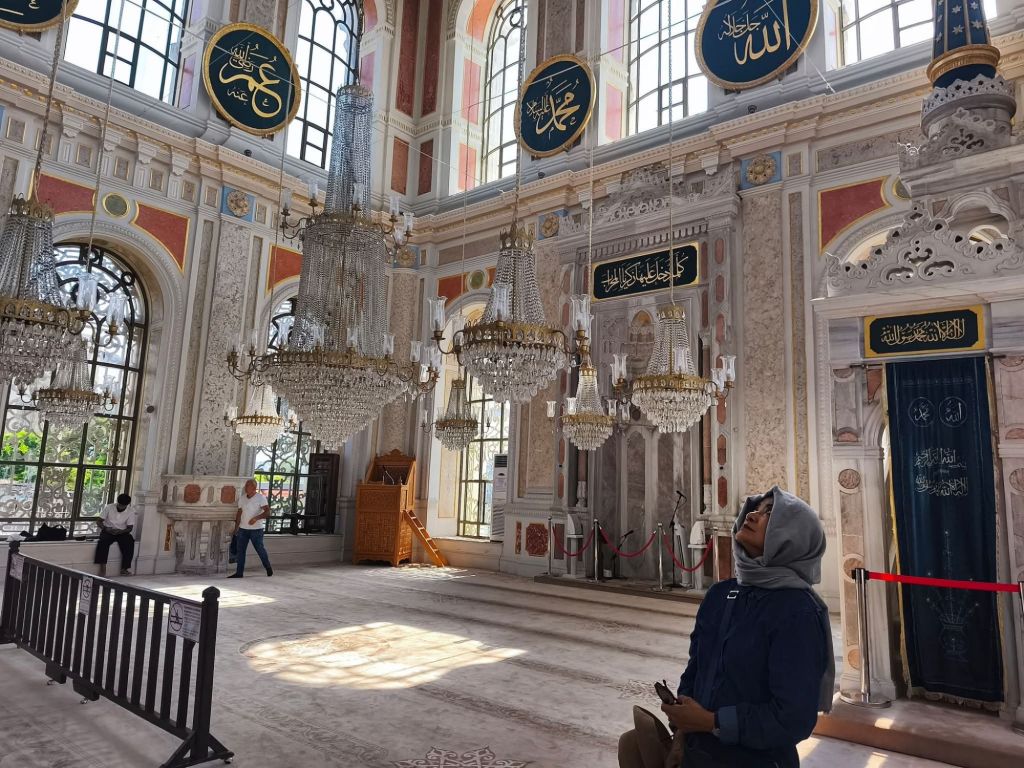
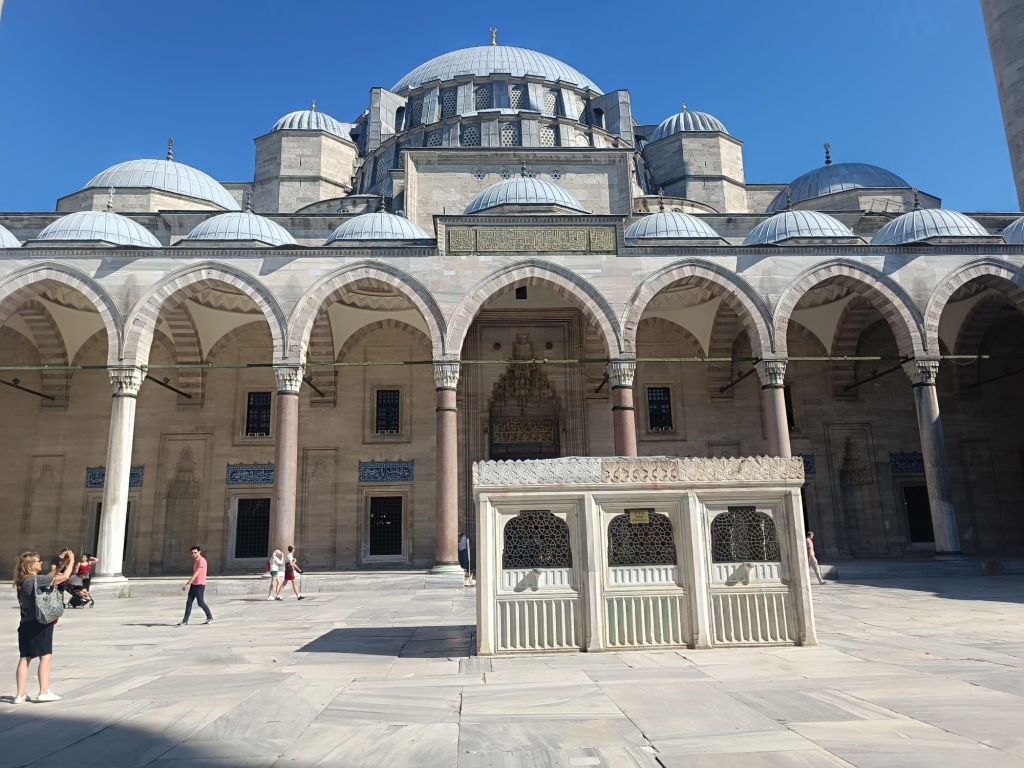
I began entering mosques.
I watched men perform their ritual washing before prayer.
There was something deeply human in the gesture.
Before entering a sacred space, the body is prepared.
The hands.
The face.
The arms.
The feet.
A purification.
A transition.
The ordinary world is left outside.
Inside, another order begins.
As a practitioner of martial arts, I recognized something in this discipline.
The body prepares the mind.
The gesture becomes intentional.
Repetition becomes consciousness.
And consciousness transforms ordinary movement into something almost sacred.
I did not enter these mosques as a Muslim.
I entered them as a human being searching for beauty and understanding.
And something unexpected happened.
Islam and Christianity began speaking to one another inside me.
Not as competing systems.
But as two great streams of human spiritual experience.
I thought of churches I had entered.
I thought of Christian prayer.
I thought of Islamic prayer.
Different forms.
Different languages.
Different symbols.
And yet beneath the differences was the same human gesture:
the turning of the human being toward something greater than himself.
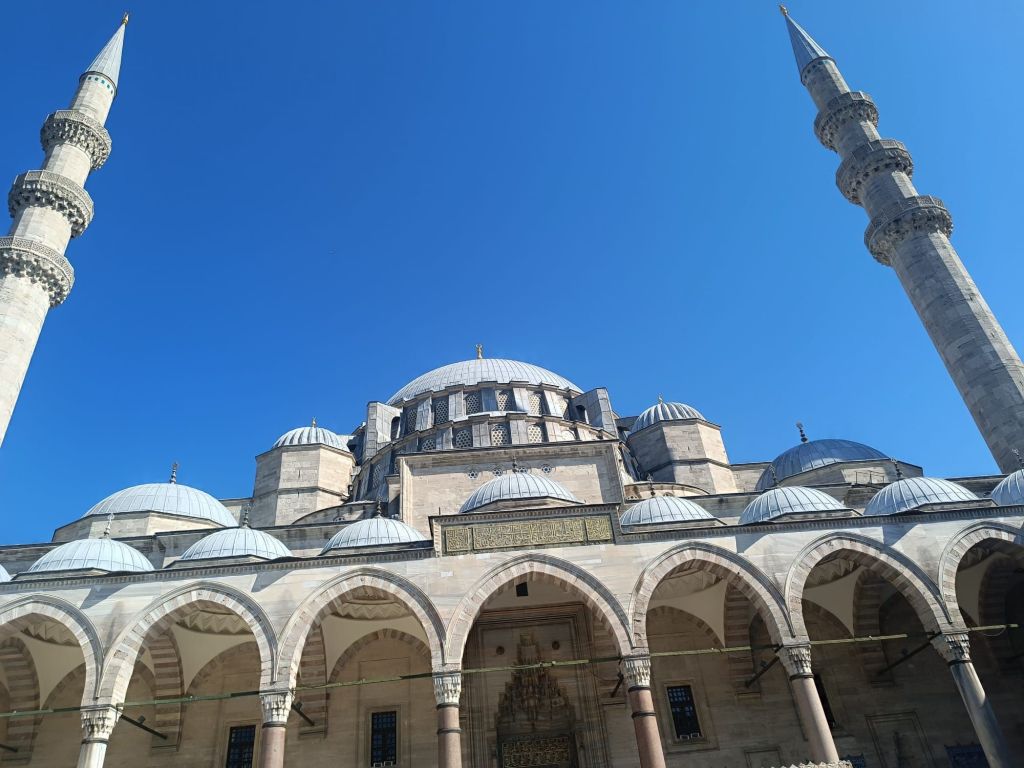
Day Twelve — Mimar Sinan
One of the great discoveries of my Istanbul journey was a man whose name had previously been almost unknown to me:
Mimar Sinan.
The architect.
The master builder.
The man who transformed stone, space, light and proportion into spiritual experience.
I had visited mosques before.
But now I began looking at them differently.
Architecture was no longer simply architecture.
It was philosophy expressed through matter.
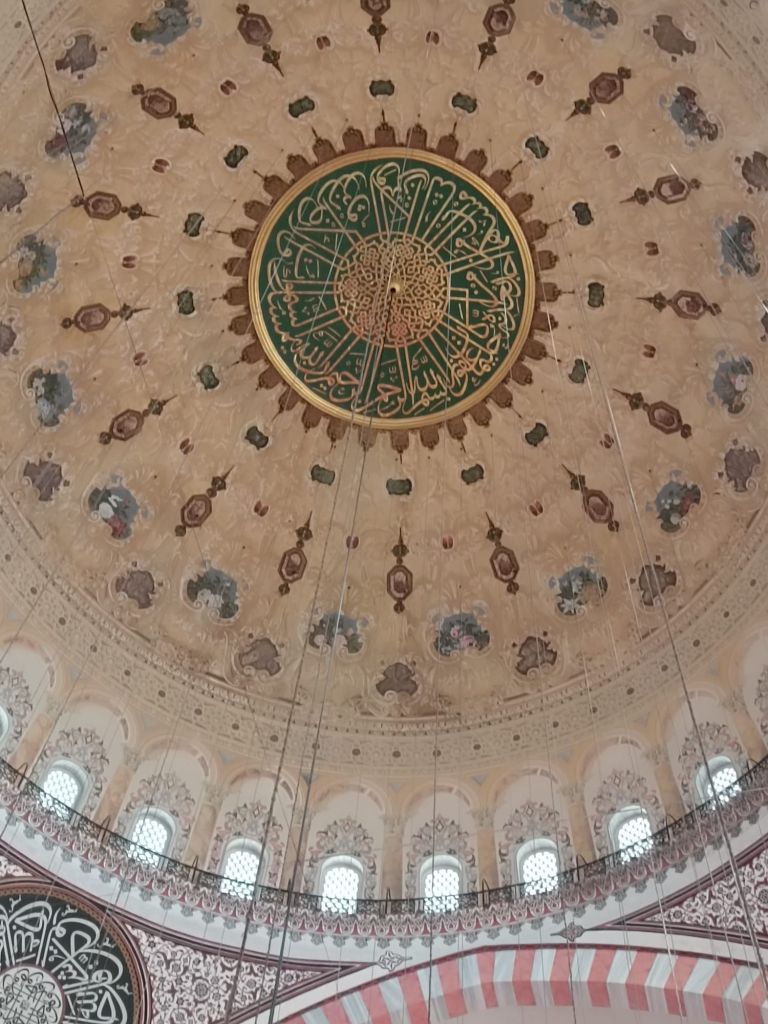
The dome rises.
The human being stands beneath it.
The walls appear to carry the weight of heaven.
Light enters.
Sound travels.
The eye is drawn upward.
And the body suddenly becomes aware of its own smallness.
Yet it is not humiliated.
It is embraced.
This reminded me of something I have experienced in martial arts.
A great master does not make you feel insignificant.
He makes you aware of possibilities within yourself that you had not previously seen.
Perhaps great architecture does something similar.
It enlarges the human being by placing him within something greater.
Day Fifteen — Hagia Sophia
And then came Hagia Sophia.
There are historical buildings that one studies.
And there are buildings that one experiences.
Hagia Sophia was the second kind.
When I entered, I had the strange sensation that I was entering not merely a building but a memory.
The stones beneath my feet had been touched by countless feet.
The walls had been looked upon by countless eyes.
Generations had stood beneath that enormous dome.
Emperors.
Priests.
Worshippers.
Soldiers.
Sultans.
Travelers.
Muslims.
Christians.
And countless ordinary men and women.
The building had witnessed them all.
Here was Christianity.
Here was Byzantium.
Here was Constantinople.
Here was Islam.
Here was the Ottoman world.
Here was modern Turkey.
One building.
Many histories.
Many meanings.
And suddenly my earlier idea returned to me:
I was inside the mind of Istanbul.
The building seemed to contain contradiction without needing to resolve it.
Christian mosaics and Islamic calligraphy.
Crosses and crescents.
Byzantine forms and Ottoman additions.
Ancient stones and modern visitors.
Light and shadow.
Silence and remembered music.
Instead of asking which layer was the “real” Hagia Sophia, I began asking a different question:
Could all these layers be part of its reality?
Perhaps they could.
Perhaps that is the deeper lesson of civilization.
We are not made only from what we create.
We are also made from what we inherit.
Day Eighteen — Across the Bosphorus
Several times I crossed the Bosphorus by ship.
And from the water, Istanbul changed again.
The city seemed to reveal itself from another dimension.
From the ship I could see the city stretched along two continents.
Europe behind me.
Asia before me.
And the water between them.
I found that image almost irresistible.
Two worlds separated by water.
And yet connected by the same city.
I visited the eastern side, its markets, streets and mosques.
Again I encountered the rituals of purification before prayer.
Again I entered sacred spaces.
Again I felt that strange inner dialogue between Christianity and Islam.
But now I began to understand that the Bosphorus itself could be read as a metaphor.
A boundary.
But also a bridge.
A separation.
But also a connection.
Perhaps human beings have always made the mistake of seeing boundaries only as divisions.
Sometimes a boundary is precisely where two worlds meet.
Day Twenty-One — The Peaceful Warrior Walks
Walking through Istanbul, I could not leave my martial-arts self behind.
A martial artist sees differently.
One observes posture.
Movement.
Balance.
Rhythm.
Space.
Breathing.
Stillness.
Even a crowded street becomes a kind of choreography.
People move around one another.
They stop.
They turn.
They accelerate.
They avoid collisions.
They occupy space.
And in the mosques, the body becomes even more conscious of movement.
Standing.
Bowing.
Kneeling.
Prostrating.
Rising.
The sequence is physical, but it carries spiritual meaning.
This reminded me of Tai Chi and Qi Gong.
The body can become a doorway to the mind.
Movement can become meditation.
Breathing can become prayer.
Discipline can become a path toward inner freedom.
I began to wonder whether different civilizations had discovered variations of the same human truth:
The body is not merely something we possess.
It is something through which we experience the world.
Day Twenty-Four — The Search for Beauty
I have always considered myself a searcher of Beauty and Harmony.
Perhaps this explains why Istanbul affected me so deeply.
I did not want to judge everything according to categories of East and West, Christian and Muslim, ancient and modern, Greek and Turkish.
I wanted to see how the contrasts could belong to a larger harmony.
This does not mean that the differences disappear.
They remain.
History contains conflict.
Religions have disagreed.
Empires have conquered one another.
Cities have been destroyed and rebuilt.
People have suffered.
We should not romanticize history.
But neither should we allow conflict to become the only lens through which we see civilization.
Because civilization also means transmission.
One people inherits something from another.
A form of architecture travels.
A musical instrument crosses borders.
A word enters another language.
A religious symbol is reinterpreted.
A mathematical idea travels from one civilization to another.
A cooking tradition becomes something new.
Humanity is constantly borrowing from itself.
Day Twenty-Seven — The City at Night
There were evenings when I simply walked without purpose.
Istiklal Caddesi remained alive.
Cafés.
Restaurants.
Music.
Conversations.
The smell of Kebab Döner.
The movement of people.
The lights.
An old Byzantine chapel standing under a new building.
Sometimes I would stop and simply watch.
That may be one of the greatest pleasures of travel:
to have nowhere you need to be.
You become a witness.
And gradually the city begins revealing itself.
Not through monuments.
Through familiar details.
A waiter carrying coffee.
An old man sitting quietly.
A young couple walking together.
A musician playing somewhere in the distance.
A stranger smiling.
A mosque appearing between buildings.
The call to prayer moving through the evening air.
And somewhere, perhaps, an oud.
The city became less like a museum and more like a living organism.
Day Thirty — Leaving Istanbul
After a month, I realized that I had not succeeded in “understanding” Istanbul.
The”Istan Blues” in me couldn’t grasp it.
Perhaps nobody can.
A city with thousands of years of human memory cannot be completely understood in a month.
But perhaps understanding was never the real purpose.
Perhaps the purpose was to listen.
I came to Istanbul expecting to discover its history.
Instead, I discovered something about myself.
I discovered how deeply music can cross civilizations.
I discovered that architecture can become philosophy.
I discovered that religious differences need not prevent an inner conversation.
I discovered that the body can understand something before the intellect has found the words.
And I discovered once again that walking can be a form of meditation.
Athens had allowed me to walk into the philosophical mind of the ancient world.
Istanbul allowed me to walk into the layered memory of civilizations.
Perhaps that is why Hagia Sophia remains so powerful in my memory.
Standing beneath that enormous dome, I felt that the building was not asking me to choose between its histories.
It was simply showing me that they had all happened.
They had all left their traces.
And those traces had become one building.
One city.
One human story.
The Empty Hand
As I left Istanbul, I thought about something familiar from my own martial-arts journey: Karate Do,The Way of The Empty Hand.
We train for years to acquire knowledge, technique, strength and discipline.
And then, paradoxically, we are asked to let go.
To empty the hand.
To empty the mind.
Perhaps cities teach the same lesson.
We travel believing that we are collecting places.
But eventually we understand that the greatest journeys are not about collecting.
They are about receiving.
I arrived in Istanbul carrying my own history.
My ChristianityMy martial arts. My music.
My memories. My questions.
My ideas about East and West.
And Istanbul placed all of these things into a much larger landscape.
It did not erase them.
It rearranged them.
Like an oud improvising around an old melody.
Like jazz.
Like the blues.
Like Tai Chi.
Like life itself.
The Mind of Istanbul
Perhaps Istanbul is difficult to define precisely because it has never been only one thing.
Greek.
Roman.
Byzantine.
Christian.
Turkic.
Ottoman.
Islamic.
European.
Asian.
Ancient.
Modern.
And yet none of these words alone is sufficient.
Istanbul exists in the space between them.
Between continents.
Between religions.
Between empires.
Between histories.
Between East and West.
Between memory and present experience.
And perhaps this is why I felt so strangely at home while walking through it.
For I, too, have spent much of my life walking between seemingly contrasting worlds:
hard and soft,
Empty hand and armed hand (Kobudo)
Karate and Tai Chi,
Yang and Yin,
discipline and freedom,
body and mind,
science and spirituality,
Christianity and the wisdom of the East,
the warrior and the seeker.
Maybe this is why Istanbul spoke to me.
I was not merely observing its contradictions.
I was recognizing something of my own journey within them.
And so, when I remember Istanbul now, I do not see only the Blue Mosque, Hagia Sophia, Taksim Square, Istiklal Caddesi, the Bosphorus or the mosques on the other shore.
I hear something.
An oud.
A distant call to prayer.
The murmur of a crowded café.
The footsteps of countless generations on ancient stones.
And underneath all of it—
the old, familiar rhythm of the blues.
A rhythm that seems to say:
We come from different shores,
but we are carried by the same river.
That, perhaps, was Istanbul’s deepest lesson to me.
I went there to walk through a city.
I came away feeling that I had walked—
inside the mind of a civilization.
And somewhere along the way,
I also walked a little deeper
inside my own.
Indeed, travel is also a beautiful inward journey….

