Buildings designed with unique character finding market

From Philippine Daily Inquirer

Even when buying a townhouse or residential condominium, customers these days expect so much more from a brand. Chief among these expectations, particularly among high-end buyers, is that spaces have a certain unique character they can relate to or a strong “sense of place,” according to Digno “Ding” Asuncion, who, together with wife Isabel, heads Asuncion-Berenguer Inc. (ABI), a leading architectural and interior design firm.

Thus, when ABI drew plans for a boutique 280-unit town house development by Alveo Land in Pasig City, the firm shied away from safe-and-tested design solutions. It chose a contemporary theme focused on the cubiform for the townhomes. For the centerpiece of the community, the clubhouse, Ding designed an irregular L-shaped layout, with window recesses that play on irregular angles.

“Many people believe symmetry is beauty. In Ametta Place, we wanted to show that asymmetry can also be very attractive,” explains the architect, who, after working with international architectural firms in Hong Kong, set up his own design office doing design work in Guangzhou and Shanghai, and in the colony at the height of the construction boom in the ’90s.

Asymmetry is also very evident in a four-level clubhouse for Solinea Condominium Resort in Cebu, also drawn up by ABI. The clubhouse’s layout and facades likewise shy away from right angles.

The architect who paints abstracts in mixed media and creates metal sculptures to destress observes that more and more upper-end real estate clients are traveling these days and getting exposed to unconventional architecture that make a design statement.

Another ABI project that breaks the monotony of traveling on the North Expressway is an all-white Shell Station Food Hub along North Luzon Expressway, with a roof that seems to form a wave. Inside, the structure breaks away from the standard flat ceiling and follows the curves of the roof, allowing the visitor to experience that strong sense of place consistent with the works of ABI.

States Asuncion, who conceptualized that Shell Station design inspired by a handkerchief waving in the wind: “We want people to stop and think when they see our work. We enjoy deconstructing simple shapes and putting them back together in a unique way.”

To keep his creativity flowing, Ding dabbles in the fine arts. He works with mixed media on canvas and has a marked preference for acrylic and charcoal. His garden in the Quezon City home he shares with Isabel and their three children displays his metal sculptures that he leaves to rust—finding beauty in the oxidation process. Nevertheless, he does not exhibit or sell his works as a rule. The rare owner of three of his paintings is an ex-pat, who bought a Belleview flat in Tagaytay Highlands once owned by the couple. The buyer purchased the place on the condition that Ding’s paintings should be part of the package.

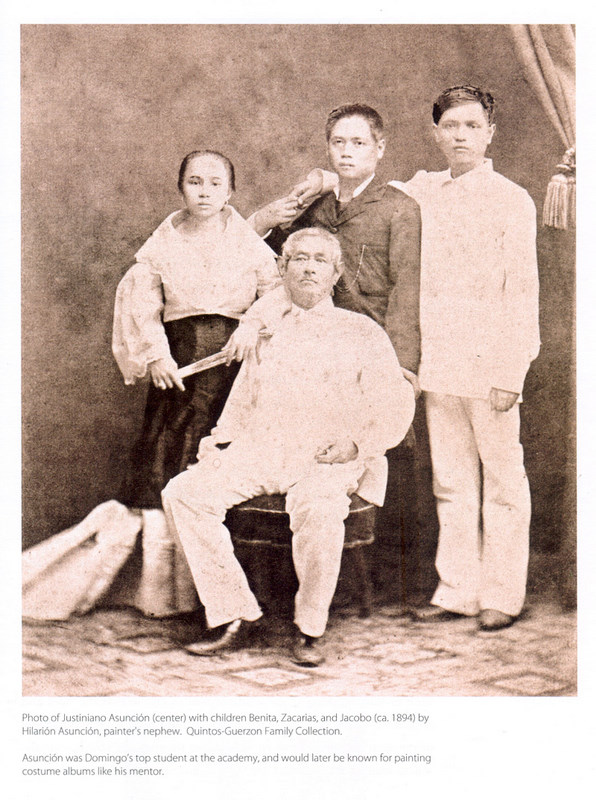
A descendant of Justiniano Asuncion or “Kapitan Ting,” one of the leading Filipino painters of the 19th century, Ding was once a University of the Philippines fine arts student. On his second year, he shifted to architecture and moved to the University of Sto. Tomas because it allowed him to “work on a more artistic and purposeful scale beyond that which a visual artist would normally encounter.”

In 2013, another ABI-designed structure in Bonifacio Global City is bound to make passersby pause and think. To maximize visual impact, the mid-rise headquarters of Alveo Land is composed basically of two attached rectangular masses, with one significantly smaller than the other. Its glass wall exteriors boldly display solid diagonal panels which continue beyond the roofline.

“Our client is a prolific developer that embraces green architecture. They continually explore new concepts for their projects and have grown leaps and bounds,” says Ding. He drew inspiration from the bountiful grass that grows in Bonifacio Global City’s open spaces, which are fast disappearing and may in the near future be immortalized only in this prime building beside High Street.

—————————————

April 2013 – A Blessed Month For Reunions

by Sonny Asuncion Rayos
IMG_5220-001
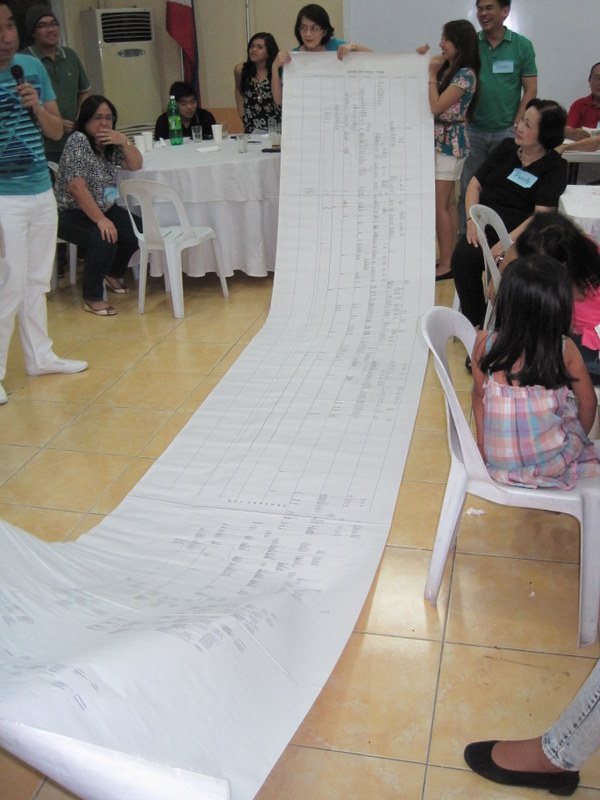
Sometimes plans go awry and dreams of reunions, even years in the making, do not materialize. Blame it on unfavorable timing, exorbitant plane fare or just plain and simple: flights are fully booked. Legitimate excuses. The reality is Asuncion family reunions are scheduled in late December or January are tough for travelers.
From out of nowhere, I received an email from Lota about an Asuncion family reunion on April 6. It was meant to be! This is perfect timing. I already have my plane tickets for travel to Manila in late March. Maybe I was trying to mask and contain my excitement because the only reply I sent was “I will be able to make this reunion.”
An old cliché comes to mind – “Pictures are worth a thousand words” and “To make a long story short,” here are some of the pictures taken during the Asuncion reunion.
IMG_5141 IMG_5166IMG_5137IMG_5152
IMG_5158IMG_5159
But wait! There’s more!! Attached is a photo with Manong Gabriel Asuncion with daughter Jo Anne. Manong Gabby has been my source of almost anything Asuncion . I must admit, this is my first time I’ve met Manong, although we talked often via telephone or email. Gabby’s brother the late Eugenio was  instrumental in reminding me that I am an Asuncion . I knew vaguely of this fact (other than it being the surname of my maternal grandmother) and the historical importance of what it meant – so thanks Eugene and may you rest in peace. Manong Gabby’s lineage is Leoncio Asuncion, then Hilarion Asuncion, then Jose Maria Asuncion.  My maternal grandmother, Feliza, is the youngest sister of Jose Maria.
IMG_5217
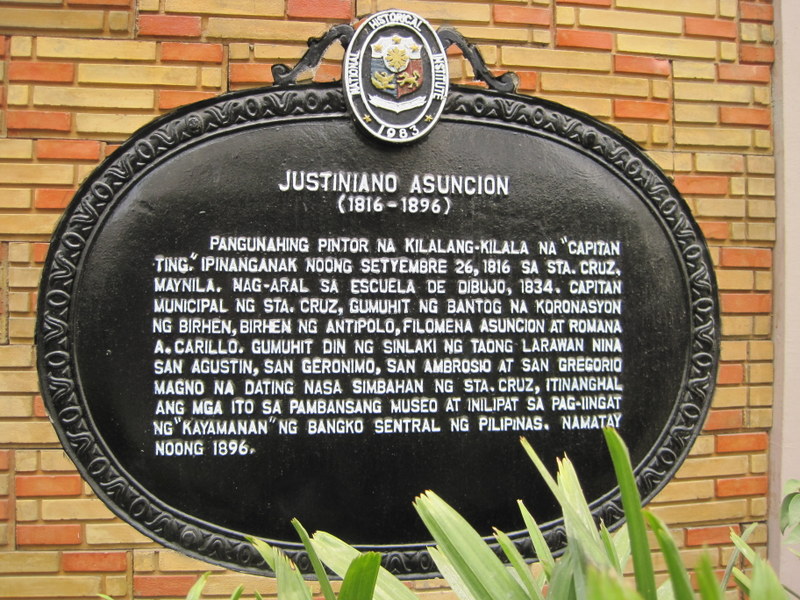
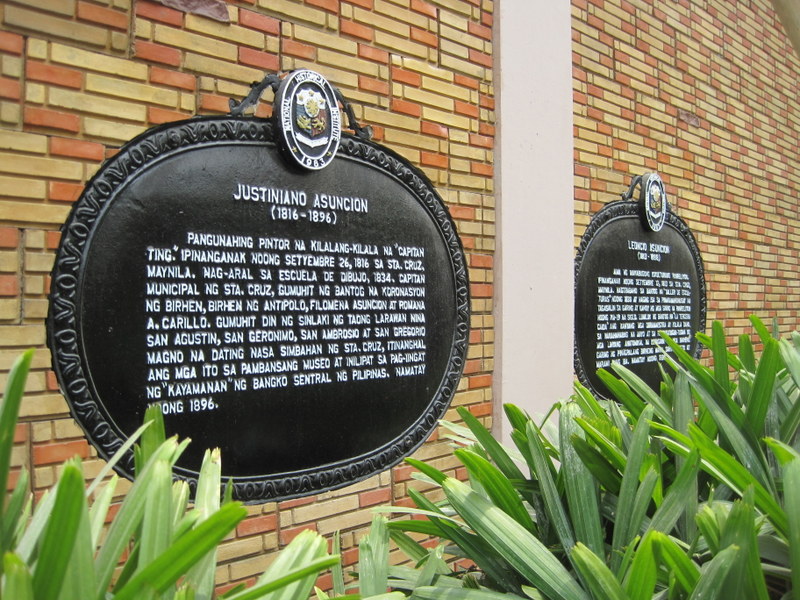
A reunion with Santa Cruz Church ?  Could one consider this a reunion? I must say YES. I am getting reunited with the two commemorative plaques of my great, great, (how many more great?) uncle and grandfather Justiniano and Leoncio Asuncion. These are located on the west side of the SC church (on your right hand part if facing the façade of the church). Herewith are the photos of each marker
IMG_5182IMG_5184IMG_5185
It can’t be better than this: Asuncion-Paterno reunion! Our common ancestry starts with a china man named Ming Mong Lo. He is considered a sanglay; a spanish colonial term for pure chinese immigrants who are in the Manila to conduct commerce.  It comes from the Chinese word “Seng-Li” meaning business. Family records described him as an “apothecary of Mandarin descent.” He had his named changed to Jose Molo when he was baptized. It is well documented in archives that Jose Molo is the progenitor of the Paterno family – with one of the sons, Paterno Molo de San Agustin, eventually changing the surname Molo (and those of his siblings following suit) to Paterno. One of the daughters of Jose Molo is Maria de la Paz Molo de San Agustin. Maria de la Paz married Mariano Cagalitan. The Cagalitan surname was later changed to Assumpcion then finally to Asuncion .
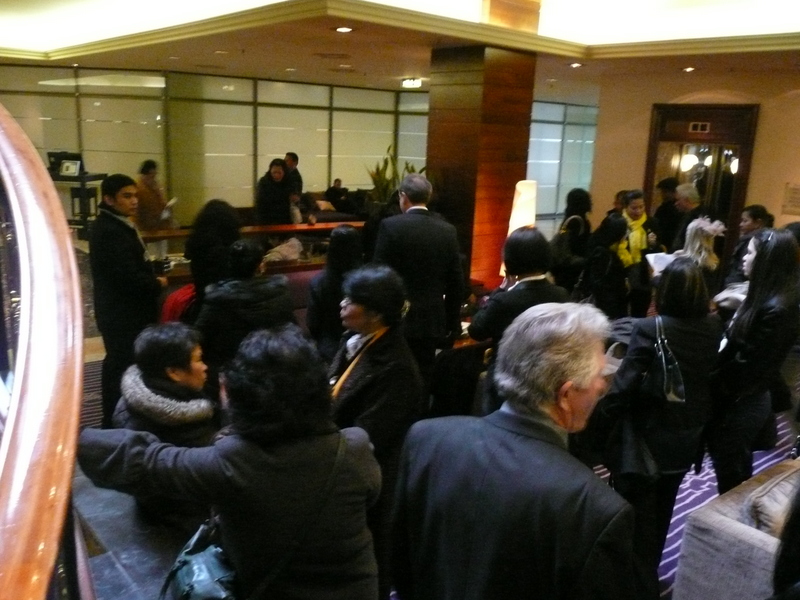
The reunion and reunification of blood siblings of Ming Mong Lo – the Asuncions and the Paternos is considered one of the highlights of April. This is about seven or eight generations of pinsans from the progenitor Ming Mong Lo. Attached are photos of this event. The setting for this historic event couldn’t be more perfect – at the Orchid Garden Suites – a beautiful hotel (excellent staff, wide choice of food, clean and wholesome hotel) across the Century Park Sheraton in Vito Cruz St. Malate, Manila .
IMG_5219IMG_5220
The last reunion for this blessed month of April is the most special and personal. This is my reunion with the ivory sculpture of baby Jesus by Leoncio Asuncion. Attached are several photos. This sculpture is the one that my mother, Juanita Asuncion-Palileo, takes out during Christmas and New Year for all of us kids to kiss. This is a known work of Leoncio with good provenance – a hand me down from generations.
IMG_5253 IMG_5257 IMG_5261 IMG_5264 IMG_5269
I hope you’ve enjoyed my Asuncion family stories and photos. Until the next Asuncion reunion or better yet a joint Asuncion-Paterno reunion.
——————————

May 2013 Elections / List of Local Candidates In Bulan

FOR MAYOR – BULAN
BALLESTEROS, MARNELLIE (LP)
DE CASTRO, DONDON (UNA)
GUYALA, NONONG (PMP)

FOR VICE-MAYOR – BULAN
GOCOYO, RONALDO (LP)
GOGOLA, MANUEL JR.
GURAN, TESSIE (UNA)
ONG, DANILO (PMP)

FOR COUNCILOR – BULAN
ALCANTARA, NOLI (LP)
BONCAN, ANTONIO (LP)
BURIAS, EDGAR (PMP)
BURIAS, ELMER (UNA)
COX, ROSE (PMP)
DELMONTE, CHITO (UNA)
GALLEGO, ALBERTO
GERONGA, GUTO (UNA)
GIGANTONE, RONNIE (UNA)
GOGOLA, BOY (LP)
GOGOLIN, RODOLFO (PMP)
GOÑA, AGNES (PMP)
GONZALES, ENTE (PMP)
GONZALES, ROMMEL (LP)
GORDOLA, ROMEO (LP)
GOTLADERA, CRIS (LP)
GUELAS, ALER (UNA)
GUETA, PANDING (LP)
GUTAY, IRISH (PMP)
HAO, CHITO (UNA)
LETADA, JASON (PMP)
MONFORTE, NEIL (PMP)
QUE, ROBERTO JR.
SOLIS, JOANNE (UNA)
VALERIANO, RECTO (LP)
ZUÑIGA, EKEL (UNA)

Source: COMELEC

MAKING A DIFFERENCE WITHOUT WALLOWING IN POLITICS

JGL Eye

By JOSEPH G. LARIOSA

(© 2013 Fil Am Extra Exchange)

CAROL STREAM, Illinois (FAXX/jGLi) – Unlike the father of Sorsogon re-electionist Sen. Francis “Chiz’ Escudero, who discouraged Chiz from running for elective office, the father of Escudero’s province mate, Loida Nicolas Lewis, groomed her in politics early in life.

In fact, her father, Francisco J. Nicolas, gave her name recognition a head start while she was still a young student, by naming one of the first movie houses in the province after her – Loida – in the capital city of Sorsogon, instead of his three other children.

When another accomplished Filipino American – Cook County Judge Jessica O’Brien in Illinois – asked Attorney Lewis last April 12 here if she ever has entertained plans of running for office in the Philippines, her response was short and swift: “No. Kakainin tayo ng buhay, (politics will eat us alive) if we run (for office) in the Philippines. Voters are poor. You have to give them money. They get your money (but they can) not to be trusted. If you run, run to win. If you run for principle, gaga ka (you are nuts.)”

Of course, another militating factor for her not to enter politics in the Philippines is the injunction for her to give up first her U.S. citizenship, a Constitution ban, which many dual citizen Filipinos want scrapped.

So, instead of politics, Ms. Lewis now sticks by with what she does best – keep up with her advocacies with her fellow members of the U.S. Pinoys For Good Government (USP4GG) as watchdogs to politicians, who stray off the straight path.

She said, when someone proposed to bury the late Ferdinand Marcos in the Libingan ng mga Bayani (National Heroes Cemetery), “we were there to stand in the way.” Ironically, it was a congressional resolution authored by Senator Escudero’s father, the late Congressman Salvador “Sonny” Escudero, one of the sponsors of my wedding, who sponsored the resolution to give Mr. Marcos a heroes burial, which did not get off the ground.

Ms. Lewis was in town as one of the motivational speakers to what was billed as “Billionaire’s Expo” held at the Holiday Inn & Suites at 150 S. Gary Avenue sponsored by IPJM in cooperation with twice-monthly Fil-Am MegaScene of nearby Buffalo Grove, Illinois.

THE 1-MILLION OAV’s

On the side, she also endorsed eight of the 12 senatorial candidates of the PNoy Team that the nearly one million registered Filipino overseas absentee voters out of the estimated 9.5- to 12.5-million should vote by mail from April 13 to May 13 elections. Overseas voters will also be voting for one Party-List representative. If the registered overseas Filipinos would turn up in droves, the votes could spell victory or defeat for candidates contesting the 12th spot.

A leading overseas political campaigner and fund-raiser for the Noynoy-Mar 2010 presidential elections that resulted in a split victory to President Aquino, Attorney Lewis is also grounded on local politics in keeping with the truism that all politics are local.

She is now being viewed by bickering local politicians’ as their lifeline to political gods like Secretary Mar Roxas, the presumed standard bearer of the Liberal Party in the 2016 presidential elections.

Sorsogon provincial board member Vladimir Ramon B. Frivaldo, the official candidate for Vice Governor in Sorsogon under the Liberal Party, sought the help of this columnist to bring his complaint to Attorney Lewis for Mr. Roxas to impose party discipline on 2nd District Sorsogon Rep. Diogracias “Ding” Ramos,” Sorsogon and Provincial LP Co-Chairman, for not recognizing Mr. Renato “Ato” Laurinaria, LP official candidate for Sorsogon governor, and himself as LP vice gubernatorial candidate in Sorsogon.

Mr. Ramos, instead, endorsed an independent gubernatorial candidate. Mr. Frivaldo wants Ms. Lewis to relay this confusion to Mr. Roxas.

And as a Bicolana, Ms. Lewis was also invited by Ms. Evelyn R. Tolledo, president of Bikol U.S.A. of the Midwest, to be the guest of honor and speaker at the national convention of Bikol National Associations of America in Chicago, Illinois on July 25-27, 2014.

Aside from local politics, Attorney Lewis is also attuned to international affairs, involving the Philippines. Last year, she was a godsend to Filipino nationalists, who could not speak openly against Chinese aggression in Philippine Western Sea (South China Sea). She advocated for the boycott of Chinese products around the world by urging overseas Filipinos to hold rallies before the Philippine Embassy and different consulates in the U.S. On Aug 21, 2013, it will be a much bigger rally, she warned.

SPOTTY CHINESE INTELLIGENCE EXPOSED

Her boycott call must have been so effective that when she led a rally in Makati, she saw her face on a Chinese footage carried by a local TV denouncing her as China’s “Public Enemy No. 1. The footage urged Chinese to boycott her Beatrice products in Mainland China, eh, nabenta ko na ito! (I already sold out my products in China!),” evoking laughter from her audience.

Ms. Lewis’ feat of attracting the attention of China was a coup of sorts as it exposed China’s spotty intelligence apparatus for calling for a boycott of Beatrice products based on false information – a bum steer (koryente).

Ms. Lewis congratulated the government of President Aquino for piling up over $80-billion in reserves since he took power from Gloria Macapagal Arroyo; for improving the investment grade of the country to triple “B” rating in 2012; for turning the GDP growth as No. 3 in Southeast Asia at 6.6 % economic expansion with China as first and Turkey, second; for the International Monetary Fund to ask the Philippines to lend Spain $1.3-billion. “Isn’t it amazing? Spain brought us Christianity but was repressive to us, but is now saved by the Philippines!”

She added another feather in President Aquino’s cap is the elevation of Secretary of Finance Cesar Purisima as the best finance minister in the world by a financial magazine.

The philanthropist, who helped raised a portion of “blood money” for the release of Rodelio Celestino “Dondon” Lanuza, said Mr. Lanuza is going to be released next month from Death Row in Saudi Arabia after the Saudi King Abdullahoffered to fork over a substantial balance of 2.3 million Saudi Riyals (P25 million) of the total 3 million Saudi Riyals (P33 million) to spare Lanuza’s life. She credits this columnist for bringing Mr. Lanuza’s case to her attention.

But for all the accolades she heaped on President Aquino, she dumbed down Mr. Aquino for his handling of the Sabah issue. “The Sultan of Sulu wrote him letters three times and nothing happened.  They (the Sultan’s men) invaded Sabah. Why go on TV (and threaten the Sultan with jail)? (Bakit hindi niya tawagan ang Sultan nariyan lang sa Taguig?) (Why didn’t he call the Sultan, who is just there in Taguig? And tell him, “What do you want? Let’s talk.” Paghindi niya ginawa yan, napakasimple. Otherwise, he is doing good.” (lariosa_jos@sbcglobal.net)

Atty. Loida N Lewis

FAXX/jGLi Photo of Atty. Loida N. Lewis.

JOSEPH G. LARIOSA

Correspondent
Fil Am Extra Exchange
Journal Group Link International
P. O. Box 30110
Chicago IL 60630
U.S.A.
Tel. 312.772.5454
Telefax 312.428.5714 
———————————

FIL AM GROUP ENDORSES 8 TEAM PNOY SENATORIAL BETS, JUNKS ENRI

By JOSEPH G. LARIOSA

(© 2013 Fil Am Extra Exchange)

CAROL STREAM, Illinois (FAXX/jGLi) – Filipino American business tycoon Loida Nicolas Lewis, co-leader of the U.S. Pinoys For Good Governance (USP4GG), disclosed here on the eve of the start of the absentee voting for overseas Filipinos on Friday (April 12) that USP4GG is endorsing at least eight of the 12 Team PNoy senatorial candidates to give President Noynoy Aquino a majority in the Philippine senate for the next three year. But she clarified the endorsement should “not let [President Aquino become] a dictator but only to get things done properly.”

The ageless and tireless civil rights activist said USP4GG would also be campaigning for the election of two Independent candidates (Edward Hagedorn and Bro. Eddie Villanueva) “who are straight (honest) at hindi ipagbibili ang bayan(who will not betray the people). But she will be campaigning against a senatorial candidate accused of murdering an actor during martial law (Rep. Jack Enrile).

The credibility of the USP4GG gained traction in 2010 elections when majority of its endorsed senatorial slate in the 2010 won in the presidential elections, including then Sen. Noynoy Aquino, who won the presidency. But its vice presidential bet, former Senator and now DILG Sec. Mar Roxas, lost to former Makati City Mayor Jojo Binay. There are about 900,000 registered Filipino overseas voters.

A Makati city resident and former law classmate of Vice President Binay, Attorney Lewis said she would still be backing Secretary Roxas if Mr. Roxas and Mr. Binay would have a return bout in the 2016 presidential elections.

She said Mr. Binay simply cannot toe the line of President Aquino’s call for a “tuwid na daan” (straight path) as Vice President Binay has surrounded himself with corrupt underlings with the likes of former Sen. Ernesto Maceda, who was accused of car smuggling and human trafficking while Philippine Ambassador to the United States under the President Joseph “Erap” Estrada Administration.

BINAY OWNS BAKERY

While then Mayor Binay was giving away birthday cakes to senior citizens of Makati, these cakes came from Binay’s bakery. A resident of luxury Rockwell condominium in Makati, Ms. Lewis said in every high-rise tower built in Makati, Mr. Binay has one condominium unit, like his daughter, who has a penthouse at Rockwell.

At the same time, the Bicolana businesswoman and lawyer from Sorsogon province is raising funds for the campaign of Atty. Leni Robredo, the widow of the late iconic DILG Secretary Jesse Robredo, who is running for congress of the third district of Camarines Sur under President Aquino’s Liberal Party. Mrs. Robredo, a very poor candidate, is running against a well-ensconced political dynasty — the wife of incumbent termed-out Rep. Luis R.  Villafuerte – Atty. Nelly Favis-Villafuerte, former Trade and Industry Undersecretary a columnist of Manila Bulletin.

The philanthropist urged Evelyn de la Rosa Tolledo, president of Chicago’s suburban Schiller Park, Illinois-based Bikol U.S.A. of the Midwest, to help her appeal to fellow Bikolanos to raise funds for Mrs. Robredo that Attorney Lewis will match and would turn over by April 30, 2013 to Mrs. Robredo. Ms. Tolledo, a native of Catanduanes, can be reached at 3809 Emerson Drive, Schiller Park, Illinois, 60167 U.S.A., Tel. 773.946.9668, or email address:evelynbikolusamid@gmail.com.  Checks are payable to Loida N. Lewis and at the memo of the check, “In Trust for Leni Robredo.”

In brief remarks before members of the Filipino community, Ms. Lewis thanked the community for supporting the causes of USP4GG, among them the election of President Aquino last May 2010. She said President Aquino needs continued support of overseas Filipinos for keeping his word to eliminate corruption in the Philippine bureaucracy. She credited Mr. Aquino with the impeachment of former Chief Justice Renato Corona and the passage of the contentious RH Bill, which spells out the need for spacing the children, which is vigorously opposed by the Catholic Church.

Lewis explained that when Mr. Aquino’s mother, the late President Cory Aquino, took power partly behind the support of the Catholic Church, there was no government policy on birth control. During that time, the Philippine population stood at 45-million. But after nearly 30 years, the Philippine population has doubled to 100-million.

MORE CHILDREN, MORE CHALLENGE TO FIND THEM JOBS

Lewis said, “If we don’t give women the right to decide the number of children in the family, the Philippines will lose its ability to find jobs for these children. This will force Filipinos to go to the ends of the world. Filipinos have now relocated to every part of the earth, including the God-forsaken and the coldest place on earth, Antarctica, where studies on earth are being carried out. There are three Filipina nurses working in Antarctica. There are even 2,000 families living in La Loma Cemetery in Manila and even under bridges.

“If you send your children to school, go to a puericulture center to get advice when pregnant and how to feed babies right and undergo vaccination and health check ups, the government gives away 1,500 Philippines pesos (US$36.00) a month under the Conditional Cash Transfer (CCT). This is the program that weakens the existence of the New Peoples Army because the government is now taking care of the poorest of the poor in the Philippines,” she said.

The other speaker at the community interaction was Judge Jessica O’Brien, the first Filipino American elected Cook County Circuit Court judge, who narrated her early struggles growing up in Mandaue City in the Philippines.

The Team PNoy senatorial candidates that Attorney Lewis is endorsing for overseas Filipinos to vote by mail starting April 13 up to May 13, 2013 elections are: No. 2. Edgardo “Sonny” Angara, Laban ng Demokratikong Pilipino; No. 3. Benigno “Bam” Aquino, Liberal Party; No. 18. Risa Hontiveros, Akbayan Citizen’s Action Party; No. 19. Loren Legarda, Nationalist Peoples’ Action Party; No. 24. Ramon Magsaysay, Jr., Liberal Party; No. 27. Koko Pimentel, Partido Demokratiko Pilipino Lakas ng Bayan; and No. 13. Chiz Escudero, Independent; and the Independents are No. 16. Edward Hagedorn and No. 31. Bro. Eddie Villanueva, Bangon Pilipinas Party.

Being endorsed as one of the three Party-List Representatives are No. 117. Akbayan Citizens’ Action Party; No. 127. Ang Nars, Inc.; and No. 129. Coalition of Association of Senior Citizens in the Philippines; and being junked from senatorial slate is Rep. Jack Enrile.

CAYETANO, ESCUDERO VOTES EXPLAINED

Mrs. Lewis added Pia Cayetano into the mix for supporting the “RH” (Reproductive Health) bill. But Cayetano is not a candidate in next month’s elections  either as her term would still end in 2016. She might have in mind Cayetano’s younger brother Alan Peter Cayetano, who is also a part of Team PNoy and was one of the 13 senators who also voted for the passage of the RH bill.

Although, Senator Escudero is not in the endorsed list, Attorney Lewis is campaigning personally for Mr. Escudero, not only because he is her fellow Sorgogueno but Mr. Escudero has not been accused of big-time corruption baka maliliit lang (maybe petty ones). Although Mr. Escudero has not done anything to improve Sorsogon province except for the appropriation of 500,000 pesos (US$11,904.00) for a book on Sorsogon, he could not be entirely blamed because during the term of Gloria Macapagal Arroyo, Mr. Escudero was never allocated his pork barrel.

As former classmate of the mother of actor Alfie Anido, Sarah Serrano, at St. Theresa’s College, Mrs. Lewis said the family of Anido did not pursue the investigation of the murder of Anido whose death was being pinned on Jackie Enrile because during martial law the truth could not be established. She urged Filipinos to junk the senatorial candidacy of Jack Enrile even if Senate President Enrile will be mad at her.

Mrs. Lewis also accepted an invitation from Ms. Evelyn Tolledo to be the guest of honor and speaker of the 31st national convention of Bikol National Associations of America from July 25 to 27, 2014 to be held in Chicago area. The BNAA will be holding its 30th national convention this year at Oriental Hotel in Legazpi City from July 16-18 in cooperation with the Department of Tourism.

Among the initial donors for the Leni Robredo campaign fund drive are Bikol U.S.A of the Midwest, $100; and its members, Bob Tolledo, $20.00; Tony Blando, Romy Sarcilla of World Financial Group and Danilo Auro, $10.00 each; and Jun Delfin of Chicago’s suburban Palatine-based Unlimited Agency, Inc., $50.00.

Tony Blando, a classmate of Jesse Robredo and Joel Anselmo Cadiz, President Aquino’s former lawyer and Solicitor General and two-time president of Integrated Bar of the Philippines and running under Aquino’s Liberal Party banner, said Attorney Cadiz is facing termed-out 77-year-old Rep. Luis R. Villafuerte Sr. of the Nationalist People’s Coalition (NPC) and the latter’s 23-year-old grandson, Miguel Villafuerte, of the Nacionalista Party, for the gubernatorial race in Camarines Sur. Mr. Cadiz had earlier requested his classmate, former Philippine prosecutor Carlos A. Cortes, Jr., a Chicago immigrant, to return to Camarines Sur to help him run for governor. Mr. Blando asked Attorney Lewis to support Mr. Cadiz if only to help totally topple the Villafuerte dynasty in the province..

Ms. Lewis was in town to speak on April 12-14 before “Billionaire’s Expo” at the Holiday Inn & Suites at 150 S. Gary Avenue here sponsored by IPJM in cooperation with twice-monthly Fil-Am MegaScene published and edited by Bart & Yoly Tubalinal of nearby Buffalo Grove, Illinois. The other featured guests at the event were Bishop Abraham Gaor, founder, “School of Wealth & Success,” and Pastor Armand Cudia, author of Shepherds Into Kings, Ms. Irene Alano-Rhodes of “Miss Saigon,” West End Theater, London and Dany Juat of “Papuri” singing group and IPJM Band. (lariosa_jos@sbcglobal.net)

Accepts BNAA Invite To Chicago

BIKOLANA TYCOON ACCEPTS BNAA INVITE:

Bikolana Filipino American Attorney Loida Nicolas Lewis (seated) holds the book, “Why Should White Guys Have All The Fun?,” a bio epic of her husband, Attorney Reginald Lewis, shortly after accepting last Friday, April 12, an invitation from Ms. Evelyn de la Rosa Tolledo (third from right), president of the Bikol U.S.A. of the Midwest, to be the guest of honor and speaker at the national convention of the Bikol National Associations of America (BNAA) on July 25-27, 2014 in Chicagoland. Attorney Lewis was the featured speaker at the  “Billionaire’s Expo” at the Holiday Inn & Suites at 150 S. Gary Avenue in Carol Stream, Illinois sponsored by IPJM in cooperation with twice-monthly Fil-Am MegaScene, published and edited by Bart & Yoly Tubalinal of nearby Buffalo Grove, Illinois. The other guests at the event were Bishop Abraham Gaor, founder, “School of Wealth & Success,” and Pastor Armand Cudia, author of Shepherds Into Kings, Ms. Irene Alano-Rhodes of “Miss Saigon,” West End Theater, London and Dany Juat of “Papuri” singing group and IPJM Band. Ms. Lewis also spoke about current events in the Philippines. Looking on from left are officers and members of the Bikol U.S.A. of the Midwest, Danilo Auro, Tony Blando, Romy Sarcilla, Bob Tolledo, Joseph G. Lariosa and Luz Nunez. (FAXX/jGLi Photo)

Campaign Opening Salvo (1)

OPENING CAMPAIGN SALVO:

Filipino American Attorney Loida Nicolas Lewis (standing), co-leader of the U.S. Pinoys For Good Governance, gives brief remarks, where she endorsed to 900,000 registered Filipino overseas voters to vote for at least eight of the 12 Team PNoy senatorial candidates to give President Noynoy Aquino a majority in the Philippine senate for the next three year. But she clarified the endorsement should “not let [President Aquino become] a dictator but only to get things done properly.” Looking at left is Judge Jessica O’Brien (left), the first Filipino American elected Cook County Circuit judge, and Ms. Yoly T. Tubalinal, co-publisher/editor of Fil Am Megascene, a twice-monthly publication in Chicagoland. At left are participants to a community event that include Jun Delfin, Tony Blando, Bob Tolledo, Bart SG. Tubalinal, Thelma Fuentes, Evelyn Natividad and Luz Nunez. (FAXX/jGLi Photo by Joseph G. Lariosa)

JOSEPH G. LARIOSA

Correspondent
Fil Am Extra Exchange
Journal Group Link International
P. O. Box 30110
Chicago IL 60630
U.S.A.
Tel. 312.772.5454
Telefax 312.428.5714 
————————————————-

Asuncion Clan Reunion 2013

“Kita Kits Muli Tayo”

“ASUNCION TOGETHER FOREVER”

WHEN:      April 6, 2013 @ 4:00pm onwards

WHERE:   #18 Collins ST. Dona Faustina I

                  Culliat, Quezon City

                  Atty. Godofredo Asuncion‘s

                  Residence and  Clubhouse                    

Pls. call :     

Lota  Asuncion Abella-  

Atty. Nina Asuncion- 

Atty. Edgar Asuncion- 

Mary Anne  Asuncion Gray-

Pls. coordinate with  Lota A. Abella for the Food

Pls. bring gifts for the raffle and games.

 ———————————————

What Is Obama’s Take On North Borneo (Sabah) Standoff?

By Joseph Lariosa

“Men take advantage of weakness of other men. They’re just like countries that way. The strong man takes the weak man’s land.”
-Lolo Soetero Mangunharjo, stepfather of President Barack Obama (“Dreams from My  Father”) © 1995

CHICAGO (FAXX/jGLi) – Barack Obama was probably in the third or fourth grade of his impressionable years in the late sixties in Jakarta, Indonesia when he asked his stepfather Lolo (Soetero Mangunharjo) if he ever saw a man killed.

Lolo answered, “Yes.” And Barack asked again, “Was it bloody?” Lolo answered, “Yes.”In his book, Dreams from My Father (Random House, 1995/Kodansha Globe 1996), the grade school boy, who would be the 44th United States President, asked again, “Why was the man killed? The one you saw?”

Lolo answered, “Because he was weak. That’s all. That’s usually enough. Men take advantage of weakness of other men. They’re just like countries that way. The strong man takes the weak man’s land. He makes the weak man work in his fields. If the weak man’s woman is pretty, the strong will take her.” He paused to sip water, then, asked, “Which would you rather be?”

“I didn’t answer,” Obama said, and Lolo squinted up at the sky. “Better to be strong,” he said finally rising to his feet. “If you can’t be strong, be clever and make peace with someone who’s strong. But always better to be strong yourself. Always.”

These quotes from Mr. Obama’s bestseller reminded me of the attempt of some 200 heirs and followers of the Sultan of Sulu, who tried to reclaim North Borneo or Sabah from Malaysia. Among them were several dozens of Royal Army of Sultan bodyguards.

Instead of negotiating with Sultan of Sulu landlords, the Malaysian Army used all its might and attacked the members of the Royal Army. Malaysia used a sledgehammer, instead of a flyswatter, by killing several dozens of the helpless Filipino landowners. Less than a dozen Malaysian policemen were also killed. 

But Malaysian Army kept on attacking the Filipinos, despite appeals of the United Nations  for a ceasefire, and violated the human rights of the Filipinos, who were arrested.

The young Obama’s nearly four-year stay in Indonesia gave him a brief knowledge of history of Indonesia, which was colonized for centuries by Netherlands (Dutch) and the Japanese during World War II.

OBAMA KNOWS THE REGION IS OIL RICH

In his book, Mr. Obama wrote, “[b]efore leaving Hawaii, she (his mother Stanley Ann Dunham) had tried to learn all she could about Indonesia: the population, fifth in the world, with hundreds of tribes and dialects; the history of colonialism, first the Dutch for over three centuries, then the Japanese during the war, seeking control over vast stores of oil, metal, and timber; the fight for independence after the war and the emergence of a freedom fighter named Sukarno as the country’s first president.”

So, if Mr. Obama would be provided with intelligence by his national security advisers on how to handle the peaceful-turned-bloody take over of North Borneo by the Sultan’s Royal Army, he does need a lot of introduction.

All Mr. Obama needed to be told was that North Borneo or Sabah was the former real estate property of Sultan of Brunei, who ceded Sabah to the Sultan of Sulu for extending protection of the Sultan of Brunei.

But because Brunei struck oil in 1920’s and the oil is still flowing to this day, the neighboring North Borneo has suddenly become a hotly contested property.

Finding the Sultan of Sulu vulnerable from the attack of Spanish colonizers, Austrian Consul Baron von Overbeck tricked the Sultan of Sulu into signing a lease treaty with the Sultan on Jan. 22, 1878. The treaty was written in Malay language written in Arabic script. The agreement gave Overbeck the authority to administer North Borneo estate with a very paltry lease amount – an annual payment of 5,000 Mexican pesos (now Malaysian Ringgit).

This is exactly what Lolo meant when he told the young Obama, “Men take advantage of weakness of other men. They’re just like countries that way. The strong man takes the weak man’s land.”

NO ONE-YEAR ADVANCED NOTICE, NO TREATY SIGNED BY U.S. & GB

Despite the revocation of the lease agreement in September 1878 by the Sultan of Sulu, a Protocol of March 7, 1885 was allegedly hatched among Great Britain, Germany and Spain. For unknown reason, the Protocol let Spain renounce “as far as regards the British government, all claims of sovereignty over the territory of the continent of Borneo, which belong, or which have belonged in the past to the Sultan of Sulu (Jolo) and which comprise the neighboring islands … from the coast, and which form part of the territories administered by the company styled the British North Borneo Company.”

But Mr. Obama will find out that this “Protocol of March 7, 1885” became a worthless scrap of paper when Great Britain tried to ask the United States to transfer North Borneo to Great Britain after the United States signed the Treaty of Peace of 1898 with Spain after U.S. payment of $20-M to Spain, ceding the Philippines and Sulu Archipelago, including North Borneo, to the United States.

Question, if the Protocol of March 7, 1885 was in effect why did Great Britain still ask the U.S. to transfer North Borneo to British administration when the U.S. and Great had the Exchange of Notes of July 3 and 10, 1907 and Jan. 2, 1930 Convention?

According to the Jan. 2, 1930 Convention, “Firstly, the said company (BNBC) be left undisturbed in the administration of the islands (North Borneo) in question unless or until the United States Government give notice to His Majesty’s Government of their desire that the administration of the islands should be transferred to them. The transfer of administration shall be effected within one year after such notice is given on a day and a in a manner to be mutually arranged.”

Its Art. V says, “The present Convention shall be ratified by the President of the United States of America, by and with the advice and consent of the Senate thereof, and by His Britannic Majesty, and shall come into force on the exchange of the acts of ratification, which shall take place at Washington as soon as possible.”

There was no “one year such notice … given and a manner to be mutually arranged” and there was no such ratification by the President of the USA and advice and consent of the Senate and by His Britannic Majesty” on June 26, 1946 when the British North Borneo Company entered into an agreement with the British Government, transferring its interests, powers and rights over to the British Crown to become State of North Borneo. No wonder, the International Court of Justice ruled in 2002 that there was no such transfer.

( lariosa_jos@sbcglobal.net This e-mail address is being protected from spambots. You need JavaScript enabled to view it )

———————————————

The politics of an executive order

Marginal Note

By Felix ‘Boy’ Espineda, Jr., BicolToday.com

At this early takers of greening position in local politics here in the province of Sorsogon are throwing stones with their possible opponents by way of couched personal interest, using position held by a family member who were given a woeful feedback on how to upend the incumbency in a position of influence and power.

For lately, legislative fiat is being secured by a woman chief executive inviting attention to its supervisory power over barangay affairs specifically in the monitoring of national funded projects. The scheme was seen as an early fireworks to the floated interest of her husband who is aiming the seat of an incumbent representative.

Disguising its family intent by way of an executive order was too much for the taking of the provincial board where sitting committee members were heard that its all about politics and nothing more. The exercise was futile, though arguing certain provisions of the local government code which was interpreted to suit its political purposes.

It was a dismal performance by the lady chief executive and her staff who argued their cause but who willfully misinterpreted the exact provisions of the local government code. The committee does not want to be in the crossfire for 2013 is just about in the corner, thus doing the explaining is the provincial director of the interior and local government, supplying the missing, omitted provisions of the local government code with regard to the role, duties and responsibilities of a chief executive.

Pity for the executive order is full of antagonistic ideas to the sitting congressman and did put to test the position of the engineering district, thus the value of loyalty was opened.

Creating a technical monitoring team was too good to be true, it was the icing of the executive order, but the biggest chunk of the take is to negate the authority of an independent local government executive to accept a finish project in his barangay funded out from the national treasury specifically, congressional funds. That was the rub, and the play of the executive order is rubbish for it overstep its limitations and intends to transgress upon a legal authority to function as clearly defined in the local government code.

Taking the issue of corruption and using the line of the present administration of ‘matuwid na daan’ the executive order falls smack in the face of the executive, but do not blame her, it was her husband who purloined the interest by his ilks in the municipal government. He counts his people for he served nine long dubious years and the wife is currently on her last term in their moonless town.

Here’s another rub, at the hearing, she was overheard name-dropping a cabinet secretary who according to her is a relative, as if pushing out the contradiction of the provincial director of the interior and local government for their department is the same. But, to no avail.

Their object of ire is a man who do’esnt expect to win but took the seat from under for his district believed that he performed far better as local chief executive that his contenders.

Why soldiers don’t retaliate vs enemies

By

11:22 pm | Wednesday, January 30th, 2013

“You hit one of us, you hit all of us. We will come after you.”

Those brave, fighting words came from Interior Secretary Mar Roxas, addressing the gunmen who killed eight civilians and a policeman and wounded 12 other civilians in an ambush at Las Castellana town, Negros Occidental province.

If that stern warning was addressed to the New People’s Army (NPA), it sounded hollow and full of hot air.

In the past, NPA guerrillas had ambushed and killed many soldiers and cops, but government troops hardly retaliated.

Of course, press statements were made by the government after numerous soldiers or policemen were killed that troops were in hot pursuit of the NPA or Moro rebels who staged the ambush.

But those press statements were not followed up with news that government troops had avenged the deaths of their comrades.

* * *

Retaliation by government troops for the deaths of their comrades never happened because soldiers or policemen are confined to their barracks or police stations because of the peace talks with the rebels.

Besides—and this is more significant—the morale of soldiers in the field is very low.

Why? Because their personal welfare, as well as those of their families, is not attended to by the government.

For example, when a soldier is seriously wounded in battle and is treated at the Armed Forces or V. Luna Medical Center, he or his family is asked to buy his own medicines that are not available in the hospital’s pharmacy.

The soldier and his family are told the government will reimburse them for the medicines they buy outside the V. Luna Hospital pharmacy.

To an underpaid soldier, who has a family to feed and children to send to school, buying medicines is a big drain on his pocket.

And, by the way, the reimbursement for his medicines comes many months after he leaves the hospital.

And if the soldier is killed, his family has a hard time getting his pension.

Worse, a gigolo at the AFP Finance Center in Camp Aguinaldo seduces the dead soldier’s widow and runs away with the pension.

Now, if you were a soldier who is ordered to go after the rebels who killed your comrades-in-arms in an ambush, would you go after their killers hammer and tongs, given the situations I just mentioned?

* * *

During my father’s time, the Armed Forces of the Philippines (AFP) took care of the medical needs of soldiers and their dependents.

My father was with the defunct Philippine Constabulary (PC), one of the AFP’s major services, and he and his dependents—my mom and us, his children—enjoyed complete medical coverage.

When one of the children was sick—which was often since there were 10 of us—we were sent to the military doctor who was assigned in every PC camp.

Soldiers who were severely wounded in combat were flown to Manila to be treated at the Camp Crame General Hospital or the V. Luna Medical Center.

It was unthinkable then for a soldier wounded in combat to complain that his needs were not met.

* * *

If those gunmen who ambushed and killed or wounded innocent civilians were members of the New People Army (NPA), they have lost whatever moral ascendancy they claim they have over the civilian populace.

How can the NPAs now claim they protect the poor and the oppressed when they slaughter them?

Most of the sympathizers and supporters of the NPA come from the ranks of citizens disgruntled over the uneven justice system and the apathy of government towards their plight.

If indeed the gunmen who murdered innocent civilians in La Castellana are members of the NPA, they can no longer hide from the authorities.

The civilians who harbor them will tell on them. It will be the beginning of the end of the NPA.

———————————————-

President Aquino’s visit in Zürich

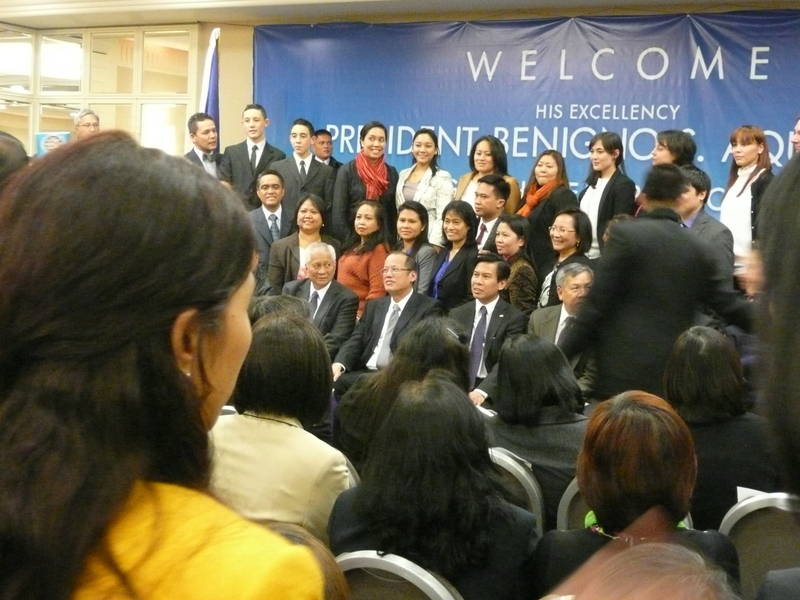
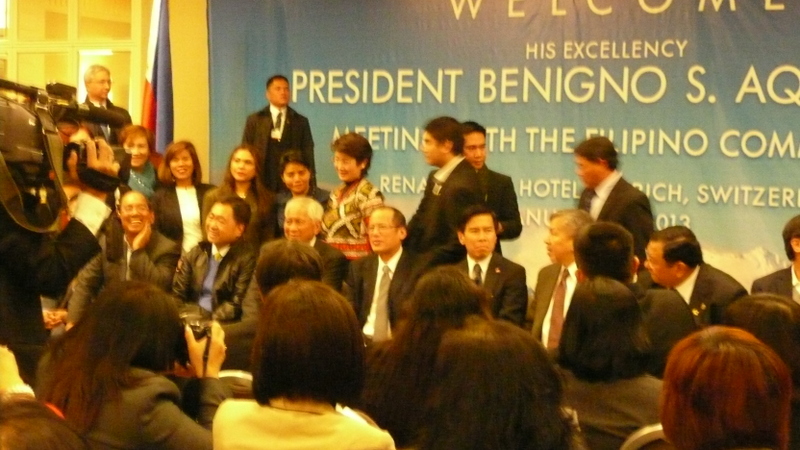
President Benigno Aquino III’s visit to this ice – covered  Zürich last Saturday, January 26, was brief and concise as he gave a summary of his WEF participation in Davos and the progress achieved to date of his administration. It was a relaxed atmosphere in that morning in Renaissance Hotel Zürich where Filipinos – most of them also holders of Swiss passport – from all over Switzerland and the Liechtenstein flocked happily to meet personally their President.

There was a sense of pride all over the place for this time Filipinos were expecting to hear the good news coming from the President himself – good news this time about the growing economy, fight against corrupt government officials, etc. It is true that as we change our views and attitudes toward our system, we also change the same of the world upon us. The Philippine’s international image has been upgraded since President Benigno Aquino assumed office. And the Swiss are aware of the positive changes happening in our country and that’s really what affects the Filipinos in their daily life here in Switzerland. It’s amazing how the Swiss people react this way, this from the people whose country still has the best performing economy and institutions the world over. There are much to be learned from the Swiss system of governance, democracy and entrepreneurship. And the Filipino community here desires also only the best for our country – the Swiss way as much as possible.

President Aquino lauded the Filipino community here as being one of the most respected and appreciated foreign groups in Switzerland who contribute also to the stability of both the Swiss and Philippine economies. Not to forget that the old Swiss humanitarian tradition –  Switzerland being the birthplace of the  International Red Cross-  also has long found its niche in every Filipino residing here. Swiss-Filipinos, through their respective local organizations, are on the frontline when it comes to helping disaster victims in the Philippines.

The visit was short for the President had to catch his plane homeward bound after lunch. And so there was no more forum to throw questions such as the Enrile Problem and the current mess at the Senate where senators quarrel over their financial “Christmas” gifts, the ongoing talks with the Bansangmoro, the communist insurgency, etc.

We hope that President Aquino would realize much of his development plan for our country during his term, the institutionalisation of the reforms achieved to prevent the rollbacking to the old ways of Wang-wang mentality, to the self- serving government and public officials of the past administrations.

At the end of his speech was picture-taking. The Filipinos and some Swiss nationals who were present did not hesitate to be photographed beside President Aquino, another proof of his international popularity and trust to his intentions. Yes, public service is public trust.

jun asuncion

P1170795P1170801P1170800P1170794P1170791P1170792P1170787P1170783P1170782P1170781P1170777P1170776P1170774P1170773P1170771P1170766P1170764P1170756P1170754P1170742P1170752P1170750P1170767P1170744P1170758P1170749P1170751P1170763P1170767P1170768

(photos by junasun)

Related news extracted from the President’s official communication websites:

Aquino accepts donation from Filipino community in Switzerland for victims of Typhoon PabloJanuary 27, 2013

ZURICH, Switzerland) President Benigno S. Aquino III thanked the Filipino community from Switzerland and Lichtenstein for extending aid to victims of Typhoon Pablo in Mindanao.

An initial check worth 8,650 Swiss francs was turned over to the President during his meeting with the Filipino community here.

“Marami pong nag-donate ng konting halaga para sa mga biktima ng bagyong Pablo na tumalasa sa ating bansa noong nakaraang buwan. Noong nalaman po nilang darating kayo dito sa Switzerland, ninais po naming magbigay pa ulit ng kaunti pang tulong,” Ambassador to Switzerland Leslie Baja said in his remarks.

The initial donation, however, was increased to 9,050 Swiss francs.

During his speech, the President lauded the members of the Filipino community for their donation. “Lampas po sa halaga na ipinagkaloob niyo sa ating mga kapatid na nabiktima ng Bagyong Pablo, talaga naman pong napapadama niyo sa kanila na hindi sila nag-iisa,” President Aquino said.

The President said that the donation is the best present that they could give to the Filipinos in the country. “‘Yun po ang talagang napakagandang ipapasalubong natin sa buong Pilipinas,” he said.

President Aquino met with the Filipino communities in Switzerland and Lichtenstein before his return to Manila following his successful participation to the World Economic Forum Annual Meeting in Davos.

—————-

President Aquino calls on Filipino Overseas Workers in Switzerland to uniteJanuary 27, 2013

ZURICH, Switzerland) President Benigno S. Aquino III called on the members of the Filipino community here to unite and continue to tread the straight path as he moves to implement the various reforms needed to effect the country’s march towards progress and development.

The Chief Executive, who arrived here to attend the annual meeting of the World Economic Forum from January 23 to 27, spearheaded the greet-and-meet activity with the Filipino community at the Renaissance Hotel here to personally oversee their condition.

In his speech, the President shared the positive changes and the economic developments back home during the last two and a half years of his administration, including the confidence of the international community in the Philippines, and the stock market’s remarkable performance that keeps the country’s resiliency despite the global crisis.

The President told members of the Filipino community present during the event that the Philippines’ Gross Domestic Product (GDP) has continued to grow despite the global economic crisis. “Alam naman po ninyo na iyan ang pangunahing sukat ng sigla ng ekonomiya ng isang bansa,” he said.

The country’s GDP has expanded by 7.1 percent in the third quarter of 2012. The stock market index also posted record highs 70 times. “Tinalo po natin pati ang sariling mga projection. Sunod-sunod ang record-high sa ating Philippine Stock Exchange index,” he said.

“Sa katunayan, mula June 30, 2010, kung kailan po tayo nag-umpisang manungkulan, umabot na sa pitumpung beses ng nabasag ang record po ng ating stock exchange.”

The President expressed hope that the stock market index will reach the 6,500 level by next month, particularly on his birthday, and the 7,000 level by year-end. “Palagay ko, hindi pa naman ito nasisira sa atin, mukhang malaki ang pag-asang mangyari po ‘yan,” he said.

The President also cited the confidence of the international community in the Philippines as evidenced by the influx of investors who have already expressed their interest to invest in the country.

“Naaalala ko nga po dati, sa panahon ng aking ina: naisama po ako sa ilang biyahe po niya, nagpunta po ako sa Japan, at halos nagmamakaawa tayong magtayo sila ng negosyo sa Pilipinas. Pero ngayon po, tayo na ang pinipilahan,” he stressed.

“Gusto po nilang makisakay sa momentum ng pag-angat ng ating ekonomiya. At hindi po sa iisang sektor ito –mula sa edukasyon, sa imprastruktura, hanggang sa information technology, iisa ang bukambibig ng mga malalaking kumpanya –’Sali naman kami diyan,’” he added.

President Aquino likewise mentioned the reforms in the judiciary, and the signing of the Bangsamoro Framework Agreement between the Philippine government and the Moro Islamic Liberation Front.

“Ipinakita natin sa buong mundo ang bisa ng isang mapayapang diyalogo; higit pa rito, inilalapit natin ang Mindanao, ang naturingang Land of Promise, sa pangako ng kapayapaan at kasaganahan, na matagal na niyang inaasam,” he said.

During his speech, The President called on Filipino overseas workers for a continued support.

“Nasa kamay muli ng Pilipino ang manibela –itutuloy ko ba ang paglalakbay sa tuwid na daan? O pipiliin ko bang mag-U-turn pabalik sa kalsada ng katiwalian at kahirapan? Mahalaga pong ipaalala –ang pagsisikap ng bawat isa ay magsisilbing gasolina sa matiwasay na pagtakbo at tuluyang pag-arangkada ng ating bansa,” he said.

“Kaya nga po, karaniwang tao man o kasama natin sa paglilingkod-bayan, nasa Pilipinas man, o dito sa Zurich, saan man pong sulok ng mundo –bawat brasong nakikisagwan, bawat balikat na nakikipasan, bawat kakamping sumasagupa sa lumang sistema upang itawid ang ating reporma–kayo po, kayo ang gumagawa ng pagbabago, at hinihiling ko ang patuloy pa ninyong pakiki-ambag. Pasulong po ang ating martsa sa tuwid na landas; wala pong atrasan ito; huwag tayong pumayag na dumulas pang pabalik sa dating kalakaran,” he said.

President Aquino noted that with his move to keep the country toward a straight path, the Philippines has indeed changed. “Wala na nga po sigurong dudang nagbago na talaga ang Pilipinas,” he said.

“Kung dati po, ang tinatanong sa inyo kung bibisita kayo sa atin, ‘Paano ka nakaalis? Anong mga hakbang ang ginawa ninyo para makatakas?’ Ngayon po, ang malamang itanong sa inyo kung kayo’y makakauwi: ‘Kailan kayo uuwi ng permanente?” Tunay nga pong kay sarap maging Pilipino sa mga panahong ito,” he said.

In closing, the President thanked the Filipino community of Switzerland for their warm welcome despite the cold weather. “Kahit ano pang kapal ng ating isuot, wala pa rin pong hihigit sa init ng pagsalubong ng mga kababayan nating Pilipino,” he said.

“Kaya naman po, maraming salamat ulit sa pagyakap ninyo sa amin ngayong hapon; talaga pong napaka-warm ng welcome po ninyo, talagang napapawi ang ginaw at pagod ng buo nating delegasyon,” he concluded.

——————–

President Aquino says holding of 2014 East Asia Summit for the World Economic Forum in the Philippines to put country in the world mapJanuary 26, 2013

DAVOS, Switzerland) President Benigno S. Aquino said the holding of the 2014 East Asia Summit for the World Economic Forum (WEF) in the Philippines will put the country in the “center stage of the world map.” The President echoed this statement as he announced that he has accepted the offer for the Philippines to host the WEF East Asia Summit next year.

President Aquino arrived in Davos, Switzerland last Thursday to attend this year’s WEF Annual Meeting from January 23 to 27. His attendance to the annual meeting provided him the opportunity to highlight the Philippines as an investment haven and tourist destination for the benefit of the country and the Filipino people as a whole.

“We agree to host the East Asia Summit for the WEF in 2014,” the President said following his successful attendance at the conclusion of the WEF annual meeting.

He noted that when the East Asia Summit for WEF is held in the Philippines next year, the participants would be experiencing a warmer weather compared to the freezing weather condition experienced by the participants attending this year’s WEF annual meeting.

The President pointed out that the holding of the 2014 East Adia Mummit for WEF in the Philippines would certainly benefit the country and the Filipino people as a whole.

“It puts us at the center stage of the world map for that period, which is something like July or so. The details will have to be worked out, it was offered to us and I accepted hosting the event,” he stressed.

The President, who was visibly animated by his successful participation at the WEF Annual meeting which was participated in by global leaders, chief executive officers, top business financial executives and other stakeholders from Europe and other parts of the world said the best meeting he had attended was the roundtable luncheon meeting arranged by the Ayala Corporation.

The roundtable meeting was attended by chief executive officers and top businessmen not only from Europe but also from other parts of the globe representing a wide array of businesses.

“We were able to touch base with so many other leaders of various countries like the Dutch Prime Minister,” the President said.

He said that one of the entities who was in the roundtable meeting is sending a team to the Philippines anytime this year to look and explore areas that they would be interested in.

———————————

Speech of President Aquino during his meeting with the Filipino community in Switzerland, January 26, 2013

Talumpati ng Kagalang-galang Benigno S. Aquino III Pangulo ng Pilipinas Sa pakikipagpulong niya sa mga Pilipino sa Suwisa

[Inihayag sa Zurich, Suwisa, noong ika-26 ng 2013]

Maraming salamat po. Maupo ho tayong lahat.

Secretary Albert del Rosario; Ambassador Leslie Baja; Secretary Cesar Purisima, baka hindi po n’yo po alam, Secretary of Finance natin; Secretary Greg Domingo of the Department of Trade and Industry; of course, marami raw hong fans ‘yung susunod na ipapakilala ko sa inyo, si Secretary Butch Abad, [laughter and applause] Marami raw hong taga-Batanes dito. Patay na. Hindi ka na uli mananalo ulit. Butch, nandito na lahat ang botante mo. [Laughter]

Cabinet Secretary Jose Rene Almendras [applause]; atin pong Director General, Secretary Arsenio Belisacan ng NEDA; [applause] si Secretary Carandang, kilala na ho n’yo siguro, hindi ko na ipapakilala; [applause] Ambassador Evan Garcia; Ambassador Esteban Conejos; Mr. Bill Luz; members of the Filipino Community in Switzerland and Liechtenstein—tama ho ba? [Applause]

Honored guests; mga minamahal ko pong kababayan:

Magandang hapon po sa inyong lahat.

Pagpunta ko dito, talagang tinuruan akong mabuti kung paano magbalot ng husto dahil malamig raw ho sa Davos, pero sabi ho ni Butch Abad, pareho lang sa Batanes. [Laughter] Basta may bagyo at madaling araw sa bandang Enero at naka-short pants ka lang, ganoon kalamig raw sa Batanes. [Laughter] Pero talaga naman hong napakainit ng pagsalubong n’yo. At alam naman ho n’yo— pangatlong araw ba natin dito? Pang-apat? Pang-apat na araw. Pasensiya na ho kayo. Pinaalis kami ng Pilipinas kasi, alas-onse ng gabi. Kaya counted na raw ‘yong one day. Tapos pagbalik ko, siyempre, bibigyan kami ng mga limang oras, balik sa mga problemang hinaharap natin, pero ang init ng pagsalubong n’yo, sulit na rin hong walang tulog, gininaw, pero marami hong nangyari. Kaya ulit, maraming salamat po sa inyong lahat. [Applause]

Ngayong naimbitahan po tayo dito sa Switzerland, naalala ko po, 1982 pa pala nang huli kong madanas ang winter. Sa bahay pa po namin iyon sa Boston noong naka-exile po ang buong pamilya namin. At kapag taglamig po ay talagang natatabunan ng yelo ang mga kalsada sa lugar po namin.

Sa mga pagkakataon pong iyon, bilang panganay at paboritong anak na lalaki ng aking mga magulang… [laughter] Kita n’yo, sang-ayon ho kayo, di ba? [Laughter] Ako po ang itinuturing na “tigas” sa aming pamilya: tiga-shovel, [laughter] tagapala ng snow, tigasilab ng apoy sa fireplace, tigalinis ng kotse, taga-alaga ng aso, at marami pang iba. [Laughter] Kaya ako ang pinakatigas ho doon. Minsan-minsan ho, tigasaing rin. [Laughter]

Kuwento ko na rin ho sa inyo: Dahil sa totoo naman ho, noong nag-aaral ako, ‘di naman itinuro ‘yong paano mag-saing eh. So sabi ng kapatid kong babae, kumuha ka ng ganito karaming bigas, tatapatan mo ng ganito karaming tubig, ilalagay mo sa rice cooker, i-on mo ‘to, ‘pag naluto, titigil ‘yan. [Laughter] Mayroon naman ho tayong titulo—kaya ko ‘yan. So, nagkataon ho, wala ‘yong nanay ko, wala ‘yong mga kapatid kong babae, kami lang ho ng tatay ko nasa bahay, siya paparating, ako tagaluto ngayon. Noong kinakain na po namin ‘yong aking isinaing na bigas, naging kanin, habang sinusubo ko, sabi ko, “Ba’t kaya ganito lasa nito, parang mapulbo?” [Laughter] Nakalimutan hong sabihin na kailangan palang linisin ‘yung bigas, [laughter] bago ilagay ‘yung tubig. Buti na lang ho, gutom ang tatay ko, ‘di na niya napansin. [Laughter] Pero nabawian naman po niya ako. Niluto niya kasi sa akin ‘yung bistek. Tapos eh, siyempre ho, ‘di ba wala namang kalamansi sa Boston. Pero ang sarap ho—tama ‘yung alat, tama ‘yung asim. Ang galing ng tatay ko talaga pati pagluto. Sabi ko, “Dad, galing mo palang magluto.” Sagot sa akin, “Wala kang bilib eh.” Kinabukasan, hinatid ko sa airport, mag-isa lang po ako. Tapos, mayroon ho akong binili kasing Lea & Perrins na sarsa the day before. Nagtataka ako, bagung-bago ‘yung bote, noong umalis ang tatay ko, wala na hong laman. Kaya pala tama ang timpla nitong bistek, ibinuhos lang niya ‘yung sarsa. [Laughter] Maabilidad ho talaga ‘yong tatay ko.

Alam n’yo ho, matagal na nga ho ako uling hindi nakaranas ng winter. Tapos, kailangan kong malaman ulit ‘yung, ano nga ang kailangang gawin para ‘di masyadong ginawin? So, tulad nga ho ngayon, iniisip ko kung kakaharapin ko kayo, iniisip ko po, kung anong magiging attire ko sa pagharap sa inyo, lalo na ngayong medyo hindi na ho kasing kapal ‘yong buhok natin. [Laughter] Sabi ko, “Magsusuot ako ng sweater. Papatungan natin ng coat; lagyan pa natin ng overcoat; [Laughter] maglalagay na rin ako ng ski mask, gloves, at mayroon pang matching scarf galing kay Kris.” Pero hindi ko na po itinuloy na isuot lahat ito. Baka naman ‘pag nakita n’yo ako, sabihin n’yo, “Sino kaya nagpanggap na Pangulo ng Pilipinas na ‘yan? [Laughter] Hindi namin makita ‘yung mukha.” [Laughter] So tiisin ko na lang ho ‘yong lamig, para sigurado kayong ako ‘yong katapat n’yo at hindi snowman. [Laughter]

Pero alam ho n’yo, kahit ano pang kapal ng ating isuot, wala pa rin pong hihigit sa init ng pagsalubong ng mga kababayan nating Pilipino. [Applause] Kaya naman po, maraming salamat ulit sa pagyakap ninyo sa amin ngayong hapon; talaga pong napaka-warm ng welcome po n’yo, talagang napapawi ang ginaw at pagod ng buo nating delegasyon.

Higit po sa lahat, nagagalak po kaming lahat makabisita rito at malaman na hindi lamang nasa mabuting kalagayan ang ating mga kababayan, kung hindi nagpapakitang-gilas din sa kanya-kanyang larangan. Nurse man o doktor, hotel worker o driver, accountant o manager, anuman pong propesyon, bilib at pinagkakatiwalaan po ang mga Pilipino dito sa Switzerland at sa Liechtenstein. [Applause] Sabi nga ho ni Ambassador Baja, kulang na lang po magsabit tayo ng banner sa convoy na nagsasabing, “Proud to be Pinoy.” [Applause] Sa tuwing may foreign trip po tayo at makakahalubilo ang ating mga kababayan, talagang taas-noo po ang mga Pilipino.

Hindi na nga po palaisipan: pagkalooban mo lang ang Pinoy ng kaalaman, kasanayan, at karanasan; ipuwesto mo lang ang Pinoy sa tamang lugar o kalagayan; bigyan mo lang ang Pinoy ng sapat na panahon, magpapakitang-gilas po tayo talaga. [Applause] Siyempre po, pinapatunayan ninyo ito; at pinapatunayan din ito ng mga Pilipino sa bawat panig ng mundo.

Sa kabilang banda naman, napapaisip din po ako: Bakit sa hinaba-haba ng panahon, hindi madala-dala sa ganitong ideyal na kalagayan ang kabuoan ng Pilipinas? Bakit may mga Pilipino pa ring isang kahig, isang tuka? Tila hindi dumarating ang nilaga, kahit buong-buhay nang nagtitiyaga?

Iyan nga po ang binabago natin sa Pilipinas ngayon. Inaayos natin ang mga kundisyon; ang gusto po natin, kung magbanat ka ng buto, tiyak kang aasenso. Inaalis na natin ang sistema kung saan ang umaangat lang sa buhay ay ang mga may kuneksyon, ang mga kayang manuhol, o ang mga nakakasikmura ng pandaraya. [Applause]

Napatingin ho si Jake ng relo niya, baka maiwan na ho kami ng eroplano. [Laughter] Huwag kang mag-alala, Jake. Papaspasan natin ‘to. Baka malagay pa tayong absent sa Lunes.

Nagtataguyod tayo ng lipunan kung saan kapag pumila ka, uusad ka; kapag nagsumikap ka, mabubuhay ka ng marangal at hindi inaabot ng gutom.

Hindi naman po natin kinailangan ng agimat o orasyon para simulang ilatag ang pagbabagong ito. Ginawa lang po natin ang dapat. Ang pera ng taumbayan, itinutok natin sa mga programang may katuturan; sinunod natin ang mga batas, at pinananagot ang mga lumalabag dito. Ang sabi nga po natin noong kampanya: Tanggalin ang tiwali, at itama ang mali.

Hayaan po ninyo, hayaan po ninyo akong magbigay ng ilang halimbawa. Mayroon pong isang kontratang pinasok ang pinalitan nating administrasyon: sabi po nila, ide-dredge daw po ang Laguna Lake. Maganda nga naman po sana. Tatanggalin ang naipong sediments upang lumaki ang water holding capacity ng lawa. Ang ganda hong pakinggan, ‘di ho ba? Dahil ‘yon ang pinagkukunan natin ng tubig para sa National Capital Region. Ang problema lang po, natuklasan natin ang huhukayin sa isang bahagi ng Laguna Lake, itatambak lang pala sa kabilang bahagi ng Laguna Lake. [Laughter] Baka akala ho n’yo, nagbibiro ako, nandoon ho ‘yun sa kontrata ‘yon. eh. Eh siyempre tanong naman ng ordinaryong Juan dela Cruz, “Paano naman lalaki ang water holding capacity kung ganoon?” Tapos, gagastos pa tayo, uulitin ko ho—tayo, gagastos pa tayo ng ‘di bababa sa 18.7 billion pesos. Baka hindi nakuha ‘yun, billion po ah, 18.7 billion pesos para maglaro ng putik. Putik natin ‘yon, ‘di ba? Sa Pilipinas ‘yun. Lalaruin natin ‘yung putik natin para sa prebilihiyo, at magbabayad ng 18.7 billion. Bakit po kaya may pumayag sa kahibangang ito? Sino kaya ang makikinabang? At palagay ko ho, hindi maglalaon, may maidedemanda na naman tayong panibago. ‘Di po tayo pumayag; pinigil po natin ang kontratang ito. Simple lang naman po ang gusto natin: kung may kontrata, idaan sa tamang bidding.

Patas na ang laban, hindi lang sa mga proyekto ng gobyerno, kundi sa ating mga merkado. Iyan po ang nakita ng buong mundo. Kaya nga po sa kabila ng global economic crisis, naging tuloy-tuloy ang pag-angat ng ating Gross Domestic Product nitong 2012.

Alam naman po ninyo na iyan ang pangunahing sukat ng sigla ng ekonomiya ng isang bansa; 7.1 percent po ang inangat ng ating Gross Domestic Product nitong third quarter ng 2012. Tinalo po natin pati ang sariling mga projection. Sunod-sunod ang record-high sa ating Philippine Stock Exchange index. Sa katunayan, mula June 30, 2010, kung kailan po tayo nag-umpisang manungkulan, umabot na sa pitumpung beses ng nabasag ang record po ng ating stock exchange. [Applause] Nito lang pong January 18, nagsara sa 6,171.70 ang ating stock exchange—isa na naman pong record-high. Alam po n’yo, bago tayo naupo, ‘pag umabot ng 4,000, pipitik lang ho sa 4,000, bababa na ulit. Parang paniwala ho, hindi kayang manatili doon o lampasan doon. Ngayon po, 6,000 na. ‘Yong mga gumawa po nito, sabi sa akin eh—hinamon ko na rin—kako nasa 6,000 na eh. Saan naman tayo tutungo susunod? Baka naman puwede 7,000? Ang sagot sa akin, aniya, siguro mga 6,500. Puwede na ‘yong 6,500. Baka puwede mangyari ‘yan sa birthday ko next month na ‘yun. [Laughter] Sabi ho niya, 7,000 na bago matapos ang taon. So palagay ko, hindi pa naman siya nasisira sa atin, mukhang malaki ang pag-asang mangyari po ‘yan.

‘Pag lalo pa po tayong nagtulungan, hindi na po ako magugulat kung sa susunod, sa talaan na tayo ng Guinness Book of World Records mapapabilang sa husay ng performance ng ating stock exchange.

Naaalala ko nga po dati, sa panahon ng aking ina: naisama po ako sa ilang biyahe po niya, nagpunta po ako doon sa Japan, at halos nagmamakaawa tayong magtayo sila ng negosyo sa Pilipinas. Pero ngayon po, tayo na ang pinipilahan. [Applause] Gusto po nilang makisakay sa momentum ng pag-angat ng ating ekonomiya. At hindi po sa iisang sektor ito: mula sa edukasyon, sa imprastruktura, hanggang sa information technology; iisa ang bukambibig ng mga malalaking kumpanya: Sali naman kami diyan.

Pinupuksa na rin po natin ang katiwalian sa mga institusyong panlipunan. Masusunod ang batas at kung lalabag ka rito, tiyak mananagot ka, gaano ka man kayaman o makapangyarihan. [Applause] ‘Di po ba, napatunayan na ‘yan nang natanggal sa puwesto ang mismong Punong Mahistrado ng ating Korte Suprema? Ang sabi po kasi ng Saligang Batas: Kailangan mong ideklara sa isang sinumpaang Statement of Assets, Liabilities, and Net Worth ang buong kayamanan mo. So, ang pera pong idineklara niya, wala pang dalawang porsyento ng kabuoan niyang ari-arian. Parang sa English po, less than two percent of his cash assets was declared. Eh kailangan lahat. Ikinubli niya sa publiko ang mahigit nobenta’y otso porsiyento ng kanyang pera. Matapos ang impeachment trial, sinubaybayan po ng halos buong Pilipinas, lumitaw po ang katotohanan at walang palusot na umubra sa taumbayan. Ngayon po, gumugulong na rin ang reporma sa atin pong hudikatura.

Isa pa pong halimbawa: ‘Di po ba kaytagal-tagal na di matanaw ang kapayapaan sa Mindanao? Ngayon po, siguro nabalitaan na ninyo ang Framework Agreement na nilagdaan sa pagitan ng Moro Islamic Liberation Front at ng ating pamahalaan. Sa halip na ulitin lang ang dating “all out war” na estratehiya, “all out justice” ang ating naging tugon. Ang mensahe natin: Ang bandido ay bandido; pero kung talagang may lehitimo kang hinanakit dala ng kasaysayan ng pang-aapi, handang makipagbayanihan ang gobyerno. Imbis na walang humpay na barilan, ipinarating natin sa ating mga kapatid na Muslim: Iisa ang adhikain natin: Kapayapaan. Heto ang sagwan, tara’t itutok natin sa iisang direksyon ang bangka ng bayan, upang sabay-sabay natin maabot ang ating mga pangarap. [Applause] Ipinakita natin sa buong mundo ang bisa ng isang mapayapang diyalogo. Higit pa rito, inilalapit natin ang Mindanao, ang naturingang Land of Promise, sa pangako ng kapayapaan at kasaganahan, na matagal na niyang inaasam.

Sa huli, naniniwala po ako na anuman ang sitwasyon natin ngayon, dinala po tayo dito ng kolektibong panawagan ng Pilipino sa pagbabago. Naharap po tayo sa isang sangandaan kung saan kinailangan nating pumili ng tatahaking landas: Dito ba ako sa nakasanayang ruta ng baluktot na sistema? O ikakabig ko ba sa tuwid na daan, kung saan ang sambayanan ang mabibigyang-kapangyarihan upang sama-samang isulong ang bansa? Kung iisipin, napakadali po sana ng naunang ruta. Pipiliin ko na lang ang normal na buhay kung saan sarili lang ang kailangan kong intindihin.

Opo, madaling sabihin, pero hindi ko po yata ito maaatim na gawin. Kung ito ang landas na pinili kong tahakin, para ko na ring sinabing normal ang masadlak ang Pilipinas sa katiwalian at kahirapan; normal ang talikuran ang ipinaglaban ng aking mga magulang; normal ang pagtaksilan ang mga Pilipinong matagal nang naghihikahos para sa mas maliwanag na kinabukasan. Buong-loob po nating pinili ang tuwid na landas, kaakibat ng lahat ng kailangang pagdadaanang lubak at sakripisyo. Hindi na po bago sa atin ito. Ako po, labindalawang taong gulang pa lang nang makaranas ng Martial Law, at mahigit apatnapung taon na po ng aking buhay ang umikot sa mundo ng serbisyo publiko. Dati po’y dakilang alalay, ngayon inaalalayan ng lahat. [Laughter and applause] Mulat din po tayo, bawat Pilipino ay may kanya-kanyang binuno at binubunong pagsasakripisyo. Ang kailangan lang po nating tandaan: lahat ng pasakit ngayon, ginhawa ang kapalit sa susunod na henerasyon. Ngayong abot-kamay na po natin ang pagbabago, saka pa ba tayo hihinto?

Nasa kamay muli ng Pilipino ang manibela: itutuloy ko ba ang paglalakbay sa tuwid na daan? O pipiliin ko bang mag-U-turn pabalik sa kalsada ng katiwalian at kahirapan? Mahalaga pong ipaalala: ang pagsisikap ng bawat isa ay magsisilbing gasolina sa matiwasay na pagtakbo at tuluyang pag-arangkada ng ating bansa. Kaya nga po: karaniwang tao man o kasama natin sa paglilingkod-bayan, nasa Pilipinas man, o dito sa Zurich, saan man pong sulok ng mundobawat brasong nakikisagwan, bawat balikat na nakikipasan, bawat kakamping sumasagupa sa lumang sistema upang itawid ang ating reporma—kayo po, kayo ang gumagawa ng pagbabago, at hinihiling ko ang patuloy pa ninyong pakikiambag. Pasulong po ang ating martsa sa tuwid na landas; wala pong atrasan ito; huwag tayong pumayag na dumulas pang pabalik sa dating kalakaran.

Hayaan po ninyo akong magtapos sa isang kuwento. Noon pong congressman pa lamang ako, pinalad tayong makaharap ang isang grupo ng walumpung estudyante ng nursing. Ang tanong ko sa kanila, “Ilan sa inyo ang mananatili sa Pilipinas pagkatapos ninyong maka-graduate at pumasa ng board exams?” Ang nagtaas po ng kamay ay napakarami: dalawa. [Laughter]

Wala na nga po sigurong dudang nagbago na talaga ang Pilipinas. Kung dati po, ang tinatanong sa inyo kung mabisita kayo sa atin, “Paano ka nakaalis? Anong mga hakbang ang ginawa ninyo para makatakas?” Ngayon po, ang malamang itanong sa inyo kung kayo’y mauwi, “Kailan kayo uuwi ng permanente?” [Applause] Tunay nga pong kay sarap maging Pilipino sa mga panahong ito.

Bago po ako magtapos, gusto kong iparating sa inyong lahat, lampas po doon sa halaga ng ipinagkaloob n’yo sa ating mga kapatid na nabiktima ng Pablo, eh, talaga naman po’y pagpapadama n’yo sa kanila na hindi sila nag-iisa. ‘Yon po ang talaga ang napakagandang ipapasalubong natin sa buong Pilipinas.

Kaya magandang hapon po sa lahat. Maraming salamat muli.

—————————

From Sta. Cruz to Binãn: The Asuncion- Yatco- Carillo Lineage

Bulan
Bulan Pier

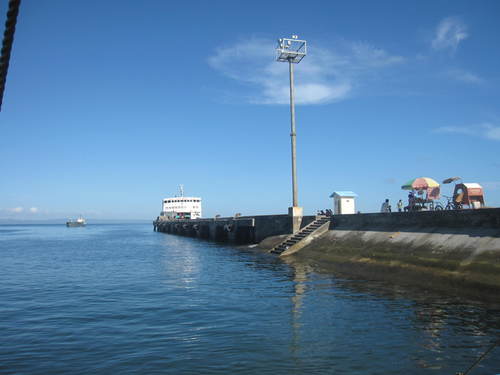
Bulan. The picturesque coastal town of Bulan was one of the first migration destinations of the Asuncions of Sta. Cruz. The spirit of the time of transition had already been felt in the Asuncion household. The master painter Justiniano was the first to realize that it was no more his time. Styles had changed and so was the taste of the artistic consumers. New names like Luna and Hidalgo were in everyone’s tongue  as they had just brought home the bacon from Europe. It was this existential uncertainty that drove Justiniano to follow his son Zacharias in Bulan who had already successfully established himself being a grocery store owner and his political  engagement in the community. The ageing Justiniano for sure did not travel alone but in the company of somebody – probably Benita.

justiniano asuncion from damian domingo book, 2010 (5)
Dolores Paterno
ca. 1870 by Justiniano Asuncion

Binãn and Pasig. Perhaps around this time, those pretty nieces of Justiniano, once his favorite models for his portrait works, also moved southwards of Manila, namely, Binãn, Laguna, hence, making Binãn the second known migration place of the Asuncions. These women, Romana and Valentina Asuncion were the daughters of Antonio Asuncion (born 1794), (Justiniano’s brother) whose wife was Remigia Sta. Ana of Pasig. The third place where an Asuncion migrated was Pasig with Antonio Asuncion, a known artist and where he also became Gobernadorcilo in his time – true to this rare mixture of politics and arts in the Asuncion  blood. This migration to Binãn resulted ultimately into the blood fusion with Yatco, Carillo-Trinidad and Yaptinchay – all prominent Binãn families.

P1170361
The Binãn Church

We were toured around the center of Binãn by my relative Christopher Yatco where he showed us the houses where  the Yatcos, together with Romana and Valentina Asuncion, once lived. A nostalgic mini tour, shooting pictures of these old spanish houses as I tried to imagine how they lived there at that time. Romana and Valentina were my first cousins, me being three generations younger.

P1170380P1170374

P1170389P1170373

P1170377P1170390

Valentina Asuncion married a Yatco which is one of the oldest gems of  Binãn. His name was Ignacio.  His brother Gregorio was the father of Ysidro Yatco, the progenitor of the “Tres Marias de Yatco” of Binãn. The merchant’s Ysidro Yatco wife was Bonifacia Mercado, sister of Jose Rizal’s father, Fransico Mercado. The Tres Marias- Salud, Leonila and Paz- were Jose Rizal’s first cousins. (The young student Jose Rizal did not use his  family name Mercado upon the advice of his brother Paciano to avoid being linked to Father Gomez who was executed by the Spaniards).


asuncion legacy
Filomena Asuncion Villafranca

Valentina Asuncion and Ignacio Yatco’s children were Eleuterio, Jose, Leoncio and Filomena [ married to Eugenio Alzona]. (Note: There are two other Filomenas: One Filomena [married to a Castrillo] , daughter of  Romana Asuncion Carillo and another Filomena [married to a Villafranca], daughter of Leoncio Asuncion [born 1813] , Justiniano’s older brother. )

According to Christopher Yatco (born 1974), Eleuterio Yatco y Asuncion had a son in the name of Francisco whose wife was Asuncion Belizario (here the name Asuncion is a first name).Their children being : Josefina Yatco (married to Andy Francia),  Digna Yatco (married to Momoy Concepcion),  Thomas Yatco (married to Florinda Sabater), Ruben Yatco (married to Adelaida Ponce) and Ernestina Yatco (a spinster) .

P1160596
Jun, Christopher, Florabel and Mila
November 2012, Felix Restaurant, Greenbelt 5 Makati

Christopher Yatco’s parents are Ruben Yatco and Adelaida Ponce. Christopher is a soft-spoken man, open-minded, friendly, very generous, informed and interested in many things. He and his wife Florabel Co- Yatco run a chain of reputable restaurants in Metro Manila. This photo above was taken at Felix restaurant owned by Chris and Florabel, a great venue with excellent food, service – and a jazzy background music! Indeed, they’re very industrious and successful entrepreneurs. Christopher’s interest in genealogy is amazing at his age despite the work that he has as a businessman – in a true Yatco- Asuncion fashion. He is a first cousin three generations younger of Don Ysidro Yatco, once a prominent business person in Binãn. His great, great-grandfather Antonio Asuncion had not the slightest idea that, 218 years after his birth, one of his “offsprings” in the name of Christopher would meet another offspring of his younger brother Justiniano. We both sensed the significance of that evening, acknowledging that we both are living extensions of them, our ancestors,  and that we have the duty to look back and honor them. Christopher is my fourth cousin a generation younger  and fifth cousin to my sons.

The Yatcos and Mercados are related as in-laws. We may say that Ysidro Yatco, being the husband of Jose Rizal’s aunt Bonifacia Mercado, was Jose’s “uncle in-law” (or Jose Rzal being Ysidro’s “nephew in -law”) and so were Ysidros’ other brothers, as they were the uncles of the Tres Marias. From the surface there seems to be no direct blood relationship among the other Yatcos with the Mercados and that all other Yatcos do not carry the Mercado’s genes, that they are just in- laws. Yet Bonfacia’s next offsprings carry the Yatco genes in themselves, the same copy that Christopher has. And if we would go a little a deeper in the sense that we would forget people and talk of blood as a collective entity then the mixing of these two bloods – the Yatcos’ and the Mercado’s”- through the union of Ysidro and Bonifacia- had ultimately effected a chemical bonding of both bloods which affects all other people carrying these bloods. This is perhaps what we mean when we say ” that person is my distant relative”.

If in-laws are distant relatives, then it goes beyond the common consanguinity relationships from first to seventh cousins. For how distant is a distant relative really? Who and what defines and limits relationships? The western concept of family relationship is very limited to biology. There are cultures and even certain people that regard family relationship beyond this common concept. The English term “next of kin” does not necessarily mean a blood-relative. And a person has the natural right to call somebody to whom he or she feels strong affinity as brother or sister. There is somehow also a spiritual dimension to human and family relationship. I mean, if we would extend the line of Ysidro Yatco as son- in-law of Juan Mercado, the grandfather of Jose Rizal, and Christopher being a great, great grand-nephew of Ysidro Yatco, therefore, Christopher could be Jose Rizal’s three generations younger “first- cousin-in-law”, with Paz, Salud and Leonila being Jose Rizal’s direct (blood) first cousins as seen from Jose Rizal’s family tree and Christopher being Salud, Paz and Leonila’s second cousin by blood, two generations younger as seen from the Yatco family tree.

With Romana Asuncion, the ninth child of Antonio Asuncion and Remigia Sta. Ana, the Asuncions got connected with another prominent Binãn family, the Carillo-Trinidad. Romana married Andres Carillo-Trinidad. Their daughter, Petronilla married a Yatco (as if following the foosteps of her aunt Valentina Asuncion). His name was Fermin Yatco y Yaptinchay, the son of Aniceto Yatco and Simeona Yaptinchay. Aniceto was Ignacio’s brother. Simeona herself was a daughter of a Carillo-Trinidad, Maria, who became the wife of the first Yaptinchay, namely Yap Tin Chay, a migrant Chinese, with Yap as the family name and Tin Chay the first name. However, his descendants adopted the combined names Yaptinchay as their family name (source : Toto Gonzalez). How Andres and Maria Carillo- Trinidad were related to one another is my question to the  Carillos of today.

But you may have noticed by now that Fermin Yatco y Yaptinchay who married Petronila Carillo- Trinidad, actually was a Carillo- Trinidad also through his grandmother Maria Yaptinchay  y Carillo- Trinidad. Hence, Petronila and Fermin were blood relatives.

20776478_10155662263893817_6651737840113576243_o
Romana Asuncion, on the right.

Now, Petronila’s and Fermin Yatco’s son, Macario Yatco y Carillo  (y Asuncion y Yaptinchay!) married Guia, an Asuncion and daughter of Zacharias Asuncion from his first wife Juana Zalvedia. I was informed that Juana Zalvedia was also an Asuncion- being the daughter of Canuta Asuncion, Justiniano’s sister. (Love seemed to be so blind among the first Asuncions). From this union between Macario and Guia was born a daughter named Gracia Yatco (y Carillo y Asuncion y Asuncion). Formally, Guia was three times an Asuncion and her daughter, Gracia, four times an Asuncion. Gracia married a Rojas (hope the mother of Emmanuel Rojas, Sr. was not an Asuncion!) and they gave birth to Ed and Noel Rojas. Hence, although a Rojas, and taking Zacharias as point of reference (common ancestor), Ed and Noel are more Asuncion than an Asuncion because they are five times an Asuncion, formally speaking, through Zacharias- Zalvedia- Macario- Guia- Gracia! And they can count two great, great grandfathers, too: Justiniano Asuncion (through Zacharias) and Antonio Asuncion (through Romana)- two great artists!

Mini reunion. This explains the intense drive and fascination of Noel and Ed in their search for the Asuncion roots! I met them last November 2012 in a restaurant somewhere in Ortigas, and this  intense discussion shown in this photo is not about the Menu for the dinner but about the family tree that Ed and Noel brought with them. We enjoyed the food, naturally, but we spent more time discussing the tree than eating that evening of November.

P1160551
Jun, Ed and Noel
P1160569
The Asuncion women
P1160581
Noel with daughter Anna

Now, with all this complexity because of internal marriages, how are we related really to one another? Taking Mariano Asuncion as common ancestor,  Juana Zalvedia  (Zacharia’s first wife) would be a niece to Justiniano,  a first cousin to Zacharias, first cousin a generation younger to Adonis;  Andres, Sr. being first cousin two generations younger and me first cousin three generations younger. Her daughters, Consuelo and Guia, formally speaking, were second cousins,- and yet were half-sisters, –  of Adonis, ( half-) aunts of Andres, Sr.  Now, to Guia’s daughter, Gracia, I would be a generation younger third cousin- while I’m a fourth  cousin to Ed and Noel, Gracia’s sons.

This picture would change, however, if we would take Zacharias as the starting point (common ancestor): Guia and Consuelo remaining as Adonis’ half-sisters; I become Gracia’s one generation younger first cousin while Ed and Noel being my second cousins. Making it more simpler, if we follow Macario’s line (remember Macario was also an Asuncion through Petronila) all the way to Antonio Asuncion and finally to the patriarch Mariano Asuncion, then Ed and Noel would appear as one generation younger fourth cousin to me. In truth, I’m younger than them. But why this?

(to be continued) jun asuncion

—————————————-

Remembering The Three Martyrs Of Bulan

(Taken from Bantayog ng mga Bayani website: “Bantayog ng mga Bayani Foundation honors those who fought, died and were martyred during the repressive rule of Ferdinand Marcos. It keeps a roster of 207 heroes and martyrs, adding more to the list as new persons are nominated and their specific contributions established. The names of these heroes and martyrs are etched on the Bantayog’s Wall of Remembrance, a granite structure that serves as the centerpiece of the whole Bantayog complex”)

VytiacoVYTIACO, Ma. Antonia Teresa V.

Ma. Antonia Teresa Vytiaco, who was Nanette to family, spent her growing up years in Bulan, Sorsogon and later in Metro Manila. She was the eldest of seven children. Her mother worked as a high school teacher and college instructor. Her father was of a landowning family in Bulan.

Nanette loved animals, played the guitar, and in high school, discovered that she loved to dance. She won a government scholarship in college and started on a degree in veterinary medicine, following after her grandfather’s footsteps. During the July-August fl oods of 1970, Nanette was among the hundreds of UP students who volunteered for fl ood relief operations. The experience politicalized her. She started joining rallies and attending workers’ pickets. Later she joined the UP chapter of the Samahang Demokratiko ng Kabataan (SDK) and became more deeply involved in activism. She spent several weeks in Central Luzon learning about community organizing. She met her future husband Nicanor Vergara who was a member of the Hukbong Mapagpalaya ng Bayan (HMB), an armed group that traced its roots to the anti-Japanese resistance.

In 1971, Nanette and her husband left Manila and moved to Bicol as fulltime members of the Kabataang Makabayan, traveling around the region organizing KM chapters.

Nanette is remembered by fellow activists in Gubat, Sorsogon, as a dedicated worker, thoughtful with comrades, humble and patient. Although urban-bred, Nanette did not spare herself the diffi cult working and living conditions that her comrades also had to suffer.

Nanette and fellow KM activists in Bicol hatched many plans, primarily for education of the local people, using mostly cultural activities, such as skits, jamming sessions, dance-and-mime, and poetry reading. Nanette acted in the plays and sometimes directed them as well. Her interpretation of the Amado Hernandez poem Kung Tuyo na ang Luha Mo, Aking Bayan always moved her audience to tears, comrades remembered.

When martial law was imposed by Ferdinand Marcos, Nanette and her comrades continued with their consciousness-building activities clandestinely. Just days after the declaration of martial law, Nanette and her group were distributing handwritten fl iers reporting about a fi refi ght that erupted between a unit of the New People’s Army and government soldiers. To avoid detection, Nanette left the fl iers inside the churches for the church-goers to read.

On 10 November 1972, Nanette was visited by her mother in a village just outside of their town. Nanette was four months’ pregnant, in high spirits, and ate heartily of her mother’s adobo. Her parents wanted her to surrender to the military authorities because of the growing danger to her safety but Nanette said: “I have chosen my path. I would rather die than surrender.”

Nanette did not survive the day. Later in the early afternoon, Nanette’s group was pursued by a group of constabulary soldiers and Nanette was killed in the exchange of fire.

A street in her town has since been named after her, just as another has been named after townmate Liliosa Hilao, another Bantayog martyr. The municipal resolution that authorized the naming of the two streets cited the two women as “examples of determination and spirit that the coming generations, young and old alike, can emulate.”

Death:November 10, 1972.

Place of Death: Bulan, Sorsogon

—————————————

HILAO, Liliosa, R.

Hilao,%20Liliosa%20R_Liliosa Hilao was a sickly student whose frail body was wracked by regular asthma attacks.

However, she was strong of mind and convictions. In 1970, she joined the Samahang Demokratiko ng Kabataan (SDK). She could hardly join rallies due to her poor health but she expressed her convictions in her writings as associate editor of the Hasik, the student paper at the Pamantasan ng Lungsod ng Maynila, where she was a student in communication arts.

Despite her weaknesses, Liliosa (“Lilli”) was active in school. She graduated with honors in elementary and high school. She was features editor of her high school organ. In college, besides writing for Hasik, she was twice elected as student president of the communication arts department. She was a representative to the Pamantasan students’ central government. She served as secretary of the Women’s Club of Pamantasan, and organized the Communication Arts Club also in Pamantasan. She was also a member of the College Editors’ Guild of the Philippines.

Lilli was abducted in 1973 by drunk soldiers who raided her family’s house. She was found dead the following day.

The soldiers, members of the Constabulary Anti‑Narcotics Unit (CANU), had come looking for her brother. Lilli had demanded a search warrant, and was slapped and her body mashed by the soldiers. Then she was handcuffed and taken in for questioning. A brother‑in‑law came to see her at the camp and found her face swollen. Lilli said she was tortured. The following day, Lilli’s sister Alice was called to the Camp Crame Station Hospital where she was told Lilli was in serious condition. Alice found Lilli dead.

The official CANU report was that Lilli committed suicide by drinking muriatic acid. But post‑mortem findings confirmed her torture. Her face was severely swollen. Her lips bore burns from cigarette butts. She had 11 injection marks in her arms and deep handcuff marks on her wrists. Her torso was badly bruised with finger marks and gun‑barrel marks. It is possible she was repeatedly abused sexually. Her brains and other internal organs were cut to pieces, soaked with muriatic acid.

Lilli died before she could graduate, but because she was a consistent scholar, Lilli was given posthumous honors (cum laude) and her seat kept vacant for her during the graduation ceremonies. Lilli’s was the first reported case of death under detention during martial law.

Birth: March 14, 1950.

Place of Birth: Bulan, Sorsogon.

Death: April 6, 1973.

Place of Death: Camp Crame, Quezon City

————————

ARIADO, Antonio G.  

The boy Antonio was born to a landed and well-to-do family in Sorsogon province and he grew in the midst of plenty. He excelled in academics and had a variety of interests such as acting, performing, and sports, particularly basketball, volleyball and table tennis. He also liked reading poems and giving orations. He would memorize long poems and recite them before his audience, usually spellbound playmates. His parents’ tenants called him “escribiente.”

Antonio, or Tony to friends, moved to Manila for college and became involved in the 1970s peace movement. His boarding house in Manila’s Sampaloc district saw long hours of impassioned discussions among students that included Tony and several of his provincemates.

The Vietnam War was escalating and the Marcos government had sent a contingent of soldiers called the Philippine Civic Action Group, or Philcag, to that country. The move drew strong criticism from Filipino peace groups and student groups. The National Union of Students of the Philippines called on students to protest the Philcag.

Tony was in his first semester in college when he joined a rally at the Manila Hotel where a Vietnam conference was being held. The rally was violently dispersed, resulting in street fighting between police and students, and giving Tony his first taste of teargas and truncheon.

Far from getting discouraged, Tony joined more rallies in front of Malacañang, the Congress building and the US Embassy, and in Plaza Miranda, mostly in protest of the Vietnam war. He joined more discussion groups involving students and laborers from Manila’s factories.

Tony became a member of the moderate NUSP and the more militant Kabataang Makabayan. His experience of the First Quarter Storm of 1970 sharpened his political awareness. School became second priority. He took a few units only to allow him access into the campus of the Araneta Univesity for his organizing work. By 1971, he had stopped going to school altogether.

Later, he went home to Sorsogon, more for political than sentimental reasons. Relieved at first to see their son back, Tony’s parents soon realized he had come home with his activism. He favored the company of his parents’ farmer-tenants, spending very little time at home. When he did, his talk focused on the farmers’ poverty and in convincing his parents “to share more” with them.

Tony helped organize a KM chapter in Sorsogon and undertook its propaganda and education section, while also helping in organizational work. Eventually he became local KM chair, the KM headquarters becoming more like home to him than his own. He gave fiery speeches during rallies and earned a local reputation as an activist leader and speaker.

Under his leadership, Sorsogon’s activists joined a historic “long march,” that took almost four days. The marchers were sometimes harassed by politicians’ goons, but more often they received warm greetings from local people.

By 1971, Tony and his fellow Bicolano activist leaders were in the government “wanted” list. When Marcos instituted martial law in 1972, Tony went underground and, not long after, joined a small group of armed activists living clandestinely in the villages far from the towns.

As his name became a military byword in Sorsogon, his family suffered for it. Many of his relatives were harassed by soldiers. His father was taken to prison for a week. His brother Norberto, a policeman, was mauled by soldiers for refusing to join a military operation.

Tony and 12 others died in a military ambush less than a year after he had gone underground. When his family brought his body for viewing at the townhall, some of the family’s tenants and villagemates wiped the activist’s battered face clean of blood and grime, a final gesture that showed their love, respect and affection for this young “escribiente” who had given up his short life for their cause. Tony was 24.

Birth: January 15, 1949
Place of Birth: Isidro, Bulan, Sorsogon
Death: July 24, 1973
Place of Death: Sorsogon
———————————

CEBU GOVERNOR SHOULD VACATE CAPITOL

JGL Eye

By JOSEPH G. LARIOSA

(© 2013 Fil Am Extra Exchange)

CHICAGO (FAXX/jGLi) – When I advised then San Juan, Metro Manila Mayor Joseph Estrada to ignore the order of Revolutionary President Cory Aquino in 1986 to vacate the San Juan municipal hall, I questioned the validity of the order because it was not addressed to anybody. I told Mayor Estrada the anonymous order was an insult to his person and his office.

If he really wanted to make a point, Mayor Estrada should call a television cameraman and tear the order to pieces, which he did. Estrada would leave the mayor’s office after a violent take-over by the Aquino forces. And only after presenting a detailed financial report – a surplus – which was unheard of at the time to the Aquino government officials so Estrada would not be accused of running away with the taxpayers’ money.

I was already in Chicago, Illinois, when the iconic defiance of Estrada of tearing the order that conjured an image of a Bonifacio tearing up the cedula (residence certificate) and would launch Estrada’s political fortune to the stratosphere.

Of course, I don’t want this to happen in Cebu. And I appeal to former President Estrada and his allies, including Vice President Binay and Senate President Enrile, to tell Cebu Governor Gwendolyn F. Garcia to vacate the capitol while she appeals her case. What she needs are lawyers, not her grandstanding supporters, to win her case.

The case of Gov. Garcia, whose six months suspension by the late Sec. Jesse Robredo of the Interior and Local Government was sustained by President Noynoy Aquino’s Executive Secretary Paquito N. Ochoa, Jr., was a far cry from Estrada’s case.

In Estrada’s case, the order came out of the blue. But in Garcia’s case, there was a full-blown administrative hearing, where she was given a day in court. She knew a decision was forthcoming.

ROBREDO FOUND GARCIA GUILTY OF GRAVE ABUSE OF AUTHORITY

Robredo found Garcia guilty of grave abuse of authority among others for usurping the appointing power of the Vice Governor, for hiring 19 consultants without prior authorization from the Sangguniang Panlalawigan (SP), and “slashing the budget, while not illegal, is suggestive of harassment, oppression, and vindictiveness with respondent utilizing the powers of her office and affinity to the SP.”

A copy of the decision on Garcia’s case was emailed to me by Provincial Board Member Vladi Frivaldo of Sorsogon, whose Governor, Raul R. Lee, was denounced by Frivaldo in a privilege speech earlier before the SP for “usurping legislative authority of the Vice Governor by transferring the funds from SP to the Office of the Governor and reducing the budget of Vice Governor from PHP23.2-M in 2009 to PHP2.5-M in 2011 or 76% and the SP budget by 30%.”

Garcia’s trouble started when the late Vice Gov. Gregorio G. Sanchez, Jr. filed complaint against her before the office of Secretary Robredo on Nov. 8, 2010 for encroaching upon Sanchez’ legislative powers, grave misconduct and abuse of authority.

On July 26, 2012, a few months before his death, Secretary Robredo came up with a ruling and elevated the case to the Office of the President “for appropriate action.”

According to the decision of the Office of the President, Gov. Garcia gravely abused her authority by: (1) encroaching on the appointing authority of the complainant over employees of the Office of the Vice-Governor (Sanchez); (2) slashing the budget of the Office of the Vice Governor by 61%; (3) stopping the publication of the Legislative Gavel and non-payment of honoraria of the publication staff; (4) transferring the funding of the Legislative Research and Codification Project from the Office of the Vice-Governor to the Office of the Governor; (5) hiring consultants without prior authority from the Sangguniang Panlalawigan (SP) or Provincial Board; (6) withholding the overtime pay of the personnel of the Office of the Vice Governor; and (7) issuing a check worth PHP10-M without prior authority from the SP.

ELECTION CONDONATION OF PRIOR MISCONDUCT

Gov. Garcia denied all the allegations in the complaint with respect to acts that occurred before June 30, 2010, (when she was re-elected for the third time as governor), invoking the case of Aguinaldo v. Santos. The case held that a public official’s re-election to office operates as a condonation of the official’s misconduct committed during a prior term. I agree with this ruling only if the misconduct was made known to the voters on or before the election.

Garcia was later accused of charges she committed after June 30, 2010.

The ruling did not give credence to her claim that all acts complained of are within a governor’s powers of supervision and control over all programs, projects, services, and activities of the provincial government.

Prior to the investigation of the complaint, Sanchez died. But DILG moved forward with the formal investigation, requiring parties to submit their respective memoranda.

In her memorandum, Gov. Garcia moved for the dismissal of the case due to the death of the complainant, “absence of a valid substitution of complainant” and lack of interest to proceed on the part of the complainant’s successor in office.

In his ruling, Robredo said “administrative case survives the death of the complainant and is not rendered moot by the dismissal of related civil cases,” adding, “unilateral acts of a private complainant will not bind the disciplining authority in its exercise of disciplinary power over erring public officials” and “complainant is only treated as witness.”

The ruling also found Garcia to have usurped the appointing power of the Vice Governor, who has a power to appoint “employees of the Sangguniang Panlalawigan, as well as those of the Office of the Vice Governor, whose salaries, are paid out of the funds appropriated for the Sangguniang Panlalawigan.”

After the complainant Sanchez died, Garcia restored the salaries and wages of contractual employees of the Vice Governor, which evoked “malice and bad faith,” “suggestive of an arbitrary exercise of authority,” according to the ruling.

But when Sanchez’s successor, Vice Gov. Agnes Magpale, “transferred to another political party,” Garcia suddenly reduced “the budget of the Vice Governor and the SP for 2011,” which indicated “malice and bad faith,” the ruling added.

Garcia also gravely abused her authority when she hired 19 consultants without “prior, express and separate authorization from the SP.” The ruling said, “continued practice does not justify an illegal act and no vested right can be acquired by an administrative official from an erroneous construction of the law.”

I just hope when a similar complaint is filed against Gov. Raul Lee and other governors, the Office of the President would swiftly investigate and carry out its suspension order as it did against Governor Garcia. (lariosa_jos@sbcglobal.net)

JOSEPH G. LARIOSA

Correspondent

Journal Group Link International

P. O. Box 30110

Chicago IL 60630

U.S.A.

Tel. 312.772.5454

Telefax 312.428.5714

———————————————-

Law bans Hit List Of Gov’t Enemies

(I find this article by Michael Lim Ubac  of Inquierer News very important, hence I reprinted it here. See also Mr. Lariosa’s article below entitled Gangsters Of Capitalism. junasun)

Rights groups urge swift enforcement

By Michael Lim Ubac

1:23 am | Sunday, December 23rd, 2012

The military is now prohibited from issuing a hit list—officially called “order of battle”—with the enactment of a law against enforced disappearances, Malacañang said on Saturday.

Order of battle is a list of people security forces say are “enemies of the state” to make them “legitimate targets as combatants,” including those not formally charged with crimes.

People on the military’s hit list are open to assassinations, abductions, harassment and intimidation.

Those who have disappeared are known as desaparecidos—the disappeared—a term first used in Latin America to refer to the critics of the Chilean dictator Augusto Pinochet who were seized by state security forces and never seen again.

Local security forces have used the order of battle to justify the seizure and detention of critics of the government, mostly activists suspected of being members of the communist New People’s Army or of front organizations belonging to the communist movement in the Philippines.

The new desaparecidos law “rejects [the] use of an order of battle or any similar document to exempt” state agents from the prohibition or “justify” the detention of enemies or critics of the government, President Aquino’s deputy spokesperson, Abigail Valte, said in a radio interview.

The President signed the Anti-Enforced Disappearance Act late Friday, hours after attending the 77th founding anniversary of the Armed Forces of the Philippines (AFP).

The new law, the first major human rights legislation under Mr. Aquino’s nearly three-year-old administration, imposes up to life imprisonment for state agents convicted of being involved in enforced disappearances.

Its enactment has made the Philippines the first country in Asia to treat enforced disappearance as an offense distinct from ordinary kidnapping.

US-based nongovernment organization Human Rights Watch challenged Mr. Aquino to “move quickly to enforce it.”

“Effective enforcement of this new law by the Philippine government will deter enforced disappearances and address the deep-seated problem of impunity for human-rights abusers,” Brad Adams, the group’s director for Asia, said in a statement.

Missing

According to the human rights group Karapatan, more than 1,000 political activists and suspected supporters have disappeared since the 1972-1986 dictatorship of Ferdinand Marcos, including more than 200 under Mr. Aquino’s predecessor, Gloria Macapagal-Arroyo.

Karapatan has documented 12 cases of enforced disappearance since 2010 under Mr. Aquino.

The desaparecidos law defines an enforced disappearance as the abduction or “any form of deprivation of liberty” of a person by state officials or their agents who subsequently conceal the person’s fate or whereabouts.

Human rights groups have reported that such people have been kept in a network of “safe houses” where they are tortured and sometimes killed, their bodies buried in unknown graves or dumped in remote areas. They say this was extensively practiced during the Marcos regime.

The law against enforced disappearance prohibits secret detention centers and safe houses and authorizes the government to conduct “regular, unannounced … inspections of all places of detention and confinement.”

The law cannot be suspended even during wartime and does not permit amnesty for those convicted. Superior officers of those found responsible are to be equally penalized.


Reporting requirement

According to Valte, the law requires public officials and private citizens to report forced disappearances, and state agencies to investigate cases and report their findings.

It also requires the regular updating of the lists of people being held in state detention centers.

The number of attacks against political opponents of the government has risen alongside the growth of the 43-year-old communist insurgency and the decades-long Moro rebellion in Mindanao, which appears close to a political solution following a preliminary peace accord by the government and the Moro Islamic Liberation Front signed in October.

Mr. Aquino, son of prodemocracy icons, has pledged to take steps to prosecute violators of human rights during the previous administration and prevent new ones. Rights groups, however, say violations have continued under his administration.

The groups have urged Mr. Aquino to prosecute violators of human rights during the Arroyo administration, particularly retired Maj. Gen. Jovito Palparan, who has gone into hiding after being ordered by a court to stand trial for the enforced disappearance of University of the Philippines students Karen Empeño and Sherlyn Cadapan in 2006.

Palparan is also believed to have knowledge of the enforced disappearance of left-leaning agriculturist Jonas Joseph Burgos, son of the late journalist Jose Burgos, in 2007.

Rights groups have also urged the Aquino administration to give priority to the passage of a bill pending in Congress to compensate thousands of victims of human rights abuses, including enforced disappearance, during the Marcos dictatorship. With reports from AFP, AP

The Moon Is Not Yet Round

by junasun

Ninong Ronnie just passed away… our thoughts and prayers are with him and may he rest in peace…

With him we have lost another one of the strongest pillars of Asuncion family. But he lives in our memories…

We sustain the family’s stability by being connected ever more. For what’s the use if we took everything for granted and if we kept  secret the things we know about our history? Knowing and appreciating one’s history strengthens identity and connectedness to one’s roots.

And one way of doing this is to continue the work that we have started here which is actually based on the early works of Dr. Ronnie Asuncion, et al.

So, pass around every helpful Asuncion “tidbit” if you have it. The article Tidbits from Sor Marissa was actually an e-mail which I received from my cousin Ed Rojas. I thank Sor Marissa for these tidbits which she shared to Ed. I mean these tidbits must be shared so that they won’t get lost forever. Dr. Ronnie had shared to us what he knew and so I really thank him so much.

With Zacharias, the Asuncions became connected with the town of Bulan. Coming from Sta. Cruz, Manila, I wondered how he must have felt on his first day in Bulan. I suspect well that his motivation in coming to Bulan was not business but his love –  if Zalvedia was a Bulaneña. He must have met  Juana Zalvedia – or any of these three women – somewhere in Manila and went to Bulan after this woman had left Manila for Bulan. Without internet and skype technology at that time, meeting  her in Manila was really the only way possible.

I don’t support the theory that he came to Bulan then in search of business for at that time- and even now- Bulan sounds like a place so far away from civilization. And the enormous exertions to travel with public transportation would surely kill your initial motivation. Unless it’s love- as we all know- for love moves mountains, conquers time and space.

So, if it was love then that explains why we love Bulan that much.

Here again that portion of Ed’s e-mail which I find extremely interesting and with questions posed which show Ed’s deep interest in his family’s history:

“Some tidbits from Sor Marissa:

1) Zacharias had a second wife after Juana Zalvidea & before his wife Remedios Ramirez. Her surname was Loilo. They had a child, but the child died, and in the Asuncion family tree we have, no mention of their names appeared.

2) Zacharias must have done well in Bulan, as he was able to send his children to Manila to pursue higher education. According to Sor Marissa, when Kenerino came back to Bulan after college in UP, he was shocked that his elementary classmates never got to higher education (no high school and no college). That inspired him to establish the Southern Luzon Institute, which later became SLI-KRAMS.

The information is interesting; because we know our great grandparents (generation of the children of Zacharias) got to finish college, so that must have been in Manila . And if there was no high school in Bulan then, they must have been shipped to Manila for high school at an early age and on to college.

In a past family get together, Auntie Nellie Intengan Jocson remembers her mother Consuelo Asuncion and aunt Ghia Asuncion (both daughters of Zacharias with Juana Zalvidea) were brought up by their unmarried aunt Benita, the older sister of Zacharias. Since Consuelo & Ghia knew Bicolano, can we assume they took their elementary schooling in Bulan? Was their aunt Benita also in Bulan during their elementary school days?

Or was Benita the guardian of Consuelo and Ghia when they had to go to Manila for high school? Who took care of their siblings Jacobo, Adonis, Justiniano, Kenerino, Rodolfo when they too had to go to Manila for high school and college?”

If Juana Zalvedia was from Bulan this would explain why her daughters Consuelo and Ghia Asuncion could speak the Bicol dialect and it’s highly probable that Consuelo and Ghia Asuncion grew up and did their elementary schooling in Bulan. Remember that Zacharias- speaking for sure only Tagalog and Spanish- also had to learn the Bulan dialect. So I don’t think he was to be credited much for his daughters’ Bicol language acquisition. Still, it needs to be clarified precisely which kind of Bicol dialect had Cosuelo and Ghia spoken for it would show with certainty the origin of their mother Zalvedia- and if Consuelo and Ghia really grew up in Bulan.

With Benita, the daughter of Justiniano and older sister of Zacharias, I assume she came with her ageing Father and Master Artist Justiniano to Bulan. An unmarried daughter usually looks after her ageing parents and – under favorable circumstances – also becoming a guardian to her own nephews and nieces. Such was the case of Benita – and this information is new to me and I’m really grateful to Benita- and to Consuelo and Ghia-  for probably also looking after my little lolo Adonis when he was a highschool and college student in Manila!

Bulan is such a significant place for the Asuncion of Justiniano’s line. In the meantime so many Asuncions have already left Bulan. For those Asuncions who are still in Bulan, learn to treasure your history and abide by the Asuncion’s heritage of hard work, scholarship, bravery and honest public service. Corruption is not an Asuncion trait.

As I have said, many have left Bulan but who knows how many will be coming back? The moon is not yet round. Goodbye Tio Ronnie…

Addendum (December 18, 2012)

Last November I met two relatives in Manila who came from the Ghia line. They were Ed and Noel Rojas. From them I have learned that Juana Zalvedia (first wife of Zacharias) and Zacharias were cousins! This overturned my assumption that Zalvedia hailed from Bulan. Zalvedia could only come from Manila- unless she and/or her family were already there in Bulan before Zacharias (This would discard then our knowledge that Zacharias was the first Asuncion who came to Bulan!). Or was Zacharias not alone but in the company of Zalvedia when he came to Bulan? Until now I have assumed that Zacharias came to Bulan all alone in search of his beloved. In the light of this new information that they were relatives, I now assume that Zacharias came to Bulan in search not for business opportunities in the first place but for a remote hideaway where he could live with his cousin and wife Zalvedia in peace, away from the Asuncions in Manila. I just assume as I please since this is my privilege being an Asuncion. I would be more than beyond the moon, however, if my assumption would turn out true or not. For that would mean we have moved a step forward again in our search for these tidbits of our past.

—————-

Some tidbits from Sor Marissa

From Ed Rojas

Dear fellow Asuncions,

Last Saturday I picked up Sor Marissa at her sister’s house, Dr Numen Gonzales, we were then to proceed to Noel’s (my brother) place. At Dr Numen’s house I met one of our second cousins Xavier Asuncion (son of Roberto Asuncion of Bulan). Roberto is the oldest sibling of Sor Naty Asuncion, Dr Iluminada “Numen” Asuncion-Gonzales and Sor Marissa Asuncion. The siblings are the children of Jacobo Asuncion (Jacobo married to Trinidad Rosales).

Jacobo Asuncion’s siblings include Adonis (line of Jun Asuncion ), Justiniano (founder of UPSILON), Kenerino (founder of Southern Luzon Institute: Kenerino Ramirez Asuncion Memorial School or SLI-KRAMS) and Rodolfo (married to Monica Gerona and dad of papa Ronnie).

Jacobo, Adonis, Justiniano, Kenerino and Rodolfo are five of the thirteen children of Zacharias with Remedios Ramirez (based on the copy of the Asuncion family tree I have)..

Some tidbits from Sor Marissa:

1) Zacharias had a second wife after Juana Zalvidea & before his wife Remedios Ramirez. Her surname was Loilo. They had a child, but the child died, and in the Asuncion family tree we have, no mention of their names appeared.

2) Zacharias must have done well in Bulan, as he was able to send his children to Manila to pursue higher education. According to Sor Marissa, when Kenerino came back to Bulan after college in UP, he was shocked that his elementary classmates never got to higher education (no high school and no college). That inspired him to establish the Southern Luzon Institute, which later became SLI-KRAMS.

The information is interesting; because we know our great grandparents (generation of the children of Zacharias) got to finish college, so that must have been in Manila . And if there was no high school in Bulan then, they must have been shipped to Manila for high school at an early age and on to college.

In a past family get together, Auntie Nellie Intengan Jocson remembers her mother Consuelo Asuncion and aunt Ghia Asuncion (both daughters of Zacharias with Juana Zalvidea) were brought up by their unmarried aunt Benita, the older sister of Zacharias. Since Consuelo & Ghia knew Bicolano, can we assume they took their elementary schooling in Bulan? Was their aunt Benita also in Bulan during their elementary school days?

Or was Benita the guardian of Consuelo and Ghia when they had to go to Manila for high school? Who took care of their siblings Jacobo, Adonis, Justiniano, Kenerino, Rodolfo when they too had to go to Manila for high school and college?

Hope the other Asuncions can help.

Thanks,

Ed

GANGSTERS OF CAPITALISM

JGL Eye

By JOSEPH G. LARIOSA

(© 2012 Journal Group Link International)

CHICAGO (jGLi) – “I spent 33 years and four months in active military service and during that period, I spent most of my time as a high-class muscle man for Big Business, for Wall Street and the bankers.

“In short, I was a racketeer, a gangster for capitalism. I helped make Mexico and especially Tampico safe for American oil interests in 1914. I helped make Haiti and Cuba a decent place for the National City Bank boys to collect revenues in.

“I helped in the raping of half a dozen Central American republics for the benefit of Wall Street. I helped purify Nicaragua for the International Banking House of Brown Brothers in 1902-1912.

“I brought light to the Dominican Republic for the American sugar interests in 1916. I helped make Honduras right for the American fruit companies in 1903.

“In China in 1927, I helped see to it that Standard Oil went on its way unmolested. Looking back on it, I might have given Al Capone a few hints. The best he could do was to operate his racket in three districts. I operated on three continents.”

This quote from the talk last Sunday, Oct. 21, at the public forum, “Living the Social Gospel Today” at the Philippine American Ecumenical Church in Chicago, Illinois at the 40th anniversary observance of Philippine martial law by Filipino American author and theologian, Dr. Eleazar Fernandez, was a direct quote from Major Gen. Smedley Darlington Butler, an outspoken critic of military adventurism and at the time of his death the most decorated Marine in U.S. history – for being one of 19 men to receive the Medal of Honor twice.

General Butler, who saw action in the Philippines during the Philippine-American War, appears to be the poster boy of trigger-happy Philippine military, among them soldiers of the 27th Infantry Battalion of the Philippine Army led by Lt. Col. Noel Alexis Bravo.

Karapatan, the Alliance for the Advancement of People’s Rights based in Quezon City, Philippines, said it was the soldiers of Colonel Bravo, who strafed the house of an indigenous B’laan tribal leader, Dagil Capion, on Oct. 18 at 6 a.m., killing Dagil’s wife, Juvy, who was two-month pregnant, and their two sons, Jorge “Pap,” 13, and Jan-Jan, 7, in Fayahlob, Sitio Datal-Alyong, Danlag Village, Tampakan, South Cotabato.

Both Dagil and his daughter, Vicky, 5, were wounded.

In order to lure Dagil to give up, the soldiers brought the bodies of Juvy and her sons outside the house. Juvy was a member of Kalgad, a local Lumad organization, which is opposing the Xstrata’s Sagittarius Mines, Inc. (SMI) in Tampakan. Dagil, as B’laan tribal leader, is likewise opposing SMI for exploiting the rich gold and copper deposits in Tampakan.

AQUINO SHOULD FORM INDEPENDENT FACT-FINDING PROBE TEAM

President Noynoy Aquino should immediately order the formation of an independent fact-finding and investigation team composed of human rights groups, the Church, local government, the Commission on Human Rights to look into the massacre.

The military should stop the labeling and targeting of human rights defenders as “members of front organizations of the communists” and “enemies of the state.” It seems the rebels could no longer match the firepower of the military and the military should just take defensive position.

The Philippine government should withdraw its counterinsurgency program, Oplan Bayanihan, which victimizes innocent and unarmed civilians.

As a signatory to the United Nation’s Universal Declaration of Human Rights and other major Human Rights instruments, the Philippines should protect, not violate, the human rights of the Filipino people.

If the large-scale mining of Xstrata’s Sagittarius Mines, Inc. is straying into the tribal property, President Aquino should cancel the mining permit just as the American government has granted American Indian Natives their own reservations.

The massacre of the Capions does not appear to be isolated. In my home region of Bikol, elements of the 49th Infantry Battalion are also being accused in the killing of Barangay Captain Merlyn Bernas last Aug.7 at Barangay Malaya, Labo, Camarines Norte. Bernas was tagged as a member of the New People’s Army. Bernas, however, had the support of her constituents, who turned out in full force to denounce the military for the killing Bernas during Bernas’ funeral procession.

In Bulan, Sorsogon, soldiers from 8th Scout Ranger led by 2nd Lt. Jay Maravilla under the 31st Infantry Battalion also shot and killed on July 17, 2012 a coconut farmer they suspected as NPA member. The killing was announced on local radio by 31st IB Commander, Lt. Col. Judy Torribio.

DISBAND DEATH SQUADS

On the other hand, on April 30, 2012, soldiers from the 9th Infantry Battalion also shot and killed Jovic Estrellado in Gubat, Sorsogon. A PFC Jordan Enconada earlier approached Estrellado to withdraw his case against some members of 9th IB.

President Aquino should dismantle the Peace and Development Team (PDT) that is used as cover as the Army’s Death Squads.

These extra-judicial killings should be stopped and the killers should be punished. If these military men cannot stop the killings under their watch, they should be re-assigned and be re-trained to be sensitive to human rights procedures before they are given new assignments.

Mr. Aquino should never use the military to support what Dr. Fernandez calls “corporate greed” that was denounced by General Butler, who called the U.S. military as “gangster of capitalism.”

Dr. Fernandez said, “When your interest is not of the people, you need the military to protect yourself against the people.

“Protection of the interest of the few leads to repression of the many. This is what the predatory global market does. It goes against the interest of the people. It is anti-democratic and what is at stake here is our democratic life.”

President Aquino should justify reports that his government has informed the United Nations Commission on Human Rights in Geneva, Switzerland last May that “there is armed rebellion in the Philippines that gives him an excuse to use the military to fight the rebels.” He should also countermand the Executive Order No. 546 signed by his mother.

And he should go back to the stalled peace talk with the Communist Party of the Philippines-New People’s Army-National Democratic Front and come up with agreement that will bring about lasting peace.

If he can pull off this agreement with the left, Mr. Aquino will be the first Philippine president to have entered two major peace agreements with rebels within his term of office following the framework agreement his government signed with the Moro Islamic Liberation Front two weeks ago. (lariosa_jos@sbcglobal.net)

JOSEPH G. LARIOSA

Correspondent

Journal Group Link International

P. O. Box 30110

Chicago IL 60630

U.S.A.

Tel. 312.772.5454

Telefax 312.428.5714

 —————————–

TRIBUTE TO BIKOL’S TWO FAVORITE SONS

JGL Eye

By JOSEPH G. LARIOSA

(© 2012 Journal Group Link International)

CHICAGO (jGLi) –

In a span of less than a week, my fellow Bikolanos lost their two favorite sons – Congressman Salvador H. Escudero III of Casiguran, Sorsogon and Interior and Local Government Secretary Jesse M. Robredo of Naga City.

While Congressman Escudero lost his battle with colon cancer at the age of 69 and Robredo lost his life to a plane crash at the age of 54, both certainly died ahead of their time.

Rep._Sonny_H._Escudero

Of the two, I had a close-up look at senior Congressman Escudero, a classmate of my elder sister, Dona L. Hernandez, in the college of veterinary medicine at the University of the Philippines in the 60’s.When Dr. Escudero became Dean of the College of Veterinary Medicine, my sister worked for a few months as a Sorsogon provincial veterinarian, where she met her future husband, the late Jose E. Hernandez from what used to be Bacon and now part of Sorsogon City as a district.

My sister, Dr. Hernandez, parted ways with Dr. Escudero when she immigrated to the United States in the late sixties.

Dr. Escudero’s work ethic and being workaholic served him well him and had not gone unnoticed by the martial law government of President Marcos, who later appointed him as Director of the Bureau of Animal Industry and later as Minister of Food and Agriculture, not Minister of Education as listed in the House of Representatives’ press release. He also became Agriculture Secretary from 1996-1998.

Because of his incorruptible image and as my role model, I sought him out as one of my wedding sponsors.

MADE IT TO THE FIRST DAYLIGHT SAVING TIME IN PH

Despite his busy schedule, Dr. Escudero attended my wedding sometime in 1977 on the day that the Marcos government adopted the first daylight saving time. Making it to an early appointment was no stranger to Ninong Sonny Escudero, who as a teetotaler, usually reported to work at 7 a.m.

Less than two months before his death, I got word that he was very sick as his mobility was confined to a wheelchair. My nephew, Manuel Villamor, in Sorsogon City, told me in a Facebook message, “your Ninong wants to say hello to you. But he is now in a wheelchair.”

But I was surprised that he died so soon last Aug. 13. I wish I could have reached out to him sooner as I emailed his son, Sen. Chiz Escudero, to condole on his father’s death.

The email messages I sent a number of times to some members of the Philippines House of Representatives had never generated a response. I suggest the HR should investigate the inefficiency of its Webmaster, who should be replaced if HR wants to receive feedbacks from the public.

Ninong Escudero has sponsored and co-sponsored numerous bills. But one that left a lasting impression for him was HR 01135, which he authored in his capacity as chair of the Committee on Basic Education and Culture. HR 01135 is a resolution, urging the Administration of President Benigno C. Aquino III to allow the burial of the remains of former President Ferdinand Edralin Marcos at the Libingan ng mga Bayani.

The bill never gained traction in the House. But one of these days, if my research will check out, this resolution might see its light of day. If I find out something compelling that will vindicate the House to pass the resolution, I will dedicate my effort to the memory of my Ninong Sonny. For now, goodbye, my Ninong. May you rest in peace!

In the case of Secretary Robredo, whose tragic death caught the sympathy and interest not only of the Filipinos but also overseas Filipinos and their friends, I still find it shocking three days after his remains was recovered from the bottom of the sea that he died.

Although, he was not known to have a good “pr” (public relations) or sociable with the media, Mr. Robredo made up for this lack of this knack by being accessible and straightforward with full public disclosure of available information at hand. And this demeanor should make him popular to media types.

SILENT WORKER

Sec._Jesse_Robredo

Never known to take public issue with local politicians, who opposed his confirmation as full-fledged secretary of the department of interior and local government before the Commission on Appointments, Mr. Robredo was a silent worker, who was never distracted by petty politics. He just performed his job while he enjoyed the trust of President Aquino.Unlike Dolphy, whose deteriorating health was detailed in the news on a daily basis and made the people, who are conferring him the National Artist award, appear to be dragging their feet, the members of the Commission on Appointments found themselves being hit by lightning when they procrastinated for two years to confirm Robredo as cabinet secretary with the plane crash on Aug. 18 (Philippine time).

But from all the comments after the death of Mr. Robredo that I find intriguing is that of Sen. Panfilo Lacson, who appeared to have dishonored the memory of Mr. Robredo, who was made to appear to be harboring a criminal. Lacson said he tried to seek the help of Secretary Robredo to convince Justice Secretary Leila de Lima to respect a Court of Appeals decision that set aside the arrest warrant against him when he was running from the law.

If what Mr. Lacson was saying was true, I think, Mr. Robredo, being a non lawyer, might have also asked the opinion of his lawyer friends if what Mr. Lacson was asking him to do made sense. I’m sure Mr. Robredo’s lawyers advised Mr. Robredo that complying with Mr. Lacson’s request for help was premature – the Court of Appeals’ decision was not yet final and was still appealable to the Supreme Court!

I just hope President Aquino and the Commission on Appointment will honor the memory of Secretary Robredo by replacing him with and confirming someone, who has no criminal record. How can a once fugitive from the law have moral ascendancy over lawbreakers?

When Secretary Robredo will be honored at the Philippine Consulate in Chicago, Illinois on Friday, Aug. 24, between 10 a.m. and 11 a.m. by his APO-USA fraternity brothers and by his fellow Bikolanos, particularly the Bikol U.S.A. of the Midwest, I will be praying not only for the soul of Secretary Robredo and my Ninong Sonny Escudero but also for President Aquino to appoint an independent-minded Supreme Court Chief Justice, a more sensible replacement for Secretary Robredo, who will be confirmed by the Commission on Appointments, who should not be distracted by petty politics. (lariosa_jos@sbcglobal.net)

JOSEPH G. LARIOSA

Correspondent

Journal Group Link International

P.O. BOX 805072

CHICAGO IL 60680-4112

312.772.5454 (312.772.JGLi)

Fax 312.428.5714

 —————————————–

A CHIEF JUSTICE SERENO IS WIN-WIN FOR P-NOY


JGL Eye

By JOSEPH G. LARIOSA

(© 202012 Journal Group Link International)


CHICAGO (jGLi) – Published reports that install Justice Secretary Leila de Lima as the front-runner in the search for the replacement of convicted Chief Justice Renato Corona are not only overhype but also myopic choice.

Even if the Judicial Bar Council (JBC) would include Secretary De Lima, my kababayan (region mate) from Bicol (she was born in Iriga City), in the short list, my bet is President Noynoy Aquino should not pick her as the first woman Chief Justice of the Philippines. That is, if he wants to continue with his Daang Matuwid (straight path) reform program.

Not because the Integrated Bar of the Philippines is having issues with her for defying the Supreme Court’s TRO (temporary restraining order), allowing former President Gloria Macapagal Arroyo (GMA) to leave the country. The TRO was, in effect, subsequently affirmed by Pasay City Judge Jesus Mupas, who allowed GMA to post a one-million-peso bail. Secretary De Lima should really apologize to the Supreme Court for defying its order.

Mr. Aquino still needs Secretary De Lima as his chief graft buster. Her non-selection, though, as Chief Justice is not really a rebuke to her but will not be in the best interest to Mr. Aquino’s overall scheme of his administration.

If Mr. Aquino will be selecting a woman to replace Mr. Corona to help women break the glass ceiling in the judiciary, as did his mother in the executive branch, I feel, it should be Supreme Court Associate Justice Maria Lourdes P. A. Sereno, 52, and not Associate Justice Teresita de Castro, 63.

Between the two, GMA-appointee Justice De Castro, who convicted my friend and former President Joseph Estrada for plunder, and Justice Sereno, who was the first appointee of Mr. Aquino to the High Court, the latter has an edge even if Ms. De Castro is more senior than Ms. Sereno.

Why? Not only Justice Sereno is forward-looking and has an independence streak but she also has concrete plans to unclog the court by installing a monitor or a computerization or “software” that will lump some cases into one, say covered by “stare decisis” cases. Justice Sereno is the only one of the three and the most senior appointees so far of Mr. Aquino out of the 14 sitting associate justices. And Justice Sereno is the only one of the three Aquino appointees to apply for the vacant Chief Justice position. The rest are Arroyo appointees.

ELEVATION OF SERENO IS SHOOTING TWO BIRDS WITH ONE STONE

From now until the May 2016 presidential elections, from among the majority Arroyo court, only one can be replaced by Mr. Aquino – Associate Justice Roberto Abad – who is retiring on May 22, 2014. The other associate justice, Martin Villarama, who will be retiring on April 14, 2016, may not be replaced by Mr. Aquino as his retirement period falls within the ban on appointment during presidential elections.

So, if nobody is impeached or retires like Associate Justice Florentino Feliciano, who retired at the age of 67 to accept appointment to the Appellate Body of the World Trade Organization, or Associate Justice Ma. Alicia Austria-Martinez, who retired at 68, due to health reasons, or dies, from now until May 2016 from among the sitting associate justices, the most that Mr. Aquino can appoint before his term ends is one and that of the replacement of Justice Abad. This would run the total to four appointees before Aquino leaves office.

But if President Aquino “elevates” Associate Justice Sereno as Chief Justice, he will have another chance to appoint another Associate Justice for the post that will be vacated by new Chief Justice Sereno.

So, if Mr. Aquino commissions Justice Sereno as Chief Justice, he will be shooting two birds with one stone! This will give Mr. Aquino a high five.

That is why as soon as the Supreme Court resolves the pending motion for reconsideration filed by Sen. Francis Escudero and Rep. Neil Tupas, the JBC will be recovening again if Justice Sereno makes it to the short list and is eventually selected by Mr. Aquino.

If I were my kababayan from Sorsogon, Senator Escudero, I will not feel very bad if the Supreme Court denies their MR (motion for reconsideration). I believe the ruling of the Supreme Court should stand because the Constitution is very clear and unmistakable – Congress should only be represented by one person, not two, to the JBC. There is no more room for interpretation.

If the Supreme Court will allow him and Mr. Tupas to be members of JBC, the Court will be accused of amending the Constitution, a power the Court does not have.

But if they really insist on their MR, and since they have this power, Messrs. Escudero and Tupas can propose that the House of Representatives and the Senate convene as a Constituent assembly or “Con-Ass” and propose that “JBC has one representative each from both the House of Representatives and the Senate” and pass it with three-fourth votes from all their members based on Art. XVII of the Constitution and presto, they can both attend the JBC deliberation.

CALL “CON-ASS” OR PLAY POMPYANG!

If they do not call a Con-Ass, Messrs. Escudero and Tupas can alternate in attending the JBC deliberation by either a coin toss, as to who attends first, which is done to decide who receives first the ball in football or by raffle, which is done by raffling cases in court, or pompyang (rock-paper-scissors) game we used to play as kids in Sorsogon to find out who the winner is.

When asked if she won’t feel handicapped to get along with other more senior justices if appointed Chief Justice, Justice Sereno said she thinks she can handle the situation. She cited her passion for constitutional rule when, at age 39, she was appointed as the lone female member of the 25-member Presidential Commission on Constitutional Reform headed by Chief Justice Andres Narvasa, together with leaders such as former Justice and Ombudsman Conrado M. Vasquez and former Prime Minister Cesar Virata. She was appointed chair of the Steering Committee and nobody hesitated to appoint her in a leadership position. They even entrusted her to write the executive summary of the Constitutional Amendment of the economic provisions of the Philippine Constitution.

Looking herself in the mold of the late Supreme Court Chief Justice Claudio Teehankee as dissenter during martial law, Justice Sereno earned herself a reputation as a dissenter, among other cases, when she questioned Chief Justice Corona for raising two important policy questions on the Hacienda Luisita before the Court: Can a case that is already with the Supreme Court and that has already been heard in oral argument be subjected to mediation as ordered by the Chief Justice? And Can the Chief Justice individually give such an order that constitute a major policy decision?

Justice Sereno also objected to the issuance of a temporary restraining order for a petition and she and other justices had not even seen – in the case involving the impeachment of former Ombudsman Merceditas Gutierrez.

As to criticism that at 52, Justice Sereno could succumb to the Peter Principle of burnout and boredom, I believe, her “Seven Principles” that would guide her Court for the next 18 years should serve her well as these principles will make her life exciting. In the United States, only three Chief Justices were 50 years or younger, with John Jay, the youngest at 44.

In the US, the Judiciary is the only branch of government that comes closest to a royalty – Supreme Court Justices and some federal judges are appointed during “good behavior” or for life. If she is appointed Chief Justice, Sereno can find herself in the shoes of U.S. Chief Justice John Marshall, who for 35 years presided over a Court largely populated by Justices of an opposing political party. According to John P. Mark in Marble Palace, The Supreme Court in American Life, because of the “newness of the Constitution, it was expounding, (it) dealth with some of the greatest questions of history.” (lariosa_jos@sbcglobal.net)

——————————–

State of the Nation Address of His Excellency Benigno S. Aquino III President of the Philippines

SONA 2012 English Translation

[English translation of the speech delivered at the Session Hall of the House of Representatives, Batasan Pambansa Complex, Quezon City, on July 23, 2012]

Senate President Juan Ponce Enrile; Speaker Feliciano Belmonte; Vice President Jejomar Binay; former Presidents Fidel Valdez Ramos and Joseph Ejercito Estrada; eminent Justices of the Supreme Court; distinguished members of the diplomatic corps; honorable members of the House of Representatives and of the Senate; our leaders in local government; members of our Cabinet; uniformed officers of the military and of the police; my fellow public servants;

And to my Bosses, the Filipino people: a pleasant afternoon to all.

This is my third SONA. It wasn’t too long ago when we began to dream again; when, united, we chose the straight and righteous path; when we began to cast aside the culture of wang-wang, not only in our streets, but in every sector of society.

It has been two years since you said: We are tired of corruption and of poverty; it is time to restore a government that is truly on the side the people.

Like many of you, I have been a victim of the abuse of power. I was only 12 years old when Martial Law was declared. For seven years and seven months, my father was incarcerated; we lived in forced exile for three years. I saw for myself how many others also suffered.

These experiences forged the principles I now live by: Where a citizen is oppressed, he will find me as an ally; where there is an oppressor, I will be there to fight; where I find something wrong in the system, I will consider it my duty to right it.

Martial Law ended long ago and when it did, we were asked: “If not us, then who?” and “If not now, then when?” Our united response: let it be us, and let it be now. The democracy that was taken from us by force was reclaimed peacefully. And in so doing, we brought light to a dark chapter in our history.

Let it not be forgotten: Martial Law was borne because a dictator manipulated the Constitution to remain in power. And to this day, the battle rages: between those who seek a more equitable system, and those who seek to preserve their priveleges at the expense of others.

The specters of a lost decade haunted us from our first day in office.

There was the North Rail contract—an expensive project that became even more expensive after renegotiation. Ironically, the higher cost came with fewer public benefits; a fleet of 19 trainsets was reduced to three, and the number of stations, from five to two. To make matters worse, the debts incurred from the project are now being called in.

We had GOCCs handing out unwarranted bonuses, despite the losses already suffered by their agencies. We had the billions wasted by PAGCOR on—of all things—coffee. We had the suspect management practices of the PNP, which involved ignoring the need to arm the remaining 45 percent of our police force, just to collect kickbacks on rundown helicopters purchased at brand-new prices.

We were left with little fiscal space even as debts had bunched up and were maturing. We were also left a long list of obligations to fulfill: A backlog of 66,800 classrooms, which would cost us about 53.44 billion pesos; a backlog of 2,573,212 classroom chairs, amounting to 2.31 billion pesos. In 2010, an estimated 36 million Filipinos were still not members of PhilHealth. Forty-two billion pesos was needed to enroll them. Add to all this the 103 billion pesos needed for the modernization of our armed forces.

To fulfill all these obligations and address all our needs, we were bequeathed, at the start of our term, 6.5 percent of the entire budget for the remaining six months of 2010. We were like boxers, sent into the ring blindfolded, with our hands and feet bound, and the referee and the judges paid off.

In our first three months in office, I would look forward to Sundays when I could ask God for His help. We expected that it would take no less than two years before our reforms took hold. Would our countrymen be willing to wait that long?

But what we know about our people, and what we had proven time and again to the world was this: Nothing is impossible to a united Filipino nation. It was change we dreamed of, and change we achieved; the benefits of change are now par for the course.

Roads are straight and level, and properly paved; this is now par for the course.

Relief goods are ready even before a storm arrives. Rescue services are always on standby, and the people are no longer left to fend for themselves. This is now par for the course.

Sirens only blare from the police cars, from ambulances, and from fire trucks—not from government officials. This is now par for the course. The government that once abused its power is finally using that power for their benefit.

Reforms were established as we cut wasteful spending, held offenders accountable for their actions, and showed the world that the Philippines is now open for business under new management.

What was once the sick man of Asia now brims with vitality. When we secured our first positive credit rating action, some said it was pure luck. Now that we have had eight, can it still just be luck? When the Philippine Stock Exchange Index first broke 4,000, many wondered if that was sustainable. But now, with so many record highs, we are having trouble keeping score: For the record, we have had 44, and the index hovers near or above 5,000. In the first quarter of 2012, our GDP grew by 6.4 percent, much higher than projected, the highest growth in the Southeast Asian region, and the second only to China in the whole of Asia. Once, we were the debtors; now, we are the creditors, clearly no laughing matter. Until recently, we had to beg for investments; now, investors flock to us. Some Japanese companies have said to us, “Maybe you’d like to take a look at us. We’re not the cheapest but we’re number one in technology.” A British banker recently came loooking for opportunities.

Commentators the world over voice their admiration. According to Bloomberg Business Week, “Keep an eye on the Philippines.” Foreign Policy magazine, and even one of the leaders of ASEAN 100, said that we may even become “Asia’s Next Tiger.” Ruchir Sharma, head of Morgan Stanley’s Emerging Market Equities said, “The Philippines is no longer a joke.” And it doesn’t look like he’s pulling our leg, because their company has invested approximately a billion dollars in our markets. I only wish that the optimism of foreign media would be shared by their local counterparts more often.

And we are building an environment where progress can be felt by the majority. When we began office, there were 760,357 household-beneficiaries of the Pantawid Pamilyang Pilipino Program. Our target: 3.1 million within two years. By February of this year, the three millionth household-beneficiary of Pantawid Pamilya had been registered. Next year, we will enroll 3.8 million—five times what we had at the beginning of our term.

This is a long-term project, with far-reaching impact. The research is in its initial stages, but already the figures show promise. Based on data from the DSWD: 1,672,977 mothers now get regular checkups; 1,672,814 children have been vaccinated against diarrhea, polio, measles, and various other diseases; 4.57 million students no longer need to miss school because of poverty.

When we first took office, only 62 percent of Filipinos were enrolled in PhilHealth. Enrollment was not necessarily based on need but on being in the good graces of politicians. Now, 85 percent of our citizens are members. This means that since we received our mandate, 23.31 million more Filipinos have access to PhilHealth’s array of benefits and services.

And here’s even better news: the 5.2 million poorest households identified by our National Household Targeting System will now fully benefit from PhilHealth’s programs, free of charge. Because of the Department of Health’s No Balance Billing Policy, treatment for dengue, pneumonia, asthma, cataracts—as well as treatments for catastrophic diseases like breast cancer, prostate cancer, and acute leukemia—can be availed of for free by our poorest countrymen.

The process for our poorest PhilHealth members: Enter any government hospital. Show you PhilHealth card. Get treatment. And they return to their homes without having to shell out a single centavo.

One of the briefings I attended noted that four out of ten Filipinos have never seen a health professional in their entire lifetime. Other figures are more dire: Six out of ten Filipinos die without being attended to by health professionals.

But whatever the basis, the number of Filipinos with no access to government health services remains a concern. And we are acting on this: In 2010, ten thousand nurses and midwives were deployed under the RNHeals Program; to date, we have deployed 30,801. Add to this over 11,000 Community Health Teams tasked to strengthen the links between doctors and nurses, and the communities they serve.

And today, because of efficient targeting, they are deployed to where they are most needed: to areas that have been for so long left in the margins of society. We have sent our health professionals to 1,021 localities covered by the Pantawid Pamilya, and to the 609 poorest cities and municipalities, as identified by the National Anti-Poverty Commission.

This new system addresses two issues: thousands of nurses and midwives now have jobs and an opportunity to gain valuable work experience; at the same time, millions of our countrymen now have increased access to quality health care.

But we are not satisfied with this. What we want: True, universal, and holistic health care. This begins not in our hospitals, but within each and every household: Increased consciousness, routine inoculation, and regular checkups are necessary to keep sickness at bay. Add to this our efforts to ensure that we prevent the illnesses that are in our power to prevent.

For example: Last year, I told you about our anti-dengue mosquito traps. It is too early to claim total victory, but the initial results have been very encouraging.

We tested the efficacy of those mosquito traps in areas with the highest reported incidence of dengue. In 2011, traps were distributed in Bukidnon—which had recorded 1,216 cases of dengue in 2010. After distribution, the number of cases decreased to 37—that is a 97 percent reduction rate. In the towns of Ballesteros and Claveria in Cagayan, there were 228 cases of dengue in 2010; in 2011, a mere eight cases were recorded. In Catarman, Northern Samar: 434 cases of dengue were reported in 2010. There were a mere four cases in 2011.

This project is in its initial stages. But even this early on, we must thank Secretaries Ike Ona of DOH and Mario Montejo of DOST; may our gratitude spur them into even more intensive research and collaboration.

Challenges remain. The high maternal mortality ratio in our country continues to alarm us. Which is why we have undertaken measures to address the health-care needs of women. We, too, want Universal Health Care; we want our medical institutions to have enough equipment, facilities, and manpower.

We can easier fulfill all these goals, if the Sin Tax Bill—which rationalizes taxes on alcohol and tobacco products—can be passed. This bill makes vice more expensive while at the same time raising more money for health.

And what of our students—what welcomes them in the schools? Will they still first learn the alphabet beneath the shade of a tree? Will they still be squatting on the floor, tussling with classmates over a single textbook?

I have great faith in Secretary Luistro: Before the next year ends, we will have built the 66,800 classrooms needed to fill up the shortage we inherited. The 2,573,212 backlog in chairs that we were bequeathed will be addressed before 2012 ends. This year, too, will see the eradication of the backlog of 61.7 million textbooks—and we will finally achieve the one-to-one ratio of books to students.

We are ending the backlogs in the education sector, but the potential for shortages remains as our student population continues to increase. Perhaps Responsible Parenthood can help address this.

For our State Universities and Colleges: we have proposed a 43.61 percent increase in their budget next year. A reminder, though, that everything we do is in accordance to a plan: There are corresponding conditions to this budget increase. The SUC Reform Roadmap of CHED, which has been deliberated and agreed upon, must be enacted to ensure that the students sponsored by the state are of top caliber. Expect that if you work to get high marks in this assignment, we will be striving just as hard to address the rest of your needs.

Year after year, our budget for education has increased. The budget we inherited for DepEd last 2010 was 177 billion pesos. Our proposal for 2013: 292.7 billion pesos. In 2010, our SUCs were allocated a budget of 21.03 billion pesos. Since then, we have annually raised this allocation; for next year, we have proposed to set aside 34.99 billion pesos of our budget for SUCs. Despite this, some militant groups are still cutting classes to protest what they claim is a cut in SUC budgets. It’s this simple: 292.7 is higher than 177, and 34.99 is higher than 21.03. Should anyone again claim that we cut the education budget, we’ll urge your schools to hold remedial math classes. Please attend.

When we assumed office and began establishing much-needed reform, there were those who belittled our government’s performance. They claimed our achievements were mere luck, and what impact they may have as short-lived. There are still those who refuse to cease spreading negativity; they who keep their mouths pursed to good news, and have created an industry out of criticism.

If you have a problem with the fact that before the year ends every child will have their own chairs and own set of books, then look them straight in the eye and tell them, “I do not want you to go to school.”

If you take issue with the fact that 5.2 million of the country’s poorest households can now avail of quality health-care services without worrying about the cost, then look them straight in the eye and tell them, “I do not want you to get better.”

If it angers you that three million Filipino families have been empowered to fulfill their dreams because of Pantawid Pamilya, then look them straight in the eye and tell them, “I will take away the hope you now have for your future.”

The era where policy was based on the whims of the powerful has truly come to an end. For example, the previous leadership of TESDA generously distributed scholarship vouchers—but neglected to fund them. Naturally, the vouchers bounced. The result: over a thousand schools are charging the government 2.4 billion pesos for the vouchers. One person and one administration wanted to show off; the Filipino people are paying for that now.

When Secretary Joel Villanueva assumed the post, he was not daunted by the seemingly impossible reforms that his agency needed to enact. Despite the staggering debt inherited by TESDA, it still trained 434,676 individuals under the Training for Work Scholarship Program. The TESDA Specialists Technopreneurship Program likewise delivered concrete victories—imagine: each of the 5,240 certified Specialistas are earning 562 pesos a day, or 11,240 pesos a month. This is higher than the minimum wage.

From infancy, to adolescence, to adulthood, the system is working for our citizens. And we are ensuring that our economy’s newfound vitality generates jobs.

Let us keep in mind: there are about a million new entrants to the job market every year. The jobs we have produced within the past two years total almost 3.1 million.

As a result, our unemployment rate is declining steadily. In 2010, the unemployment rate was at 8 percent. In April 2011, it dropped to 7.2, and dropped further to 6.9 this year. Is it not an apt time for us to dream of a day where any Filipino who wishes to work can find a job?

Look at the BPO sector. Back in the year 2000, only five thousand people were employed in this industry. Fast forward to 2011: 638,000 people are employed by BPOs, and the industry has contributed 11 billion dollars to our economy. It has been projected that come 2016, it will be bringing in 25 billion dollars and will be employing 1.3 million Filipinos. And this does not include the estimated 3.2 million taxi drivers, baristas, corner stores, canteens, and many others that will benefit from the indirect jobs that the BPO industry will create.

A large portion of our job generation strategy is building sufficient infrastructure. For those who have gone to Boracay on vacation, you have probably seen our newly christened terminal in Caticlan. The plan to expand its runway has also been laid out.

And we will not stop there. Before the end of my term, the New Bohol Airport in Panglao, New Legaspi Airport in Daraga, and Laguindingan Airport in Misamis Oriental will have been built. We will also upgrade our international airports in Mactan, Cebu; Tacloban; and Puerto Princesa Airport, so they can receive more passengers; in addition to remodeling the airports in Butuan, Cotabato, Dipolog, Pagadian, Tawi-Tawi, Southern Leyte, and San Vicente in Palawan.

I am the fourth president to deal with the problems of NAIA Terminal 3. Airplanes are not all that take off and land here; so did problems and anomalies. Secretary Mar Roxas has already said: Before we convene at the next SONA, the structural defects we inherited in NAIA 3 will have been fully repaired.

This June, the LRT Line 1 Cavite Extension project began to move forward. When completed, it will alleviate traffic in Las Piñas, Parañaque, and Cavite. In addition to this, in order to further improve traffic in Metro Manila, there will be two elevated roads directly connecting the North Luzon and South Luzon Expressways. These will be completed in 2015 and will reduce travel time between Clark and Calamba to 1 hour and 40 minutes. Before I leave office, there will be high-quality terminals in Taguig, Quezon City, and Parañaque, so that provincial buses will no longer have to add to the traffic on EDSA.

Perceptions have also changed about a department formerly notorious for its inadequacies. I still remember the days when, during the rainy season, the Tarlac River would overflow and submerge the MacArthur Highway. The asphalt would melt away; the road would be riddled with potholes, until it ended up impassable.

As the representative of my district, I registered my complaints about this. The Department of Public Works and Highways’ reply: we know about the problem, we know how to solve it, but we have no money. I had to appeal to my barangays: “If we don’t prioritize and spend for this ourselves, no one will fix it, and we will be the ones who suffer.” Back in those days, everyone called upon the government to wake up and start working. The complaints today are different: traffic is terrible, but that’s because there’s so much roadwork being done. May I remind everyone: we have done all this without raising taxes.

We will not build our road network based on kickbacks or favoritism. We will build them according to a clear system. Now that resources for these projects are no longer allocated haphazardly, our plans will no longer end up unfulfilled—they will become tangible roads that benefit the Filipino people. When we assumed office, 7,239 kilometers of our national roads were not yet fixed. Right now, 1,569 kilometers of this has been fixed under the leadership of Secretary Babes Singson. In 2012, an additional 2,275 kilometers will be finished. We are even identifying and fixing dangerous roads with the use of modern technology. These are challenges we will continue to address every year, so that, before end of my term, every inch of our national road network will be fixed.

We have fixed more than roads; our DPWH has fixed its system. Just by following the right process of bidding and procurement, their agency saved a total of 10.6 billion pesos from 2011 to June of this year. Even our contractors are feeling the positive effects of our reforms in DPWH. According to the DPWH, “the top 40 contractors are now fully booked.” I am hopeful that the development of our infrastructure continues unimpeded to facilitate the growth of our other industries.

The improvement of our infrastructure is intertwined with the growth of our tourism industry. Consider this: In 2001, the Philippines recorded 1.8 million tourist arrivals. When we assumed office in 2010, this figure had grown to only around 3.1 million. Take note: despite the length of their time in office, the previous administration only managed to add a mere 1.3 million tourist arrivals—and we contributed half a year to that number. Under our administration, we welcomed 2.1 million tourist arrivals by June 2012. More will arrive during peak season, before the end of the year, so I have no doubt that we will meet our quota of 4.6 million tourist arrivals for 2012. This means that we will have a year-on-year increase of 1.5 million tourists. The bottom line: In two years, we would have had a bigger growth in tourist arrivals, compared to the increase charted by the previous administration in their nine years. We are not singing our own praises; we are merely stating the truth.

But Secretary Mon Jimenez is still not satisfied. He says: if 24.7 million tourists came to Malaysia in 2011, and around 17 million visited Thailand, would it be too far-fetched to have ten million tourists visiting the Philippines annually by 2016? And if the Filipino people continue to embody the same solidarity that allowed the Puerto Princesa Underground River to become one of the New Seven Wonders of Nature, there is no doubt that we will be able to achieve this. As we have already announced to the entire world: “It’s more fun in the Philippines.” Secretary Mon Jimenez has been at his post for less than a year, but we are already reaping the fruits of the reforms we have laid down. So, when it comes to tourism, we are confident in saying, “It’s really more fun—to have Secretary Mon Jimenez with us.”

When it comes to growth and development, agriculture is at the top of our priorities. Secretary Alcala has been working nonstop to deliver us good news. Before, it seemed as though the officials of DA cultivated nothing but NFA’s debts. The NFA that our predecessors took over had a 12-billion peso debt; when they left office, they then bequeathed to us a debt of 177 billion pesos.

For so long in the past, we were led to believe that we were short 1.3 million metric tons of rice, and that we needed to import 2 million metric tons to address this shortage. They ordered rice as like it was unlimited—but because we had exceeded far more than what we needed, imported rice went to rot in the warehouses.

In just our first year, we redcued the annual shortage of 1.3 million metric tons to just 860,000 metric tons. This year, it is down to 500,000—including a buffer stock to dip into in times of calamity. And, if the weather cooperates, we’ll be able to export rice next year.

Secretary Alcala has said that key to our success is a feasible irrigation program and the assiduous implementation of the certified seeds program. What is galling is that this knowledge is not new—it simply wasn’t applied. If they had only done their jobs right, where could we have been by now?

Look at our coconut industry: Coconut water, once treated as a waste product, is now being utilized by our farmers. From 483,862 liters exported in 2009, to 1,807,583 liters in 2010, to a staggering 16,756,498 liters of cocowater exported in 2011. And where no one previously paid heed to coconut coir, we are now experiencing a shortage due to the high demand of exporters. We are not wasting this opportunity: we are buying the machines that will process the coco fibers. We have allocated 1.75 billion pesos to invest in, and develop, this sector.

My mother initiated the Comprehensive Agrarian Reform Program. It is only just that this program sees its conclusion during my term.

We are improving the system, so that we can more swiftly and more efficiently realize agrarian reform. The government is doing everything in its power to ensure that our farmers can claim as their own the land they have tilled and nurtured with their sweat.

There are those, however, who wish to obstruct us. I say to them: We will obey the law. The law says, the nation says, and I say: Before I step down, all the land covered by CARP will have been distributed.

Let me shed some light on our advances in the energy sector. In the past, an electrical wire needed only to reach the barangay hall for an entire barangay to be deemed energized. This was the pretext for the claim that 99.98 percent of the country’s barangays had electricity. Even the delivery of so basic a service was a deception?

We challenged DOE and NEA, allocating 1.3 billion pesos to light up an initial target of 1,300 sitios, at the cost of one million pesos per sitio. And the agencies met the challenge—they lit up 1,520 sitios, at a total cost of 814 million pesos. They accomplished this in three months, instead of the two years it took the people that preceded them. Secretary Rene Almendras, I give you credit; you never seem to run out of energy. With public service, you are not only ever-ready, but like an energizer bunny too—you keep on going, and going, and going.

We have suffused the nation with light—and it is this light, too, that has exposed the crimes that occur in the shadowed corners of society. What the Filipino works so hard for can no longer be pilfered. Crime volume continues to decline across the country. In 2009, over 500,000 crimes were recorded—this year, we have cut that number by more than half, to 246,958. Moreover, 2010’s recorded 2,200 cases of carnapping has likewise been reduced by half—to 966 cases this 2011.

It is these facts that, we hope, will be bannered in headlines. We do not claim that we have ended criminality, but I’m sure no one would complain that it has been reduced. In the span of just a little more than a year, haven’t we finally put Raymond Dominguez in jail, after years of being in and out of prison? Charges have been filed against two of his brothers as well, and they are now serving time, too. Of the two suspects in the Makati bus bombing of the past year—one is dead, and the other is living in a jail cell. He shares the same fate as the more than ten thousand individuals arrested by PDEA in 2011 for charges relating to illegal drugs.

Pacquiao does not fight every day, and so we can’t rely on him to bring down the crime rate. Which is why we’re strengthening our police force. When this administration began, 45 percent of our police carried no guns and probably relied on magic charms as they chased criminals. But now we have completed the bidding—and we are now testing the quality—for an order of 74,600 guns, which we will provide our police, so that they may better serve and protect the nation, our communities, and themselves.

Let us now talk about national defense. Some have described our Air Force as all air and no force. Lacking the proper equipment, our troops remain vulnerable even as they are expected to be put in harm’s way. We cannot allow things to remain this way.

After only one year and seven months, we have been able to allocate over 28 billion pesos for the AFP Modernization Program. This will soon match the 33 billion pesos set aside for the program in the past 15 years. And we’re only getting started: if our proposed AFP modernization bill is passed in Congress, we will be able to allocate 75 billion pesos for defense within the next five years.

The 30-million dollar fund entrusted to us by the United States for the Defense Capability Upgrade and Sustainment of Equipment Program of the AFP is now ready as well. This is in addition to their assistance in improving the way we patrol our shores under the Coast Watch Center of the Philippines, which will soon be established.

At this moment, the Armed Forces is likewise canvassing equipment such as cannons, personnel carriers, and frigates. Before long, the BRP Ramon Alcaraz, our second Hamilton class cutter, will drop anchor, to partner with the BRP Gregorio del Pilar. We are not sending paper boats out to sea. Now, our 36,000 kilometers of coastline will be patrolled by more modern ships.

And perhaps it is an apt time for our Armed Forces to clean up their hangars, because we will be having equipment arriving soon to further fortify our defenses. Finally, our one and only C-130 that has been roaming our skies for the past 36 years will have partners: two more C-130s will once again be operational. Before this year ends, we are hopeful that the twenty-one refurbished UH-1H Helicopters, the four combat utility helicopters, the radios and other communication equipment, the rifles, the mortars, the mobile diagnostic laboratories, and even the station bullet assemblies we have purchased will be delivered. Come 2013, ten attack helicopters, two naval helicopters, two light aircraft, one frigate, and air force protection equipment will also be arriving.

And it is not only through better equipment that we demonstrate our commitment to help our police and our soldiers. We have eased their financial burdens through the 22,000 houses that have been built under the AFP–PNP housing program.

We are not doing this because we want to be an aggressor, we are not doing this because we want escalation. This is about keeping the peace. This is about protecting ourselves—something that we have long thought impossible. This is about the life of a soldier who risks his life every day; this is about his family, who awaits his safe return, despite the challenges that confront him.

Let’s listen to some of the beneficiaries of these programs tell us in their own words how their lives have been changed.

[VIDEO]

Now that the people care for them, the more impassioned our soldiers are in winning the peace. We consider the 1,772 outlaws whose violence has come to an end a great triumph. One example is the infamous terrorist, Doctor Abu, who will never again strike fear in the hearts of our countrymen. We also celebrate the peace and quiet that has returned to places where our countrymen were once deafened by gunfire. As a result of our solidarity: 365 barangays have been liberated from the enemy, 270 buildings and schools have been repaired, and 74 health centers have been built.

While we are on the subject of peace, let us talk about a place that has long stood as a symbol of frustrated hopes. Before our reforms in the ARMM began, what we had were ghost students walking to ghost schools on ghost roads, to learn from ghost teachers. Some of the apparitions that haunted OIC Governor Mujiv Hataman: Four schools found with ghost students; we are also investigating the teachers whose names do not appear in the list of the Professional Regulation Commission, as well as the government workers not listed in the plantilla. Fifty-five ghost entries have been taken off the payroll. The previous scheme of regraveling roads again and again just to earn money has been outlawed. To avoid abuse, we have ended cash advances for agencies. Now, the souls of the ghosts in voters lists can rest in peace. This is why, to OIC Governor Mujiv Hataman, we can say to you: you are indeed a certified ghost buster.

What we have replaced these phantoms with: real housing, bridges, and learning centers for Badjaos in Basilan. Community-based hatcheries, nets, materials to grow seaweeds, and seedlings that have benefited 2,588 fishermen. Certified seeds, gabi seedlings, cassava, rubber, and trees that are bearing fruit for 145,121 farmers. And this is only the beginning. 183 million pesos has been set aside for the fire stations; 515 million pesos for clean drinking water; 551.9 million pesos for health-care equipment; 691.9 million pesos for daycare centers; and 2.85 billion pesos for the roads and bridges across the region. These are just some of the things that will be afforded by the aggregate 8.59 billion pesos the national government has granted the ARMM. Also, allow me to clarify: this does not include the yearly support that they receive, which in 2012 reached 11.7 billion pesos.

Even those who previously wanted to break away are seeing the effects of reform. Over the past seven months, not even a single encounter has been recorded between the military and the MILF. We recognize this as a sign of their trust. With regard to the peace process: talks have been very open; both sides have shown trust and faith in one another. There may be times when the process can get a little complicated, but these are merely signs that we are steadily moving closer to our shared goal: Peace.

We likewise engaged stakeholders in a level-headed discussion in crafting our Executive Order on mining. The idea behind our consensus we reached: that we be able to utilize our natural resources to uplift the living conditions of the Filipinos not just of today, also of the following generations. We will not reap the rewards of this industry if the cost is the destruction of nature.

But this Executive Order is only the first step. Think about it: In 2010, 145 billion pesos was the total value derived from mining, but only 13.4 billion or 9 percent went to the national treasury. These natural resources are yours; it shouldn’t happen that all that’s left to you is a tip after they’re extracted. We are hoping that Congress will work with us and pass a law that will ensure that the environment is cared for, and that the public and private sectors will receive just benefits from this industry.

Let us talk about the situation in Disaster Risk Reduction and Management. Once, the government, which is supposed to give aid, was the one asking for aid. Today, even when the storm is still brewing, we already know how to craft clear plans to avoid catastrophe.

Talking about disasters reminds me of the time when a typhoon struck Tarlac. The dike collapsed due to the rains; when one of the barangay captains awoke, the floods had already taken his family, as well as his farming equipment. Fortunately, the entire family survived. But the carabao they had left tied to a tree wasn’t as lucky; it was strangled to death from the force of the flood.

Many of those affected by typhoons Ondoy, Pepeng, and Sendong were just as defenseless. We lost so many lives to these natural disasters. And now, through Project NOAH, all our anti-disaster initiatives have been brought inside one boat, and we no longer leave the evacuation of families up to mere luck. We now have the technology to give fair warning to Filipinos in order to prepare for and avoid the worst.

Our 86 automated rain gauges and 28 water level monitoring sensors in various regions now benefit us directly and in real time. Our target before the end of 2013: 600 automated rain gauges and 422 water level sensors. We will have them installed in 80 primary river basins around the country.

Yet another change: Before, agencies with shared responsibilities would work separately, with little coordination or cooperation. Now, the culture of government is bayanihan—a coming together for the sake of the people. This is what we call Convergence.

There have always been tree planting programs in government—but after the trees have been planted, they were left alone. Communities that needed livelihood would cut these down and turn them into charcoal.

We have the solution for this. 128,558 hectares of forest have been planted across the country; this is only a fraction of the 1.5 million-hectare farmlands to be laid out before we step down. This covers the communities under the National Convergence Initiative. The process: When a tree is planted, the DWSD will coordinate with communities. In exchange for a conditional cash transfer, communities would take care of the trees; some would help nurture seeds in a nursery. 335,078 individuals now earn their livelihood from these activities.

The private sector has likewise taken part in a program that hands out special coffee and cacao beans to communities, and trains the townsfolk, too, to nurture those seeds into a bountiful harvest. The coffee is planted in the shade of the trees that in turn help prevent flooding and protect the people. The company that hands out the seeds are sure buyers of the yield. It’s a win-win situation—for the private sector, the communities with their extra income, and the succeeding generations that will benefit from the trees.

Illegal logging has long been a problem. From the time we signed Executive Order No. 23, Mayor Jun Amante has confiscated lumber amounting to more than six million pesos. He has our gratitude. This is just in Butuan; what more if all our LGUs demonstrated the same kind of political will?

The timber confiscated by DENR are handed over to TESDA, which then gives the timber to communities they train in carpentry. From this, DepEd gets chairs for our public schools. Consider this: What was once the product of destruction has been crafted into an instrument for the realization of a better future. This was impossible then—impossible so long as the government turned a blind eye to illegal activities.

To those of you without a conscience; those of you who repeatedly gamble the lives of your fellow Filipinos—your days are numbered. We’ve already sanctioned thirty-four DENR officials, one PNP provincial director, and seven chiefs of police. We are asking a regional director of the PNP to explain why he seemed deaf to our directives and blind to the colossal logs that were being transported before his very eyes. If you do not shape up, you will be next. Even if you tremble beneath the skirts of your patrons, we will find you. I suggest that you start doing your jobs, before it’s too late.

From the womb, to school, to work, change has touched the Filipino. And should a life of government service be chosen, our people can expect the same level of care from the state, until retirement. Our administration will recognize their contributions to our society as public servants, and will not withhold from them the pensions they themselves contributed to.

Consider: some retirees receive less than 500 pesos a month. How does one pay for water, power, and food, daily? Our response: With the New Year comes our resolution that all old-age and disability pensioners will receive no less than five thousand pesos monthly. We are heartened that we can meet their needs now, without jeopardizing their future benefits.

The face of government has truly changed. Our compensation levels are at par with the private sector’s at the entry level. But as you rise through the ranks, private-sector pay overtakes the government.

We will close that gap in time; for now, we have good news for government employees: Performance-Based Incentives. In the past, even poorly performing agencies would not have any employees with ratings lower than “very satisfactory.” To maintain smooth interpersonal relations, supervisors would have a hard time giving appropriate ratings. Exceptional employees are not recognized: their excellence is de-incentivized, and receive the same rewards as laziness and indolence.

Here is one of our steps to respond to this. Starting this year, we will implement a system in which bonuses are based on their agency’s abilities to meet their annual targets. Employees now hold the keys to their own advancement. Incentives may reach up to 35,000 pesos, depending on how well you do your jobs. This is in addition to your across-the-board Christmas bonus.

We are doing this not only to boost morale and to show due appreciation of our public servants. This is, above all, for the Filipino people, who expect sincere and efficient service—who expect that they will continue to be the sole Bosses of our workers in government.

There have always been people who have questioned our guiding principle, “If there is no corruption, there is no poverty.” They ask if good governance can put food on the table. Quite simply: Yes.

Think about it: Doing business in the Philippines was once considered too risky—the rules were too opaque and they were constantly changing. A person shaking your hand one day may pick your pocket the next.

Now, with a level playing field, and clear and consistent rules, confidence in our economy is growing. Investments are pouring in, jobs are being created, and a virtuous cycle has begun—where empowered consumers buy more products, and businesses hire more people so they can expand to keep up with the growing demand.

Prudent spending has allowed us to plug the leaks in the system, and improved tax collection has increased revenues. Every peso collected is properly spent on roads, on vaccines, on classrooms and chairs—spent on our future.

We have fixed the system by which we build roads, bridges, and buildings—they now go where they are truly needed. Our roads are properly paved; products, services, and people reach their destination quickly and with greater ease.

Because of good governance in agriculture, food production has increased, prices don’t fluctuate, wages are stable, and our economy is stronger.

It is true: A resilient and dynamic economy resting on the foundations of good governance is the best defense against global uncertainty. We have been dismantling the obstacles to progress for two years, and now, our success can only be limited by how hard we are willing to work for it.

We achieved all these things even as countries around the world were surmounting their own challenges.

We exist in this world with others. And so it is only appropriate that even as we attend to our own problems, we remain vigilant about some events that affect us.

The situation in Bajo de Masinloc has been the source of much discussion. Chinese fishermen entered out territory. Our patrol boats intercepted some of their ships, which contain endangered species. As your leader, it is my duty to uphold the laws of our country. And as I did, tension ensued: on one hand, the Chinese had their Nine-Dash Line Theory laying claim to almost the entire West Philippine Sea; on the other, there was the United Nations Convention on the Laws of the Sea, which recognized the rights of many countries, including that of China itself.

We demonstrated utmost forbearance in dealing with this issue. As a sign of our goodwill, we replaced our navy cutter with a civilian boat as soon as we could. We chose not to respond to their media’s harangues. I do not think it excessive to ask that our rights be respected, just as we respect their rights as a fellow nation in a world we need to share.

There are those who say that we should let Bajo de Masinloc go; we should avoid the trouble. But if someone entered your yard and told you he owned it, would you agree? Would it be right to give away that which is rightfully ours?

And so I ask for solidarity from our people regarding this issue. Let us speak with one voice. Help me relay to the other side the logic of our stand.

This is not a simple situation, and there can be no simple solutions. Rest assured: we are consulting experts, every leader of our nation, our allies—even those on the other side—to find a resolution that is acceptable to all.

With every step on the straight and righteous path, we plant the seeds of change. But there are still some who are commited to uprooting our work. Even as I speak, there are those who have gathered in a room, whispering to each other, dissecting each word I utter, looking for any pretext to attack me with tomorrow. These are also the ones who say, “Let go of the past. Unite. Forgive and forget so we can move forward as a people.”

I find this unacceptable. Shall we simply forgive and forget the ten years that were taken from us? Do we simply forgive and forget the farmers who piled up massive debts because of a government that insisted on importing rice, while we could have reinvested in them and their farmlands instead? Shall we forgive and forget the family of the police officer who died while trying to defend himself against guns with nothing but a nightstick?

Shall we forgive and forget the orphans of the 57 victims of the massacre in Maguindanao? Will their loved ones be brought back to life by forgiving and forgetting? Do we forgive and forget everything that was ever done to us, to sink us into a rotten state? Do we forgive and forget to return to the former status quo? My response: Forgiveness is possible; forgetting is not. If offenders go unpunished, society’s future suffering is guaranteed.

True unity and reconciliation can only emanate from genuine justice. Justice is the plunder case leveled against our former president; justice that she receives her day in court and can defend herself against the accusations leveled against her. Justice is what we witnessed on the 29th of May. On that day, we proved that justice can prevail, even when confronted with an opponent in a position of power. On that day, a woman named Delsa Flores, in Panabo, Davao del Norte, said “It is actually possible: a single law governing both a simple court reporter like me, and the Chief Justice.” It is possible for the scales to be set right, and for even the rich and powerful to be held accountable.

This is why, to the next Chief Justice, much will be demanded of you by our people. We have proven the impossible possible; now, our task is reform towards true justice that continues even after our administration. There are still many flaws in the system, and repairing these will not be easy. I am aware of the weight of your mandate. But this is what our people tasked us to do; this is the duty we have sworn to do; and this what we must do.

Our objectives are simple: If you are innocent, you will appear in court with confidence, because you will be found not guilty. But if you are guilty, you will be made to pay for your sins, no matter who you are.

I would also like to thank Ombudsman Conchita Carpio-Morales, for accepting the challenges that came with the position. She could have turned down the responsibility, citing her retirement and volunteering others for the job—but her desire to serve the nation won out. This generosity was met with a grenade in her home. Ma’am, more challenges will come; in time, perhaps, they’ll give you the same monikers they’ve given me—a greedy capitalist who is also a communist headed towards dictatorship because of the reforms we have been working so hard to achieve.

I thank you for your work, and I thank you for being an instrument of true justice—especially at the height of the impeachment trial. I thank, too, the two institutions that form our Congress—the Senate and the House of Representatives—which were weighed and measured by the Filipino people, and were not found wanting.

To everyone that ensured that our justice system worked well: You weathered many challenges and criticism, and even misgivings; couple that with the anxiety over possible failure, of having to face the ire of those you went up against, after a mission lost. But you did not falter. The Filipino people were relying on you, and you proved that their faith was rightly placed. You did not fail the nation; you further brightened our futures.

Let me remind you that our fight does not end with the ousting of one corrupt official, with the suspension of an anomalous contract, or the systemic overhauling of a government office. I call upon Congress to pass our amendments to the Anti-Money Laundering Act, that we may strengthen our measures to hold the corrupt accountable.

Every town that has and will be lighted; the highways, bridges, airports, trains, and ports we have built; fair contracts; the peace in our cities and our rural areas; every classroom, desk, and book assigned to a child; every Filipino granted a future—all of these, we have achieved in just two years. We have advanced an agenda of reform in these last two years, a marked contrast to our suffering in the decade that came before.

If we share the same ideals and work for the same goals, then we are bound by a shared agenda. But if you are against us, it only follows that you are against what we are doing. Whoever stands against the agenda for genuine change—can the people really count them as being on their side?

Elections are fast approaching. You, our Bosses, will be our compass. I ask you, “Boss, what direction will we take? Do we continue treading the straight and righteous path, or do we double-back—towards the crooked road that leads to a dead end?”

I remember well those early days when we first started working. I was keenly aware of the heavy burdens we would face. And I was among those who wondered: Is it possible to fix a system this broken?

This is what I have learned in the 25 months I have served as your president: nothing is impossible. Nothing is impossible because if the Filipino people see that they are the only Bosses of their government, they will carry you, they will guide you, they themselves will lead you towards meaningful change. It isn’t impossible for the Philippines to become the first country in Southeast Asia to provide free vaccines for the rotavirus. It isn’t impossible for the Philippines to stand strong and say, “The Philippines is for Filipinos—and we are ready to defend it.” It is not impossible for the Filipino who for so long had kept his head bowed upon meeting a foreigner—it is not impossible for the Filipino, today, to stand with his head held high and bask in the admiration of the world. In these times—is it not great to be a Filipino?

Last year, I asked the Filipino people: Thank those who have done their share in bringing about positive change in society. The obstacles we encountered were no laughing matter, and I believe it is only right that we thank those who shouldered the burdens with us, in righting the wrongs brought about by bad governance.

To all the members of my Cabinet: my sincerest thanks. The Filipino people are lucky that there are those of you ready to sacrifice your private and much quieter lives in order to serve the public, even if you know that you will receive smaller salaries, dangers, and constant criticism in return.

And I hope that they will not mind if I take this opportunity to thank them today: to Father Catalino Arevalo and Sister Agnes Guillen, who have nurtured and allowed my spiritual life to flourish, especially in times of greatest difficulty: my deepest gratitude.

This is my third SONA; only three remain. We are entering the midpoint of our administration. Last year, I challenged you to fully turn your back on the culture of negativism; to take every chance to uplift your fellow Filipinos.

From what we are experiencing today, it is clear: you succeeded. You are the wellspring of change. You said: it is possible.

I stand before you today as the face of a government that knows you as its Boss and draws its strength from you. I am only here to narrate the changes that you yourselves have made possible.

This is why, to all the nurses, midwives, or doctors who chose to serve in the barrios; to each new graduate who has chosen to work for the government; to each Filipino athlete who proudly carries the flag in any corner of the globe, to each government official who renders true and honest service: You made this change possible.

So whenever I come face to face with a mother who tells me, “Thank you, my child has been vaccinated,” I respond: You made this happen.

Whenever I come face to face with a child who tells me, “Thank you for the paper, for the pencils, for the chance to study,” I respond: You made this happen.

Whenever I come face to face with an OFW who tells me, “Thank you, because I can once again dream of growing old in the Philippines,” I respond: You made this happen.

Whenever I come face to face with a Filipino who says, “Thank you, I thought that we would never have electricity in our sitio. I never imagined living to see the light,” I respond: You made this happen.

Whenever I come face to face with any farmer, teacher, pilot, engineer, driver, call center agent, or any normal Filipino; to every Juan and Juana dela Cruz who says, ”Thank you for this change,” I respond: You made this happen.

I repeat: what was once impossible is now possible. I stand before you today and tell you: this is not my SONA. You made this happen. This is the SONA of the Filipino nation.

Thank you.

—————————————————

GOING FISHING IS MORE FUN

JGL Eye

By JOSEPH G. LARIOSA

(© 2012 Journal Group Link International)

CHICAGO (jGLi) – The last time I went sea swimming was in 2005 when I accepted an invitation from Filipino American lawyer and businesswoman Loida Nicolas Lewis, my kababayan (town mate) from Sorsogon City in the Philippines, to go swimming among the Butandings, white-spotted monster but gentle whale sharks, frequenting the mouth of Donsol Bay, part of the Sorsogon Bay and what is now known as Philippine Western Sea (formerly South China Sea).

It was also a homecoming for me as Donsol is my birthplace and two of my other siblings – my elder sister, Gregory, who died at the age of six after being run over on Aug. 18, 1952 by a bicycle driven by a hit-and-run cyclist named David Ricafort, and my younger brother, Ramon, who shortened his name into Ray when he became a U.S. Citizen.

Joining that trip were Loida’s younger sister, Mely Nicolas, now Secretary of Commission on Filipinos Overseas, who will be one of the guests at 2012 NaFFAA’s 10th National Empowerment Conference in Detroit, Michigan on Aug. 2-5, 2012, and Loida’s youngest sibling, Pastor Francis Nicolas, and my kababayan from neighboring Albay province and fellow Chicago resident, Marlon L. Pecson, and others.

But last Monday, July 9th, I went swimming again by the sea. This time by the shore of Imperial Beach, a residential beach city in San Diego County, California, with a population of 26,324 (2010 census). The city is the most southern beach city in Southern California and the West Coast of the United States. It is in the South Bay area of San Diego County, 14.1 miles south of downtown San Diego and 5 miles northwest of downtown Tijuana, Mexico.

IRRESISTIBLE WAVES

The shore is part of the expansive Pacific Ocean. It does not have the inviting Butandings but its sizable waves were irresistible for me as they reminded me of the Pacific Ocean waters in far-off Matnog, Sorsogon, the birthplace of my mom, Consolacion G. Garra.

Like Matnog’s waves that slap into the shore that create the ear-splitting sounds, where the town got its name for “Matonog” (loud sound), Imperial Beach’s waves were so alluring that even if the cold westerly winds were whipping my front and my back with piercing cold winds, I still dipped into the waters and ventured into the deeper part, where waves had not peaked before breaking into micro-bubbles that lash the sea shores.

This time I rode the waves with a surfboard that I could only paddle but not stand on. Although, I still took on water, my reunion with the waves was electric that blew my mind.

My nephew, Rico Villamor, suggested that we also harvest some clams (sea shells) that we can collect by pushing our two bare feet deeper into the knee-deep sands while we twist our feet. In combing the beach, if we felt something as hard as a stone, there was a likelihood that we stepped on a clam, which we can collect up to the maximum of six.

Of course, there was no way that we could reach the limit ourselves as we came up empty-handed. Unlike in massive Sorsogon Bay shores, seashells could be collected in buckets in just a few hours even in dry but still soft sands.

After an hour of swimming, I told Rico’s mom, Violeta L. Villamor, my elder sister, that I was heading to the nearby Imperial Beach pier, where my brother, Ray and Ray’s wife, Angie, were angling for tamban or small milk fish.

After an hour of fishing, Ray and Angie, and Rico’s brother, Nino, whispered that they only caught five tambans while a nearby angler was pulling up 2 to 4 tambans every minute.

The angler, who looked like a Mexican, appeared to have so mastered the art and science of catching tambans that other anglers, mostly Filipinos, can only shake their heads in disbelief.

EYES ON THE PRIZE

 But it took us an hour or so to figure out how the Mexican caught tambans. If one had stared long enough into the wavy waters 40 feet below, he could spot a school of tambans moving in groups. All one had to do to catch them was to throw his hook, line and sinker in the middle of tambans and pull it up and release it a little bit. Sooner or later, a tamban or two or sometimes three and four would race to nibble at several hooks tied to small colorful feather-like “jigs” that served as “baits” and the tambans would be pulling his line away. By pulling his line up gingerly but firmly so that the tamban/s could not get away, one could easily load the tamban/s safely into the waiting container. One can also catch a variety of other fishes but they are few and far between.

After a few hours when sun started to disappear from the horizon, we ran out of container and we headed home.

It was a reunion of sorts for the relatives and friends of the young Villamor family, whose patriarch, Jose Grones Villamor of Sorsogon and Imperial Beach cities, died of lung cancer on July 1st at the age of 72.

We were there to pay our last respects to Joe Villamor, my brother-in-law, at his funeral services last Saturday, July 7th, at the National City and Chula Vista Mortuary and Cremation Service at 611 Highland Avenue. Those of us from Chicago, including Ray, Angie, our eldest sister, Tonie L. Rey, were there to extend our moral support to a grieving family member. Our other sister, Dr. Dona L. Hernandez, like, Tonie, who paid a visit a month ago to Joe Villamor before he died of lung cancer, decided to stay put in Chicago. But Dona would be offering a requiem mass for Joe at the 10:30 a.m. mass on Sunday, July 22nd, at Chicago’s St. Gregory the Great Church.

Also on hand at the funeral services were the friends and co-workers of Joe and his children, Onie (Jose L. Villamor), his wife, Cathy and children Joey and Jaye, both girls; Rico, his wife, Evelyn Geraldin, and their children, Gaby (Gabrielle) and Corylene, also both girls; the widow of Melvin, Jennet, and their children Michael and Viola; and Nino and Jesse, the latter two are both in the U.S. Navy.

Joe’s cremated remains is going to be brought to Sorsogon City to show it to Joe’s other children, namely, Manuel, Roman and Celeste, and Joe’s grandchildren.

What made Joe’s life remarkable and inspirational is that he was able to fulfill his American Dream after just 14 years of immigrating to the U.S. when he was able to convince Nino and Jesse to join the U.S. Navy.

Perhaps, Joe, who used to fish by the Imperial Beach pier, gave us a lift in catching a big-bucket full of tambans as his way of appreciation when we flew in from Chicago to attend his funeral services. Good bye, Joe!   (lariosa_jos@sbcglobal.net)

———————————————-

COMPLAINT- AFFIDAVIT

Posted by  VLADIMIR RAMON B. FRIVALDO

Republic of the Philippines…..)

Quezon City……..………………) S.S.

COMPLAINT- AFFIDAVIT

I, VLADIMIR RAMON B. FRIVALDO, Filipino, of legal age, single, with residence and postal address at Arellano Street, Poblacion Norte, Barcelona, Sorsogon, and an incumbent Board Member of the Sangguniang Panlalawigan of Sorsogon, hereby files these criminal and administrative complaints:

A. Criminal complaint for violation of Section 3, Paragraphs (a) and (g) of R.A. No. 3019 otherwise known as “The Anti-Graft and Corrupt Practices Act,” against the following persons:

1. RAUL R. LEE, incumbent Governor;

2. ANTONIO H. ESCUDERO, incumbent Vice Governor;

3. REBECCA D. AQUINO;

5. FERNANDO DAVID H. DURAN III;

6. ARNULFO L. PERETE;

7. FRANCO ERIC O. RAVANILLA;

8. ANGEL E. ESCANDOR;

9. BENITO L. DOMA;

10. BERNARD H. HAO;

11. PATRICK Q. RODRIGUEZA;

12. NESON A. MARAÑA;

all incumbent Board Members of the Sangguniang

Panlalawigan of Sorsogon

13. HIL BENEDICT G. MANZANADES, Dept. Manager/Head, Land Bank of the Philippines in Legazpi City;

14. RENATO G. EJE, Vice President, Land Bank of the Philippines, Head Office.

B. Administrative complaint for Grave Misconduct and Serious Dishonesty against the following persons:

1. RAUL R. LEE, incumbent Governor;

2. ANTONIO H. ESCUDERO, incumbent Vice Governor;

3. REBECCA D. AQUINO;

5. FERNANDO DAVID H. DURAN III;

6. ARNULFO L. PERETE;

7. FRANCO ERIC O. RAVANILLA;

8. ANGEL E. ESCANDOR;

9. BENITO L. DOMA;

10. BERNARD H. HAO;

11. PATRICK Q. RODRIGUEZA;

12. NESON A. MARAÑA;

all incumbent Board Members of the Sangguniang Panlalawigan of Sorsogon.

The complaint is based on the following facts:

1. On January 17, 2011 Sangguniang Panlalawigan of the Province of Sorsogon passed Resolution No. 5-2011 entitled “Resolution Granting Authority to Governor Raul R. Lee to Enter into a Loan Agreement with any reputable Banking Institution offering a more favorable deal to the Provincial Government relative to the P350 million Bank Loan of the Province of Sorsogon.” A photocopy of said resolution is hereto attached as Annex “A”.

The respondent Vice-Governor Antonio H. Escudero who is also the Presiding Officer of the Sangguniang Panlalawigan and the respondent Board Members concerned violated a cardinal rule in the passage of Resolutions and Ordinance as provided for in Article 7 of Implementing Rules and Regulations of the Local Government Code which provides:

Art. 107. Ordinances and Resolutions. – The following rules shall govern the enactment of ordinances and resolutions:

a.Legislative actions of a general and permanent character shall be enacted in the form of ordinances, while those which are of temporary character shall be passed in the form of resolutions. Matters relating to proprietary functions and to private concerns shall also be acted upon by resolution.

b.Proposed ordinances and resolutions shall be in writing and shall contain an assigned number, a title or caption, an enacting or ordaining clause, and the date of its proposed effectivity. In addition, every proposed ordinance shall be accompanied by a brief explanatory note containing the justification for its approval. It shall be signed by the author or authors and submitted to the secretary to the sanggunian who shall report the same to the sanggunian at its next meeting.

c.A resolution shall be enacted in the same manner prescribed for an ordinance, except that it need not go through a third reading for its final consideration unless decided otherwise by a majority of all the sanggunian members.

d.No ordinance or resolution shall be considered on second reading in any regular meeting unless it has been reported out by the proper committee to which it was referred or certified as urgent by the local chief executive.

e.Any legislative matter duly certified by the local chief executive as urgent, whether or not it is included in the calendar of business, may be presented and considered by the body at the same meeting without need of suspending the rules.

f.The secretary to the sanggunian of the province, city or municipality shall prepare copies of the proposed ordinance or resolution in the form it was passed on second reading, and shall distribute to each sanggunian member a copy thereof, except that a measure certified by the local chief executive concerned as urgent may be submitted for final voting immediately after debate or amendment during the second reading.

g.No ordinance or resolution passed by the sanggunian in a regular or special session duly called for the purpose shall be valid unless approved by a majority of the members present, there being a quorum. Any ordinance or resolution authorizing or directing the payment of money or creating liability, shall require the affirmative vote of a majority of all the sanggunian members for its passage.

h.Upon the passage of all ordinances and resolutions directing the payment of money or creating liability, and at the request of any member, of any resolution or motion, the sanggunian shall record the ayes and nays. Each approved ordinance or resolution shall be stamped with the seal of the sanggunian and recorded in a book kept for the purpose.

None of these Rules were observed by the respondents Vice-Governor and the respondent Sangguniang Panlalawigan Board Members concerned.

2. On March 1, 2011, a letter was sent by a certain Alfonso C. Tanseco and Edlyn G. Quesada, Senior Vice-President and Account Officer, respectively, of the Philippine National Bank (PNB for brevity) to respondent Governor Raul R. Lee containing indicative terms and conditions for the possible financing of various projects of the Provincial Government of Sorsogon. It shows that if PNB is chosen, the principal loan of THREE HUNDRED FIFTY MILLION PESOS (P350,000,000.00) shall bear an interest rate of 5.38%. A photocopy of the letter is hereto attached as Annex “B” and the interest rate thereon as Annex “B-1″ and are made integral parts hereof.

3. On March 7, 2011, respondent Hil Benedict G. Manzanades, Department Manager and Head of Land Bank of the Philippines (LBP for brevity) in Legazpi City, submitted a similar proposal to respondent Governor Lee also to extend a loan for the various projects of the Provincial Government of Sorsogon at the rate of 7.0%. A photocopy of the letter is hereto attached as Annex “C” and the interest rate thereon as Annex “C-1”.

4. On March 25, 2011 respondent Governor Lee wrote a letter to respondent Vice Gov. Antonio H. Escudero as the Presiding Officer of the Sangguniang Panlalawigan regarding the convening of the “Finance Committee” to finalize their recommendation on the proposals of PNB and LBP. In said letter, Respondent Governor Lee was clearly instructing the Sangguniang Panlalawigan for the passage of a Resolution to authorize the latter to enter into a loan agreement with PNB. Question is, what will now be the effect of the recommendation of the Finance Committee if the governor has already chosen a favored Financial Institution then, in this case the PNB. A photocopy of the said letter is hereto attached as Annex “D”.

5. On March 30, 2011 respondent Hil Benedict G. Manzanadez, Dept. Manager/Head, LBP Legazpi City wrote another letter to Governor Lee. This time, LBP was offering the prevailing interest rate of 5.061%. A copy of said letter is hereto attached as Annex “E” and the new interest rate as Annex “E-1”.

6. Undersigned Complainant has been very consistently inquisitive as to the practice of irregularities and short cuts of procedures by the provincial government in securing loans because the respondents could not even account, liquidate nor properly come up with a report for previous loans and justify not only to the complainant but to the general public if the loans were for the their best interest and has the most reasonable terms for the Provincial Government. The Complainant in his own capacity and as a duly elected government official has been very vigil in inquiring the possible negative implications it has on the Provincial Government in securing loan in the form of letters, privilege speeches, inquiries in aid of legislation, as they remain the liabilities of the LGUs even after the term of the contracting officials has ended. Based on an on-going congressional inquiry on House Resolution 1196 of this 15th Congress of the House of Representatives, there has been a reported increase in most LGU bad loans. Such as in the case of the previous administration’s provincial loan of P260.0 million with LBP which has yet to be liquidated, reported and still remains existing and if proper safe guards are not in place this may happen again. Please find the hereto attached communications to respondent Hil Benedict Manzanades, Department Head of LBP Legazpi City and to LBP President Gilda E. Pico are hereto attached as Annexes “F”, “G”, “H” and “I”.

7. On May 12, 2011 both Alfonso C. Tanseco, Senior Vice President and Julius Ceazar P. Banog, Account Officer of the Philippine National Bank, sent another letter to respondent Gov. Lee and also offered a new interest rate, this time it’s 5%. A photocopy of the letter is hereto attached as Annex “J” and the new interest rate as Annex “J-1”.

8. A perusal of the proposals of the two financial institutions offering loan options, it shows that PNB offered the lowest interest rate, which is FIVE PERCENT (5%).

9. Thereafter, without offering any explanation, justification nor an evaluation by a government or provincial body, not even the so-called “Finance Committee” nor a Sangguniang Panlalawigan Committee, respondent Governor Lee whimsically and on his own caprice set aside the PNB proposal and instead favored the proposal of the LBP. This can be shown by the letter dated May 17, 2011 Governor Lee to Vice Governor Escudero in his capacity as the Presiding Officer of the Sangguniang Panlalawigan and submitted a copy of the proposed Loan Agreement from PNB for the Sangguniang Panlalawigan’s perusal, review and ratification. The respondent Governor did not consider the proposal from the other financial or banking institution, at least, to make sure that the contract which is most advantageous to the Provincial Government could be had. A photocopy of the letter is hereto attached as Annexes “K” and the PNB loan agreement as Annex “L”.

10. And on June 21, 2011 respondent Presiding Officer and the concerned Sanggunian Panlalawigan Board Members in direct violation AGAIN of its own internal rules and regulations ( Art. 7 of the LGC IRR) and with obvious disrespect thereto, PASSED AND APPROVED, Resolution No. 92-2011, entitled “Resolution granting authority to the Provincial Governor on behalf of the Provincial Government to negotiate and enter into a Loan Agreement with Land Bank of the Philippines (LBP) in the amount of P350.0 million to finance urgent and priority Provincial Development Projects, enumerated per attached List and hereby approving the aforesaid enumerated projects pursuant to the approved Local Development Plan and Public Investment Program or approved Annual Procurement Program of the province.” This has already been the practice of the Sangguniang Panlalawigan since time immemorial in passing measures, ordinances and resolutions which the accused Governor Lee commands upon the concerned respondent Sanggunian Panlalawigan members. Respondent Presiding Officer and the concerned Sangguniang Panlalawigan Board Members probably did not seem it necessary or important to even ask for a briefing, explanation nor justification from Governor Lee for the sudden change of heart nor did they required for any recommendation if any of the “Finance Committee” before overwhelmingly passing and approving the Resolution;

It is noteworthy that there was neither a single official committee hearing held nor any public consultation done for this purpose. This is a glaring show of conspiracy between the Governor on one hand and the Vice Governor and the concerned Board Members, because despite this the Sangguniang Panlalawigan expeditiously passed and approved Resolution No. 92-2011 LBP which has a higher interest rate of 5.061% (Please find hereto attached Photocopy of the Resolution as Annex “M”. Again, in direct Violation of Article 7 of the Implementing Rules and Regulations of the Local Government Code earlier cited.

This is direct violation of Section 3, Paragraphs (a) of R.A. No. 3019 otherwise known as “The Anti-Graft and Corrupt Practices Act,” which states:

Section 3. Corrupt practices of public officers. — In addition to acts or omissions of public officers already penalized by existing law, the following shall constitute corrupt practices of any public officer and are hereby declared to be unlawful:
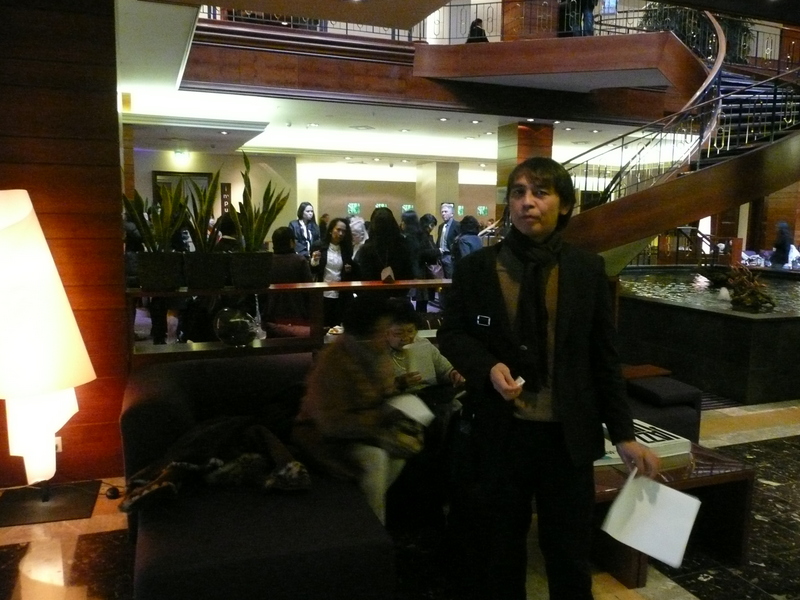
(a) Persuading, inducing or influencing another public officer to perform an act constituting a violation of rules and regulations duly promulgated by competent authority or an offense in connection with the official duties of the latter, or allowing himself to be persuaded, induced, or influenced to commit such violation or offense.

11. Further, the respondents Governor and Vice Governor as well as the aforementioned Board Members of the Sangguniang Panlalawigan did not even exert efforts nor initiate any actions necessary to secure concessional interest rates or such interest rates lower than the prevailing interest rate to justify their actions as if treating the provincial funds and decisions as their own personal funds.

Article 395 (c) of the Implementing Rules and Regulations of the Local Government Code provides:

“Government financial and other lending institutions are authorized to grant LGUs such loans, credit lines, advances, and other forms of indebtedness for projects and purposes referred in paragraph (b) hereof, preferably at concessional interest rates lower than the prevailing rates as may be authorized by the governing board of the financial or lending institution,”

Prevailing rates shall mean the Central Bank standard reference rate for medium-and long-term loans.”

12. The irregularities may be easily inferred from the sequence of events prior to the signing of the aforesaid Memorandum of Agreement (MOA) with the Land Bank of the Philippines. There was no evaluation nor any recommendation from any government or provincial body or even the “Finance Committee,” to show that the list of projects is included in the Annual Investment Plan of the province for the loan. How can a handful elected officials now decide on their own which projects or endeavors are most beneficial to the province and the poor people of Sorsogon.

In a letter dated July 5, 2012 by Dominador O. Jardin, Prov’l. Gov’t. Dept. Head of the Provincial Planning and Development Office (PPDO for brevity) to the complainant, he said that his Office could NOT come upon any feasibility study of the list of projects such as roads, bridges, buildings, farm to market roads and tourism facilities funded in the P350,000,000.00 LBP loan from available existing records. A copy of this letter is hereto attached as Annex “N” to show that not even the PPDO officer, was included nor was his office made a part of the official action of the provincial government to come up with the decision to justify and substantiate the loan application for some “priority projects “of the respondent Governor, respondent Vice Governor and respondent SP Members concerned. What is now the legal or even economic basis if any of such loan?

In direct non adherence of the provisions of the Local Government Code, specifically in Article 6 which provides for the official functions of the Planning Development Coordinator, which provides:

Article Six. – The Planning and Development Coordinator

“ X X X X X X X X

(b) The planning and development coordinator shall take charge of the planning and development office and shall:

(1) Formulate integrated economic, social, physical, and other development plans and policies for consideration of the local government development council;

(2) Conduct continuing studies, researches, and training programs necessary to evolve plans and programs for implementation;

(3) Integrate and coordinate all sectoral plans and studies undertaken by the different functional groups or agencies;

(4) Monitor and evaluate the implementation of the different development programs, projects, and activities in the local government unit concerned in accordance with the approved development plan;

(5) Prepare comprehensive plans and other development planning documents for the consideration of the local development council;

(6) Analyze the income and expenditure patterns, and formulate and recommend fiscal plans and policies for consideration of the finance committee of the local government unit concerned as provided under Title Five, Book II of this Code;

(7) Promote people participation in development planning within the local government unit concerned;

(8) Exercise supervision and control over the secretariat of the local development council; and

(c) Exercise such other powers and perform such other functions and duties as may be prescribed by law or ordinance.

And despite the absence of any or all legal requirements to support their reason for applying for a loan for a list of projects which is not even included in the Annual Investment Plan, accused Governor Lee wrote a Letter on October 5, 2011 to the Honorable Members of the Sangguniang Panlalawigan requiring the Presiding Officer and Vice Governor Escudero, the Chairs and Members of the Committee on Budget and Appropriations and the Committee on Public Works, Infrastructure and Highways to be present during the signing of the Memorandum of Agreement on October 19, 2011, 9:00 a.m. at the LBP Legazpi City Office. (A photocopy of said letter is hereto attached as Annex “O”.

13. Obviously, the respondent members of the SP are all blinded and misguided, because based on a Certification dated October 13, 2011 issued by Otilla R. Marifosque, Records Officer III/Admin. Officer V and noted by William H. Delgado, SP Secretary/PGDH of the Sangguniang Panlalawigan, there is no record of any document which could be accounted on file by the Sangguniang Panlalawigan which shows:

1. Request of the Governor endorsing to this Honorable Body for review, the Land Bank of the Philippines’ evaluation of the proposed P350 million loan of the Province of Sorsogon.

2. A draft Memorandum of Agreement between Land Bank of the Philippines and the Province of Sorsogon.

A photocopy of the Certification is hereto attached as Annex “P”. This clearly shows that the SP did not even have the privilege to scrutinize any loan agreement or proposal of the financial entity, and despite this the respondents passed and approved the accused governor’s for a resolution to enter into a loan. The reason or consideration for said approval to allow the governor to enter into said agreement is now the biggest question.

Again, the action of the accused Board Members is direct violation of Section 3, Paragraphs (a) of R.A. No. 3019 otherwise known as “The Anti-Graft and Corrupt Practices Act,” which states:

Section 3. Corrupt practices of public officers. — In addition to acts or omissions of public officers already penalized by existing law, the following shall constitute corrupt practices of any public officer and are hereby declared to be unlawful:

(a) Persuading, inducing or influencing another public officer to perform an act constituting a violation of rules and regulations duly promulgated by competent authority or an offense in connection with the official duties of the latter, or allowing himself to be persuaded, induced, or influenced to commit such violation or offense.

14. Significantly, it is worth mentioning that the abovementioned Letter was dated October 5, 2011; while in a Letter of respondent Hil Benedict G. Manzanadez, Dept. Manager and Head LBP Legazpi City Office dated October 17, 2011, it was only there that Manzanadez notified respondent Governor Lee about the LBP approval of the whooping P350.0 million loan. The said Letter was received by the Office of the Governor only on October 18, 2011. Please find the letter hereto attached as Annex “Q”.

A simple layman would not think that the approval of this controversial loan was pre-arranged by respondents Governor Lee with Vice Governor Escudero including members of the Sangguniang Panlalawigan as cohorts. The conspiracy appears to extend to the officers of the LBP who suddenly wrestled out the loan from PNB and kept the same unknown to other banking or financial institutions. Respondent knowing fully that PNB has the lowest interest rate.

The records shows that the respondent Governor, as early as October 5, 2011, already knew of the approval and the date, time and venue of the schedule for the signing of the LBP Loan Agreement way ahead of time.

Another major question now is that how come the loan was split into two loan agreements with different Interest Rates and Terms by the LBP with-out any prior notice or approval from the Sangguniang Panlalawigan, considering that the authority of the governor was specifically for the whole amount of P350.0 Million and not for the aggregate amount of P100.0 million and another P250.0 Million.

15. Noteworthy to mention is that respondents Governor Lee, Vice-Governor Escudero and the concerned Board Members of the Sangguniang Panlalawigan particularly singled- out LBP despite the higher interest rate it offered compared to the PNB proposal as the only financial institution to service the loan being secured by the Provincial Government without even asking for any justification nor explanation from Governor Lee for choosing the LBP over the PNB offer.

On October 19, 2011, respondent Governor Lee signed the Loan Agreement (Term Loan 13 in the amount of P100,000,000.00) and Loan Agreement (OTLF 2 in the amount of P250,000,000.00) with Land Bank of the Philippines represented by respondent Renato G. Eje, Vice President/ Head, ROV (herewith are the photocopies of the two (2) Loan Contracts between the Provincial Government of Sorsogon and Land Bank of the Philippines for a total sum of 350 Million Pesos, copies of said loan agreements are attached as Annexes “R” and “S”). Both LBP Loan Agreements have different Interest Rate and Term. The acts mentioned here is a direct violation of the provisions of the following:

Section 3 (g) of RA 3019 or the Anti-Graft and Corrupt Practices Act which provides:

“Entering, on behalf of the Government, into any contract or transaction manifestly and grossly disadvantageous to the same, whether or not the public officer profited or will profit thereby.”

16. The respondents Presiding Officer and the concerned Board Members of the Sangguniang Panlalawigan did not even bother to inquire as to the glaring conspiracy between respondent Governor Lee on one hand, and some officials of LBP for the purpose of securing a loan to the detriment and disadvantage of the Provincial Government. Where LBP offered 5.061% compared to the PNB’s lower interest rate of 5%. In fact, on October 21, 2011, respondents ratified, confirmed and approved Resolution No. 152-2011 entitled “Resolution ratifying, confirming and approving the Loan Agreement by and between the Land Bank of the Philippines and the Provincial Government of Sorsogon represented by Provincial Governor Raul R. Lee governing a loan in the amount of One Hundred Million Pesos (P100,000,000.00). A photocopy of the Resolution No. 152-2011 is hereto attached as Annex ”T”.

The respondents Presiding Officer and the Sangguniang Panlalawigan Board Members concerned, violated AGAIN a cardinal rule in the passage of Resolutions and Ordinance as provided for in the Article 7 of Implementing Rules and Regulations of the Local Government Code earlier cited.

17. On May 21, 2012, respondents Vice Governor Escudero and the mentioned Board Members of the Sangguniang Panlalawigan passed and approved Ordinance No. 09-2012 entitled “An Ordinance governing/authorizing the proposed borrowing of the Province of Sorsogon with the Land Bank of the Philippines (LBP) in the amount of TWO HUNDRED FIFTY MILLION PESOS (P250,000,000.00) to fund various priority infrastructure projects, farm to marker roads, buildings and other tourism facilities.” A photocopy of Ordinance No. 09-2012 is hereto attached as Annex “U”.

The respondents Vice Governor and the concerned Sangguniang Panlalawigan Members, violated AGAIN a cardinal rule in the passage of Resolutions and Ordinance as provided for in the Article 7 of Implementing Rules and Regulations of the Local Government Code earlier cited.

And, this is also a direct violation of Section 3, Paragraphs (a) of R.A. No. 3019 otherwise known as “The Anti-Graft and Corrupt Practices Act,” which states:

Section 3. Corrupt practices of public officers. — In addition to acts or omissions of public officers already penalized by existing law, the following shall constitute corrupt practices of any public officer and are hereby declared to be unlawful:

(a) Persuading, inducing or influencing another public officer to perform an act constituting a violation of rules and regulations duly promulgated by competent authority or an offense in connection with the official duties of the latter, or allowing himself to be persuaded, induced, or influenced to commit such violation or offense.

18. On June 1, 2012, Provincial Treasurer Efilda C. Nogales and Provincial Accountant Mercedes J. Ativo duly noted by Governor Lee sent to the Complainant the Status Report of the Payment for Infrastructure Projects funded under the P350,000,000.00 loan of the Provincial Government of Sorsogon with Land Bank of the Philippines. Accordingly, as of May 31, 2012 the amount paid by the Provincial Government of Sorsogon thru Provincial Treasurer Nogales and Provincial Accountant Ativo is SEVENTY TWO MILLION NINE HUNDRED TWENTY FIVE THOUSAND NINE HUNDRED FORTY EIGHT PESOS AND SIXTY ONE CENTAVOS (P72,925,948.61). Herewith is the photocopies of the June 1, 2012 Letter attached as Annex “V” and List of Projects Funded out of the P350 M Land Bank Loan as ANNEX “W”.

The release of the P72,925,948.61 is the result of the railroading of the P350,000,000.00 LBP loan, the Respondents have RAPED the funds of the Provincial Government of its money.

19. Worst, against the fundamental principle of public consultation, the loan was secured without such consultation with the members of the Provincial Development Council which fundamentally appropriates funds for the expenditures contained in the 20% Development Fund, and which is required under Sections 106 to 115 of the Local Government Code of the Philippines.

20. Further, Complainant has been very vigilant in provisions in the Loan Agreement which Complainant deems material and necessary to be explained to the Sangguniang Panlalawigan but to the stake holders as well because public funds will be used to pay the loan. The following queries were raised, to wit:

(i) where the percentage for “spread” will go and how it is charged;

(ii) why is there a Special Funder in the contract and nobody knows what it means;

(iii) why is the term of the loan conditional;

(iv) why are there two sets of loan agreement with different Interest Rate and Term for One Hundred Million Pesos (P100,000,000.00) and another for Two Hundred Fifty Million Pesos (P250,000,000.00), respectively, when there is only one set of project to be financed; and,

(v) the life span of the project – the project may have already lost it serviceability but the loan is still unpaid. However, these queries remained unanswered. These are all contained in Complaint’s numerous privilege speeches which center on the anomalous in the manner most Provincial loans were hastily and conveniently facilitated by the Respondents with any regard for laid down laws, principles and procedures. Copies of the letters are hereto attached as Annex-9.

21. In concluding, the loan was obtained using the Internal Revenue Allotment as collateral and which required the: (i) public bidding as provided under Section 10 of the Revised Implementing Rules and Regulations of Republic Act No. (RA) 9184; (ii) approval of the Provincial Development Council (the body tasked to appropriate expenditures under the 20% Development Fund); (iii) without public consultation; (iv) securing the concessional rate of interest; (v) without first securing certifications from various agencies of the national government if the projects listed can be funded by the concerned agencies.

THUS, THE HEREIN QUESTIONED TWO (2) LBP LOAN AGREEMENTS ARE ILLEGAL, GROSSLY DETRIMENTAL AND DISADVANTAGEOUS TO THE PROVINCIAL GOVERNMENT OF SORSOGON.

PRAYER

In view of the foregoing, it is respectfully prayed that:

1. The said LBP Loan Agreements (Term Loan 13 in the amount of P100,000,000.00) and Loan Agreement (OTLF 2 in the amount of P250,000,000.00) with Land Bank of the Philippines be declared illegal, therefore NULL and VOID.

2. The unreleased amount of the LBP Loan should be immediately held in abeyance and the released portion (as of May 31, 2012) in the amount of SEVENTY TWO MILLION NINE HUNDRED TWENTY FIVE THOUSAND NINE HUNDRED FORTY EIGHT PESOS AND SIXTY ONE CENTAVOS (P72,925,948.61) should be returned to the creditor bank.

3. The above-named respondents be charged criminally for violation of RA No. 3019 or the Anti Graft and Corrupt Practices Law particularly Section 3 (a) and (g).

4. The above-named respondents be administratively charged for grave misconduct and serious dishonesty;

5. The above-named respondents (except for Hil Benedict G. Manzanades and Renato G. Eje) be preventively suspended immediately pending the investigation of this complaint pursuant to Section 24 of R.A. No. 6770; and,

6. Other reliefs and remedies as may be deemed just and equitable under the circumstances are likewise prayed.

IN WITNESS WHEREOF, I have hereunto affixed my signature this 10th day of July 2012 at Quezon City, Philippines.

VLADIMIR RAMON B. FRIVALDO

Affiant

SUBSCRIBED AND SWORN to before me this 9th day of July 2012 at Quezon City, Philippines. Affiant exhibited to me his Driver’s License bearing number 3-90-102197 containing his picture and signature as competent evidence of his person.

ADMINISTERING OFFICER

VERIFICATION AND CERTIFICATION OF

NON-FORUM SHOPPING

I, VLADIMIR RAMON B. FRIVALDO, of legal age, a resident of Arellano Street, Poblacion Norte, Barcelona, Sorsogon after having been duly sworn in accordance with law, depose and state that:

1. I am a Complainant in the following cases:

A. Criminal complaint for violation of Section 3, Paragraph (a) and (g) of R.A. No. 3019 otherwise known as “The Anti-Graft and Corrupt Practices Act,” against the following persons:

1. RAUL R. LEE, incumbent Governor;

2. ANTONIO H. ESCUDERO, incumbent Vice Governor;

3. REBECCA D. AQUINO;

5. FERNANDO DAVID H. DURAN III;

6. ARNULFO L. PERETE;

7. FRANCO ERIC O. RAVANILLA;

8. ANGEL E. ESCANDOR;

9. BENITO L. DOMA;

10. BERNARD H. HAO;

11. PATRICK Q. RODRIGUEZA;

12. NESON A. MARAÑA;

all incumbent Board Members of the Sangguniang

Panlalawigan of Sorsogon

13. HIL BENEDICT G. MANZANADES, Dept. Manager/Head, Land Bank of the Philippines in Legazpi City;

14. RENATO G. EJE, Vice President, Land Bank of the Philippines, Head Office.

B. Administrative complaint for Grave Misconduct and Serious Dishonesty against the following persons:

1. RAUL R. LEE, incumbent Governor;

2. ANTONIO H. ESCUDERO, incumbent Vice Governor;

3. REBECCA D. AQUINO;

5. FERNANDO DAVID H. DURAN III;

6. ARNULFO L. PERETE;

7. FRANCO ERIC O. RAVANILLA;

8. ANGEL E. ESCANDOR;

9. BENITO L. DOMA;

10. BERNARD H. HAO;

11. PATRICK Q. RODRIGUEZA;

12. NESON A. MARAÑA;

all incumbent Board Members of the Sangguniang Panlalawigan of Sorsogon.

2. I caused the preparation of the foregoing complaint;

3. I have read the contents thereof and the facts stated therein are true and correct of my personal knowledge and/or on the basis of copies of documents and records in my possession;

4. I have not commenced any other action or proceeding involving the same issues in the Supreme Court, the Court of Appeals, or any other tribunal or agency;

5. To the best of my knowledge and belief, no such action or proceeding is pending in the Supreme Court, the Court of Appeals, or any other tribunal or agency;

6. If I should thereafter learn that a similar action or proceeding has been filed or is pending before the Supreme Court, the Court of Appeals, or any other tribunal or agency, I undertake to report that fact within five (5) days there from to this Honorable Ombudsman.

VLADIMIR RAMON B. FRIVALDO

Affiant

SUBSCRIBED AND SWORN to before me this 10th day of July 2012 at Quezon City affiant exhibiting to me his Driver’s License bearing number 3-90-102197 to expire on May 11, 2014 containing his picture and signature as competent evidence of his person.

NOTARY PUBLIC

Doc. No._____ ;

Page No. ____ ;

Book No._____ ;

Series of 2012.

——————————————————————-

Fil Am Engineer Dies On His Junior’s Birthday

By JOSEPH G. LARIOSA

(© 2012 Journal Group Link International)

CHICAGO (jGLi) – Jose “Onie” L. Villamor, Jr. was celebrating his birthday July 1 Sunday morning when the celebration was interrupted by the death of his father, Jose G. Villamor, Sr. at 1:40 p.m. Pacific Time at the hospital (Sharps Hospital Grossmont) in San Diego, California of lingering lung cancer.

When “Onie” called this reporter, his uncle, he did not even mention that it was his birthday. He just relayed the grim news that his father passed away. “Please pass around the sad news.”

Although the death of the elder Villamor, a native of Sorsogon City in the Philippines, was expected, it was a surprise because he was able to recover from a grave condition three months ago when doctors gave him 48 hours to live.

Villamor (photo), 72, an engineer by training and a college professor, was recovering and rehabbing in a nursing home (Jacob Health Care Center, also in San Diego) when he was rushed Saturday to the hospital, where he eventually died. He was the son of the late Nicolas Villamor and Concepcion Grones, both of Bulan, Sorsogon.

His wife, the former Violeta G. Lariosa, a former public school teacher in Sorsogon City, told her eldest sister, Antonia L. Rey in Chicago, Illinois, that Joe was able to say, “I am ready to go. Just cremate me and take my ashes back to Sorsogon City for my other children to see.” He must be referring to Manuel, Roman, Celeste and his grand children, who were not able to immigrate to the U.S.

During the time that he was rehabbing, Joe wanted to get healthy enough so that he could travel back to Sorsogon City, where he wanted to die. He was a general manager of the government Sorsogon Tecommunications office, where he retired before immigrating to the U.S.

His other children who were with him in San Diego are Onie, Rico, Nino and Jessie, the latter two are both in the U.S. Navy. He is also survived by his daughters-in-laws, Cathy, Evelyn, Jennet and grandchildren.

Other survivors include his in-laws, Antonia L. Rey (Roling), Dona L. Hernandez, Joseph G. Lariosa (Josie), Ray G. Lariosa (Angie), all of Chicago, and many nephews and nieces.

Funeral services, including a mass, will be held at National City and Chula Vista Mortuary and Cremation Service at 611 Highland Avenue, National City, CA 91950 on Saturday 7 July 2012 starting at 2:00 PM.

Inquiries and questions please contact his son, Nino L. Villamor, at email address, tsampion6582@yahoo.com or at cell phone number 619-518-6680. (lariosa_jos@sbcglobal.net)

JOSEPH G. LARIOSA

Correspondent

Journal Group Link International

P. O. BOX 805072

CHICAGO IL 60680-4112 U.S.A.

Tel. 312.772.5454

Telefax No. 312.428.5714

Email: lariosa_jos@sbcglobal.net

                                                                                                                                                                  ——————————————-

2012 BULAN REUNION INVITATION

by Ma. Salve Lomero
HELLO EVERYONE!
As you all know, Year 2012 is the Bulan Reunion’s Silver Anniversary…..a very important milestone in our group’s history! 
A “SAVE THE DATE” flyer was sent to you previously with information on the celebration planned in the Washington D.C. Metro area.  It’s now only 68 Days and counting until the big event……….! Woohoo!!!

Attached is your Invitation, along with attachments (listed below)!   We hope most of you, if not all, can come and be a witness to this historic event.  Please forward this Invitation and all attachments to others who may be interested and/or are not included in the list of addressee above.


PLEASE PAY PARTICULAR NOTE OF THE FOLLOWING:


    1.  The deadline for receipt of paid reservations to the Dinner-Dance is Tuesday, June 14, 2012.

    2.  The attire for the Dinner-Dance is semi-formal.     3.  There is a 5:00 P.M. mass on Saturday at Our Lady of Good Counsel Church. Some of you may choose to go Mass first and then proceed to the Dinner-Dance after.

    4.  Beer and wine will be provided FREE at each table.

    5.  Children under age 12 may attend the Dinner-Dance FREE.  Please indicate with your reservations and payment the number of children under 12, if any,
who’ll be with you as they need to be counted for seating purposes.

        Please understand that due to maximum capacity requirements (dictated by local fire code regulations), the Reunion Committee reserves
        the right to limit the number of children under 12 at the Dinner-Dance should the need arise to accommodate seating for paying guests.     6.  Additional information regarding the opportunity to advertise in the Dinner-Dance Programme will follow.

  THE FOLLOWING ATTACHMENTS ARE BEING PROVIDED FOR YOUR REFERENCE:

       1. Contact Information and Directions to De Sales Hall, the dinner-dance venue in Vienna, Virginia


      2. Listing of Hotels in the Vienna-Tysons Corner Area

        Please note that we have booked ten (10) discounted rooms at the Embassy Suites under the group name “Bulan Reunion”.
        If you’re interested in availing yourself of the discount, it is suggested that you make reservations at the earliest possible time as these rooms will be going fast.

     3. Directions to Frying Pan Park, the picnic venue.


PLEASE CALL ANY OF THE COMMITTEE MEMBERS IF YOU HAVE QUESTIONS (see attachment#1 for contact numbers). 

THANK YOU!  DIOS MABALOS!  SEE YOU ALL!

Ma. Salve Lomero