Joseph LariosaCHICAGO (jGLi) – Two surviving Filipino Americans whose members of their families were victims of murders in Illinois share opposite views on death penalty.
I sought out their views following the signing Wednesday (March 9) by Illinois Gov. Pat Quinn of the ban of death penalty, making Illinois the 16th state to end capital punishment.
As you know, the Philippines is one of the 95 out of the 193 members of the United Nations or members with UN observer status, which abolished death penalty. The Philippines is only one of eight out of 41 countries in Asia, which abolished capital punishment.
Of course, the People’s Republic of China is one of the countries, which is keeping death penalty in its books. And if it stays that way, it is going to be a frequent travel destination for Filipino diplomats, who would be appealing the stays of execution of 79 Filipinos in Death Row for “large scale drug trafficking.”
NOT THRILLED BY ABOLITION OF DEATH PENALTY
For Reyle V. Cardino, 53, whose parents were murdered on July 8, 2009 in their home in the outlying Chicago suburb of Rockford, Illinois, said he is not thrilled by the decision of the Democratic governor.
In an email to this reporter, Reyle (pronounced reel) said, “Let me start by saying that I was completely against the abolishment of the death penalty in Illinois. I have sent an email to the Governor myself, telling him my feelings towards this issue.”
He added, “I was assured by the Winnebago County State Attorney Joe Bruscato that if (the bill is) signed, there will be initiatives to put a bill together to re-instate the death penalty in Illinois. And so far, there is already movement. I just hope that this issue will be put before the people of Illinois to vote. We might find (out how) the people of Illinois (stand on) the death penalty.”
Because the case of the double murder of his father, Reynato “Rey” V. Cardino, 77, and his mother, Leticia Villanueva Cardino, 75, is still pending, Reyle anticipates “a delay (of the case) until the issue of the death penalty is settled.”
With the case still very fresh in his mind, Reyle believes, “life in prison (for the killer of his parents) alternative is not enough.” He said, “This is not the Middle Age anymore where, life in prison means being hang up against a wall with chains until (the prisoner is) dead.”
Reyle added, “Having to spend the rest of his natural life in prison, where he can start a whole new way of life, have friends and family come visit, is not penalty enough (for the killer of his parents). “Have TV, food to eat, a roof over his head, a library, a gym and maybe a movie once a week, is not penalty enough. He will put what he had done in the back of his memories and live his new life. He will not forget us, but he will not think of us, is not penalty enough.”
“He brutally attacked me and left me for dead, brutally attacked and caused the death of my mother and father. (With t)he trauma that he had inflected on my family, does he deserve to die? (In t)his case I say yes overwhelmingly.”
Like State Attorney Bruscato, other Illinois state prosecutors, among them, Illinois State Attorney General Lisa Madigan, had asked Quinn to veto the bill, saying videotaped interrogations and advancements in DNA technology had left no room for wrongful executions of innocent people. Taped interrogations were one of the features of a bill filed by President Barack Obama when he was an Illinois state senator.
“I LOVE BAN OF DEATH PENALTY”
For his part, Emmanuel S. Castro, 69, told me “I love it that there is no more death penalty in Illinois.”
Castro, a Filipino American native of Bulacan in the Philippines, is the father of Michael Castro, one of the two Filipinos and five others, who were massacred in 1993 in suburban Palatine, Illinois.
“I have since changed my mind regarding death penalty. Papatayin natin ang mga murderer, paano kung wala naman palang life after death? Di hindi na sila mapaparusahan ng Diyos.” (Okay, if we hang the murderers, what if there is no life after death? They will be spared from the punishment of God.”
“Kung nasa kulungan sila, paglalaruan lang sila ng mga inmates. (If they in prison, they will be pestered by other inmates). Their human bodies will suffer,” Mr. Castro said.
When I told him that hanging two inmates would be two mouths less to feed and saving from additional expenses, Mr. Castro countered, “You are talking about expenses not my feelings.”
“Besides,” Mr. Castro said, “because Death Row inmates are not granted parole, they will be forever suffering in isolation. They will miss birthdays of their children, the Christmas and other holidays while they are alive. No television. They only have one-hour-a day of recreation and no comfort in life at all. Only full of miseries.”
Mr. Castro said he did not get any civil damages from the owners of the fast food chain, Brown Chicken’s restaurant, because it was proven in court that the owners were not negligent – as the husband-and-wife restaurant owners Richard Ehlenfeldt and his wife, Lynn, were among those who were murdered along with his son.
“Even if I benefited from the death of my son, they can no longer have my Michael back.”
It was a rare interview granted to this reporter by Mr. Castro, who declined to be interviewed by Discovery Channel some time ago, saying, “I did not want to relive the nightmare that we suffered as a result of the death of my son.”
The killers of his son, Juan Luna and James Degorski, were both spared from Death Row and are now living a life in prison. (lariosa_jos@sbcglobal.net)
On January 24 a very dear friend and colleague Gerry Ortega was shot in the head dead. I was just with him that weekend – and a few minutes before he died what we were discussing over the phone was an anti-mining campaign in Palawan – given that on December two huge mining applications were railroaded – and they were to be near protected sites.
Gerry is dead but we will not let go of his dreams – and mine – and probably yours too.
Palawan has 17 key bio diversity sites – which means it is part of the 70% bio diversity sites which are essential for sustaining life in the planet. It has 2 world heritage sites, 8 protected sites. Yet if you see Palawan on the map you will note that it is a very thin island – which is 82% mountain. It means that if the forest gets denuded and the minerals excavated – the tailings seep directly into the sea affecting the coral reefs. The top soil is thin – and the island eco system is fragile.
Mining is not the way to go for Palawan. I have five eco tourism sites wherein the communities involved can now send their children to school, can dream bigger dreams. Mayor Hagedorn in Puerto Princesa has banned mining and logging – and focused on tourism and agriculture. From 2 flights a week, Puerto Princesa now boasts 10 flights a day. His revenues have gone up from several million to several billion.
Mining as an economic path in a magnificent “Last Frontier” is based on a paradigm of economic growth that is myopic and archaic . In this age of climate change and global warming any economic development that does not recognize and revere the web of life should be thrown in the dustbin.
Please please support the ten million signature campaign to Stop Mining in Palawan. The richness of Palawan is the wealth and pride of the country, it is the wealth of the world. Log in to www.no2mininginpalawan.com .. register your vote and please please send it to thousands others. You can also include your household by downloading the form printing it – and faxing it t 4152227 or you can scan it and send it to signatures@no2mininginpalawan.com. Questions can be sent to signatures@no2mininginpalawan.com.
Palawan
Palawan contains part of the 70% biodiversity in the planet. It has 17 key biodiversity areas, 2 world heritage sites and 8 protected sites.
Its topsoil is thin and island eco system is fragile.
There are currently 354 mining applications in Palawan. Mining in Palawan is a myopic, archaic view of economic development.
We need to respect the web of life.
Please, please help me gather 10 million signatures now. We need laws enacted to save our VIP diversity.
Greetings of Peace! In behalf of the Bulan Lions Club, I would like to thank you (Bulan Observer and Team) for your generosity. The medicines you donated were distributed during our Medical Mission at Sabang Pavilion Zone 2, last August 2010.
The following are our 2011 activities discussed during our Club meeting:
Feb. 26 Medical Mission at San Francisco, Bulan.
March 19, Vision Screening Catanusan Elementary School and Gubat Elementary School.
April 16 Medical Mission at Barangay Beguin,
and for the month of May, a medical mission for coastal Barangays to be identified during our monthly meeting this Feb. 2011.
We hope for your continued support for our future Medical Mission activities. Again, our sincerest appreciation for your assistance.
C HICAGO (jGLi) – When I was a young boy vacationing in the native town of my mother, Consolacion G. Garra, in Matnog, Sorsogon, Luzon’s gateway to Southern Philippines, I always wondered why its white beaches had sprinklings of black sands.
It turned out those black sands are called “margahas,” which I later came to know as magnetite sands.
With no money to buy toys, we used these margahas to entertain us. We would put a trickle of these black sands on top of a small piece of grade school pad paper and put a magnet or magnetite stone (bato balani) below the paper and we would run the magnet in different directions.
Because the margahas is attracted to the magnets, these black sands would stand up on end, like soldiers, if we moved the magnet or bato balani below the paper. The margahas would follow the magnet like dutiful soldiers.
And it gave us a kick because it put matters under our control.
I had no idea that these margahas and bato balani abundant in Matnog and the whole of the Bicol region were iron oxide minerals that are often mined as an ore or iron. It is commonly used as abrasive in water jet cutting, as toner in electrophotography and as micronutrient in fertilizers, as pigments in paint, etc.
These magnetic minerals attracted nationwide attention in November 2005 when two sacks of dead fishes were allegedly buried in Barangay Binosawan in Rapu-Rapu, an island town of Sorsogon’s neighboring province of Albay to the north.
For these margahas and bato balani to be of commercial use, they have to be mined. During their mining, they would give off toxic discharges, like cyanide, that emptied into Albay Gulf and into the Pacific Ocean that flowed south to neighboring towns of Prieto Diaz, Gubat, Barcelona, Bulusan and Bacon (now part of the capitol town of Sorsogon City), all in Sorsogon province.
GLORIA ARROYO’S SHINING MOMENT
The cyanide poisoning caused massive fish kills in the area prompting President Gloria Macapagal Arroyo to create the Presidential Rapu Rapu Fact Finding Commission Report, and a separate DENR (Department of Environment and Natural Resources) Assessment of the Rapu Rapu Polymetallic Project, both in 2006.
In one of then-President Arroyo’s rare shining moments, she approved the Commission’s report to junk the “$45-million in capital investments from Lafayette, Philippines, Inc. (LPI) of Australia, as well as $10-million investments from LG Group of Korea” that were jointly mining in Rapu Rapu. Ms. Arroyo learned that LPI’s Country Manager Mr. Roderick Watt “inadvertently stated in his letter” to her that LPI’s PEZA (Philippine Economic Zone Authority) application did not need the Mayor’s (Rapu Rapu’s) concurrence.
More damaging, however, was the forgery of Rapu Rapu Sangguniang Bayan Secretary’s signature in the SB resolution that granted “ecozone” permit to LPI for tax-exemption.
As a PEZA registrant, LPI certified that it would not endanger public safety or public health or violate anti-pollution requirements by installing pollution-control devices.
As a result of the fish kills, the National Economic Development Authority recommended the LPI’s “tax-free status” revoked. While the DENR ordered the Bureau of Internal Revenue to investigate possible tax fraud as a mere two percent was paid in excise tax for the year 2005 for PhP 2,065,511.54, out of the $2.4-million ore exported.
But the most damning information issued by the Commission is the finding that the “DENR, its bureaus, i.e., MGB (Mines and Geo-Sciences Bureau) and EMB (Environmental Management Bureau), its regional offices, including its monitoring team, (are) to be so dysfunctional as to be unable to prevent the occurrence of the October (fish kills) incidents. They simply did not have the sufficient capability of monitoring mining operations in Rapu-Rapu. Worse, though, is that if they had the capability, then, they utterly lacked will.”
“UNWARRANTED AND UNTOLD SUFFERINGS”
I wonder if my friend, Sorsogon Gov. Raul R. Lee, ever read these reports. He was quoted in the report as saying that in Sorsogon, the fish scare caused “unwarranted and untold sufferings” to fisher folk families, fish traders and the fish consuming public. Did the good governor ever sue the LPI for damages to assuage the “unwarranted and untold sufferings” of his constituents?
A registered mail sent me by Gov. Lee justifies the approval of a similar small-scale mining operation, like Rapu-Rapu’s, in a small barangay of Balocawe in Matnog consisting of 19,848 hectares.
The lucky mining permit holder is one Antonio Ocampo and/or Antonio Comerciase, Jr. of No. 3 Barangay Tomolin, Ligao, Albay. He was given a permit on “Sept. 23, 2009, to extract 25,000 metric tons of iron ore from Sept. 23, 2009, to Sept. 22, 2010, with an option to renew for the same length of period.”
Writer’s Note: Rapu-Rapu’s mining operation covers only 5,218 hectares and was able to extract 67,693 metric tons of gold ore mined in 2005 and exported $2.4-million worth of ore.
Governor Lee was prodded to send me a letter after I e-mailed DENR Secretary Ramon J. Paje that he should listen to the petition of “Save Matnog, Stop The Iron Project.” Secretary Paje, in turn, forwarded my e-mail to Regional Director Reynulfo A. Juan of Mines and Geo-Sciences Bureau in Bicol. Mr. Juan sent me a registered mail, informing Governor Lee about my complaint.
In his letter to the Governor, Director Juan said, “(M)ay we recommend that the Provincial Government conduct the necessary validation on the issues being raised and to inform Mr. Lariosa directly on the actions taken by your office”?
THIS CABINET SECRETARY IS E-MAIL-FRIENDLY
Governor Lee told me, the “Permit Holder (on Balocawe mining) was issued with an Environmental Compliance Certificate (ECC) dated Aug. 13, 2009, by the DENR Environment Management Bureau (EMB V) on the basis of the submitted Project Study and Initial Environmental Examination Report after thorough evaluation of that Office who (sic) has the authority and capacity to undertake environmental assessment of projects within their area of jurisdiction.”
Mr. Governor, the permit was issued in August 2009, three years after the scathing Commission Report. My question to you is this: Did you get an assurance that remedial measures have now been undertaken since the Commission’s report in 2006 that indicted the “DENR, its bureaus (i.e. MGB (Mines and Geo-Sciences) and EMB (Environmental Management Bureau), its regional offices, including its monitoring team, (as) to be so dysfunctional as to be unable to prevent the occurrence of the October (fish-kill) incidents? They simply did not have the sufficient capability of monitoring mining operations in Rapu-Rapu. Worse, though, is that if they had the capability, then they utterly lacked (the) will”?
Does the mining permit holder have the LFI’s and LG’s of Korea combined resources in capital investment of $55-million to operate a much-bigger “small mining” operation that will ensure the public safety or ensure public health and not violate anti-pollution requirements by installing “control devices”? If so, who are his business partners?
In the event of a disaster, like a massive fish kills, or loss of the threatened Philippine Eagle owl (Bubo, Philippines), whose nest will be displaced by the clearing of the biodiversity area and occurrence of mudslides, is the permit holder capable of buying disaster insurance from Lloyds of London to appropriately compensate future victims, who in your words, may run into “unwarranted and untold sufferings”?
If you can answer, “yes” to all these questions, I will be behind this permit holder.
Meanwhile, I am appealing to President Noynoy Aquino and the Commission on Appointments to keep and confirm Mr. Paje as DENR Secretary and keep or promote Director Juan just for responding to my e-mail. Any other Cabinet Secretary or Bureau Director would have just deleted my e-mail complaint from their junk e-mails.
Government should help ease the financial burden on families caring for children with special needs by allowing a deduction on a parent or legal guardian’s taxable income.
Rep. Deogracias Ramos, Jr. (Sorsogon, Second District) said families with special needs children have different out-of-pocket expenditures than those with regular children.
“We should help children, regardless of any difficulties or differences they may have, to fully realize their potential for development. By allowing a tax deduction on a legal guardian’s taxable income, we help families reduce their expenses and hopefully provide better care,” he remarked.
Under House Bill 3765, a taxpayer caring for a child with a disability will be able to get a tax deduction of P50,000. Expenses that qualify for a deduction are:
• Tuition for a private school
• Therapy
• Diagnostic evaluations by a medical professional
• Tutoring
• Transportation expenses to school or a medical facility
• Specialized instructional materials
The Department of Education’s Special Education Division estimates the cost for taking care of a child with a disability is at least double compared to regular children.
Based on the 2009 Family Income and Expenditure Survey, Filipino families earned an average of P206,000 and spent P176,000 on the average. This translates to an average annual family savings of P31,000 in 2009. On a monthly basis, the reported average income was P17,200 and average expenditure was P14,700.
Families in the bottom 30% income group reported an average annual family income of P62,000. Families in the upper 70% income group earned an average annual income of P268,000. On a monthly basis, the average income of the families in the bottom 30% was P5,200 while the upper 70% earned an average of P22,300.
A child with a disability is understood to be one who is intellectually disabled, has hearing impairments (including deafness), speech or language impairments, visual impairments, serious emotional disturbance, orthopedic impairments, autism and traumatic brain injury.
Rep. Ramos pointed out that families living in the provinces have a harder time getting an educational program and medical assistance suitable to the child’s needs.
He said children with different disabilities are often grouped together rather than have separate classes for each condition.
Children with a learning disability topped the list of special needs children enrolled in a public elementary school as of 2009. A total of 51,296 children were assessed as learning disabled, while the number of mentally retarded/intellectually disabled children stood at 13,119. Children who are hard of hearing ranked third with 12,039.
For School Year 2007 to 2008, the number of enrolled children with special needs in public and private elementary schools stood at 92,429. This translates to a 27.6% increase compared to School Year 2004 to 2005’s total of 79,118. Many children no longer pursue secondary education or stay in elementary schools for an extended period of time.
About Rep. Deogracias B. Ramos Jr.
Liberal Party – Sorsogon, 2nd District
Rep. Deogracias B. Ramos, Jr. represents the Second District of Sorsogon in the House of Representatives. The district covers Bacon, Gubat, Barcelona, Bulan, Irosin, Santa Magdalena, Matnog, Juban and Prieto Diaz.
He currently serves as vice-chairman of the Committee on Natural Resources, Committee on Rural Development and Committee on Bicol Recovery and Economic Development.
Rep. Ramos received numerous national awards during his time as Mayor of Gubat, a second-class municipality in Sorsogon. These include:
• 1994 National Population Development Award
• 2002 TESDA Kabalikat Award
• 2004 Department of Agriculture Gawad Saka Award
• 2009 National Nutrition CROWN Award
• 2009 Punong Bayan Award of Excellence from the League of Municipalities of the Philippines.
The Congressman played a pivotal role in the establishment of the Bicol University – Gubat Campus.
The awards and the creation of the BU – Gubat Campus reflects the Congressman’s commitment to Agriculture, Education, Health, Nutrition and Public Service.
From where I am, I can sense that Bulan politics is so still you could hear a pin drop. The pledge to be transparent, the enthusiasm to inform and be informed have all vanished into thin air–perhaps corked in the trapos’ bottles of potions only to be reopened when it’s time to bewitch the electorate again.
Something’s wrong. This silence needs to be broken lest we be accused of being privy to whatever plot is being brewed by these political wizards and witches. This is the point when silence is no longer golden. It reeks of many things that you and I are both wary of—secrecy, muted whimpers, and God forbid… a whole new world of shenanigans!
Just a few more weeks, the year will be over. And yet, nothing significant has transpired in the way hits and misses in local governance are regularly reported to the people of Bulan. Well, fair do’s, at least its official website has been recently tweaked making it technically no longer dormant. Thanks to Tinker Bell! But, by golly, it still bears the same news items that netizens have probably read and reread to their boredom. To make things worse, count how many times the mayor’s picture “graced” the welcome page. Has the moon’s gravity paralyzed the mighty brains and hands of our local heralds? Or have they been gagged by the powers that be?
Whatever the case may be, it still puzzles me why this is happening when I suppose there’s enough manpower to do this job. It doesn’t take a genius to write what we see, hear, and feel. We’re not asking for brilliantly written pieces; we’re asking for reports, for observations, for stories decently written that can fill the vacuum of emptiness that make one stop thinking the world has come to a halt—in Bulan.
Personally, I want to go home, go around the town, and gather some news just for me to have a springboard. But do I really have to do them? For sure, columnists don’t go to Iraq or to North Korea just to get some juicy pieces of information for their articles. For sure, they can have the needed information to put substance into what they write without hopping from one place to another.
Hence, it bothers me that I can write commentaries about Southeast Asian affairs at a drop of a hat, but I can never write a piece about my own hometown. I can’t … because I rely mostly on cyber news. And there’s nothing much and there’s nothing new that we can read about our town through the world wide web. That’s for sure.
So, let me propose one thing: let’s all write. It might be daunting at first, but when we get the hang of it—perhaps through trial and error or dedicated mentoring—everything will just go smoothly.
By writing down our “observations,” we can subtly change the course of events in our town. It’s not tilting at windmills. In fact, it’s doing our share.
Silence is not what we need now. Make noise. Let’s write.
I guess many of you have already noticed that over the last few weeks, comments that came in were mostly on my posts about the Asuncion History thus giving us the impression that we’re drifting away from our aim of keeping an eye on Bulan politics.
This maybe true but only if seen over a short-term. But talking about the families of Bulan is also part of our initial definitions for it is about local history. I started with the history of the Asuncions of Bulan not because I’m an Asuncion but because the Asuncions are also part of our municipal history. I have always stressed in my past writings that local history is a subject of great importance. For how does it help our young Bulaneños’ identity if they only learn about Napoleon or Alexander the Great? Bulaneños should know first of all who died for them in the soils of Bulan fighting for their freedom. In this way, I welcome Mayor Helen De Castro’s plan of starting a local museum of Bulan for then we can start paying our tribute to our past heroes and people from all walks of life who made a little difference in our town.
Looking back is advisable only if we have the intention of coming back to improve our present situation. This is also what I expect from our politics in Bulan. It should look back with the purpose of improving Bulan and of uniting its people. It should neither look back with the intention of revenge or destruction nor build a local heritage museum only to glorify one family or an exclusive group of Bulan citizens. A local heritage museum should glorify the whole town of Bulan by bridging it to its past and to its desired future and by giving its local identity a solid historical ground.
But above all these, it’s all about the attitude of thankfulness when we begin to treasure the past. Carried over to the present politics, we can only harvest good things from it. For a mayor and other elected municipal officials of Bulan to be sincerely thankful to the people who placed them to their positions is a good sign of cultivating that public trust.
Now, over the long-range, my search for the Asuncion’s history is also one of the many ways I have in mind of connecting Bulan with other places in the Philippines and even abroad. This is my way of putting Bulan in the global map. With more and more Asuncions coming from different places- and so as Yatcos, Alzonas, Rayos, Paternos, etc.,- reading Bulan Observer we also increase indirectly observers of Bulan. In this way, we are actually fulfilling that definition of letting the whole world know about what’s happening in our town not ony politically but also culturally. Political vigilance should be spread out for it to be effective.
The other method of increasing our observers is that of inviting writers to publish some of their works here. We have been graced lately by a Philstar columnist Michelle Dayrit-Soliven when she posted her articles here in Bulan Observer. We are humbled and honored by her gesture of recognition for the culture that we represent. Until now we have been successful with this method but it is clear to all contributors that everything is on voluntary basis. So writers come and go and that’s good like that for we are all free to move around as we treat each other as good neighbors.
But lately this did not work with one contributor from Gubat for he had other expectations and couldn’t deal with criticism to the point that he literally ran amok and ordered me to go away and look for another master. I’ve looked around for level-headed writers, not ego-inflated colonial masters. And go away from what, from Bulan or Bulan Observer? Since I don’t want that the youth should learn from such primitive language and arrogant attitude, I decided to exclude him from our round table where we treat one another as free beings, not as masters or slaves. In this way we remain true to our committment of preventing BO from becoming a hate site. Yes, we aim for a culture of freedom and reason, not for a culture of slavery and hate.
Now, let it be made clear to our local officials that we have a broader and healthier concept of political vigilance. It is not about mistrust or paranoia but of appreciation of good things they do for Bulan. Though we still encourage every one not to hesitate to report observed unpleasant events in Bulan that concern us all. It’s not personalities but principles that interest us most of all. Indeed, nothing personal in the truest sense of the word, a motto which has cost me personally some good old friends but also left me with a few real good ones.
Back to writing about family heritage, may this serve as motivation for others in n Bulan to do the same for it’s not only interesting but also full of surprises. It could for instance suddenly turn out that a neighbor you cannot stand is actually your relative. So writing about one’s family brings people closer together. This is one thing good about looking back.
I had never known the joys of the ocean until I came across a man so at ease with the earth’s most awesome sea creatures. His persistence led me to a deeply moving encounter that gave me a richer appreciation of the gifts of God to Mother Nature. I arrived with a fearful heart and left with an electrified spirit, courtesy of our newfound family friend, a man named Omar.
Omar Nepomuceno
God equips His children with specific talents and abilities in order to pursue their purpose in life. It is therefore no coincidence that Omar Nepomuceno was born in the seaside town of Donsol in Sorsogon, a blessed haven where the world’s largest concentration of butandings (whale sharks) abound.
A strong self-taught swimmer, Omar’s fondest childhood memory is that of his grandfather Isidoro taking two styrofoam ice chest covers used in his ice candy business. Using rope made of straw, he securely tied one onto his grandson’s back, the other onto his stomach. Then he would say to his apo: “O, sige na hijo, maligo ka na.”
His parents Rosalina and Isidoro Jr. watched over their fearless little son joyfully swimming around the river.
He describes himself as “taong dagat” because he adores, protects and
respects the ocean and everything in it. Omar completed a Marine Engineering course at Mariners Polytechnic Colleges Foundation in Legaspi City. When the Department of Tourism and the WWF conducted training for butanding interaction officers (BIOs) in Donsol, Omar emerged on top of his class. He loves butandings and he loves his job with a passion!
I felt this when I met Omar last month in Donsol. I had been hearing his name from my younger sea-loving sisters Yvonne and Christine who had gone several times before me. For a very safe and enjoyable experience, they highly recommend Omar as my guide. Indeed they were right, but I experienced much more than they prepared me for.
All butanding encounters are different and everyone has his or her own story to tell. Mine began on the morning of March 27.
Incidentally, we were in Sorsogon the day before to attend the first graduation rites of The Divine Healer Learning Center. This is a school that provides quality education for underprivileged but deserving students founded by Father Gerard.
It was a perfect day. Clear blue skies and glorious sunshine accompanied us on the scenic drive to Donsol. Upon our arrival on Vitton Beach, we received an enthusiastic welcome from a man named Omar, introduced as our BIO. He accompanied us to watch the orientation video in the registration office. “So it is you my sisters were talking about,” I told him as we walked into the boat and set off into the azure waters of the bay.
He asked if we had with us some snorkeling gear. My son and husband nodded and showed it to him. He checked on them and seemed satisfied. Then he looked at me. The moment I dreaded came and I felt I just had to tell him: “Omar, there is something you need to know. I have never ever in my life used a mask and snorkel. This will be my very first time.” Instinctively he probably felt the fear I had because he immediately assured me that it was very easy. “Kaya mo yan, ma’am. Don’t worry, I will teach you now,” he told me.
He put the mask over my face and adjusted it comfortably. Then he gently inserted the snorkel into my mouth and showed me how to breathe. “Now, remember, do not worry. When I say jump, just jump in and hold on to me when you get into the water,” he said. I nodded, trying to keep a brave front. Suddenly, I heard the boatman pointing and excitedly saying: “Ayan na! Nandyan na yung butanding.”
I froze in fear! So soon! My sisters told me that they had to wait an hour or two to find a whale shark. I thought I would have more time to get used to the use of a mask and snorkel. They stopped the boat. I watched in horror as my hubby and my son jumped in. Omar was looking at me. “Ma’am, it’s time to jump. Let’s go!” I panicked! My heart was pounding as I hoisted myself unsteadily onto the edge of the boat. I was shaking while the boat bobbed up and down. I fought to keep my balance. Like a rag doll I was awkwardly teetering back and forth, so afraid to hit the water and almost fell back into the boat instead. I was trying to open my mouth to say, “I’m backing out! I changed my mind! I cant do this!” Suddenly I felt Omar’s strong hand taking mine as he jumped in pulling me into the water with him.
I wanted to scream but the snorkel was in my mouth. I closed my eyes. Terror gripped me as we hit the water. But I heard Omar saying, “Ma’am relax ka lang. Just hold on to me and do not be afraid.” He readjusted my mask and snorkel and said, “Ready? Let’s go!” He held my hand firmly and swam away, not giving me time to think.
“Look down,” Omar told me. “Just put your head down.” I obeyed… put my head down. And opened my eyes… and gasped! The sun’s rays penetrated the waters revealing a humongous blue gray figure with round white spots swimming gracefully beneath me. I was right smack on top of the butanding and the water was so clear I could see it breathing. Omar swam and supported my elbow lightly so that I could interact with this gentle being. As the silence enveloped me under water, a sudden peace pervaded my soul. I felt a deep spiritual connection between the whale shark and Omar as we all swam together side by side, basking in joyous tranquility.
It was a successful conspiracy. These two soul mates (Omar and the whale shark) sensed my fear of the sun and the ocean kept me with them for a blissful 30 minutes, emptying me of all my fears.
That was only the first of the six butandings I would encounter that day. We all emerged triumphant and invigorated. Omar was elated. BIO Florante Trinidad did such a good job with Lucy Lee’s new underwater camera that we each had a video of our interaction with these colossal yet amiable beings.
We then enjoyed a sumptuous lunch courtesy of Sorsogon’s very gracious Gov. Sally Lee. Over succulent seafood and the best ginataang langka, Omar shared his stories.
Very protective and caring in nature, Omar wants his visitors to make the most of the time and money they spend to come to Donsol. “I want everyone to be comfortable in the water and go home with wonderful stories to tell.”
His most unforgettable experience in the ocean was the day in 2001. He had some American guests who flew all the way from Pittsburg wishing to see a whale shark. They didn’t just see one but a whole school of them, about 50 on a feeding frenzy. They were ecstatic!
Another glorious moment was the day Omar and Florante successfully rescued a trapped butanding in Batangas. Asked how they did it, when several others before them failed, he humbly said, “I prayed for God’s assistance.”
He takes every opportunity to share his insights to protect the precious butandings. “If a group of six fishermen kill a butanding, six families may have enough to live on for six months. But in exchange the rest of the other families in the community will all go hungry for years to come. Why? Because this brutal act could scare the butanding population away. And what do you think will happen to the van drivers who pick up guests, resort owners and restaurant owners, their employees, souvenir stall owners, boatmen, BIOs? With their livelihood gone, their families will go hungry,” he said.
He prays often for the safety of his wife Yvette, a nurse in the Middle East, and is most grateful that his daughter Rayven graduated grade school at Aquinas School in Legaspi with honors. This nature lover feels God’s presence in the sunshine, the calmness of the sea, the magnificence of the gentle butandings. “I always ask God to please let my visitors see the butanding.” He is happiest when he sees his guests enjoying.
“I always want to spread the sunshine,” he says of his motto in life. “Whatever blessings and gifts I receive from God, I must share.”
To Omar, this means teaching others the skills he has mastered like swimming, being a good BIO, training others who want to be guides of other natural attractions, giving talks to the fishing community on the importance of not harming but preserving their environment, finding new activities and exciting destinations that guests to his beloved province of Sorsogon can enjoy and his fellowmen can benefit from. /
——————————————–
*Asking Michelle to publish her article in Bulan Observer, she replied :
“Sure Andres! ( Andres?- that’s me, jun!) That was one experience I will never ever forget. Omar is the best. I am so glad you did not drown (she’s referring to my story of almost drowning in the sea of Donsol when I was 8). You must have a mission in life to fulfill. I am sure it is something that will be most rewarding. Be blessed in all you do.” MICHELLE DAYRIT-SOLIVEN
Thank you Michelle!
Omar is my first cousin (mother’s side), he lives and works in Donsol. I have good memories of Donsol as I also partly spent my childhood there. The beautiful sceneries with Mt. Mayon against a lovely sunset, the quiet sea and the loving people and of course my dear grandparents Doro and “May” (mother) Nepomuceno with whom I used to go for a walk along the sea after dinner. I met Omar last April 2009- in Bulan!
This post is not intended as an academic work but just my personal thoughts on this Independence Day and as my reply to a comment on my earlier post Strengths And Weaknesses Of The Filipino Political Character.
A Hindu-Muslim Archipelago.We know of Datu Puti as one of the Bornean Datus who ruled in the south during the pre-Hispanic period. During the Spanish time Raja Colambu was the King of Limasawa, Rajah Humabon of Cebu, Sultan Kudarat Of Maguinadanao, Datu Lapulapu of Mactan, Rajah Lakandula of Tondo, Datu Macabulos of Pampanga, Datu Urduja of Pangasinan and Rajah Sulaiman III of Manila. There were many other Datus and Rajas all over the archipelago whom the Spanish colonial power called Las Islas Filipinas, the Islands of the Philippines. Hinduism came to the Philippines via traders between 1350 and 1389 from the island of Java during the Majapahit Empire (1293-1500) and exerted great influence on the natives of the archipelago only to be superseded within a short time by the Islamic conquest of Majapahit empire and the coming of Islamic Indonesians and Arab missionaries in the 15th century.
Hence, the archipelago was dominantly a Hindu- Muslim archipelago as Sultans, Datus and Rajahs are all Hindu-Muslim titles of rulers and nobilities. If I identify myself with the pre-Hispanic archipelago, then I’m a Hindu- Muslim; if I identify myself with the time and culture I was born in, then I am a Christian.
Genetically of Malay race, our dominant ancestral, pre-Hispanic civilized society was a Hindu- Muslim society. However, not all people at that time were Hindu-Muslims as there were people who were trapped or isolated themselves up in the mountains and were neither islamized when the Muslims came nor catholicized with the coming of the Spaniards. They still exist today as “cultural minorities” (a label I dislike) like the Igorots, Aetas, Ati (Negritos ethnic group) etc. with their own culture, political organisation and system of beliefs.
The very first people who inhabited the archipelago- or some places of it- long before the invention or evolution of today’s dominant religions were animistic in their belief and world view. If I identify myself with those primal ancestors of 20-30 thousand years ago – in the belief that my family and genetic lineage can be traced back to them- then I am an animist, a being who is one with the forces of nature and see spirits in them, or much later a syncretist of Hinduistic origin who believes in Anitos, Diwatas or Bathala.
Hindu-Muslim Social Hierarchy. The independent Hindu-Muslim barangays in the archipelago and the sultanates in the south all attest to existing social communities, communities with hierarchical systems of Ruling class as Sultans, Datus or Rajahs, of Intermediate class as the Freemen or Maharlikas and of the Ruled or Unfree-class as the Alipins or slaves.
There were interbarangay commerce, cultural exchanges, etc., all transactions suggesting a kind of confederative co-existence,yet no common identity, no common laws, no central government that kept them together or a court that settled interbarangay conflicts. The mythical legal code of Kalantiyaw which was supposed to bring order to the folks of Negros was proven to be a forgery.
From Code of Kalantiyaw to Mt. Sinai. This changed with the coming of the Spanish colonizers who already have in them the concept of national government, of a nation or country, of a central powerful monarchy that rules over vast territories and colonies. But before that there was this catholization that took place, the biblization of the Hindu-Muslims, and later the changing of names, like Rajah Humabon becoming Carlos, or Mariano Kagalitan to Mariano Asuncion.
But the social structures remained the same, more or less. Allowed to keep up their lordships over their barangays, the now catholized datus had to subjugate themselves however to the new ruling class, the Spaniards, or to the new omnipotent Catholic King of Spain. In effect, the whole archipelago with all its barangays was reduced to the lower class level, if not to that of oppressed or slaves, the Alipins. In fact the new ruling class introduced a new form of intricate slavery- the polo y servicio which is a system of forced labor within the encomienda throughout the island colony.
From Suppression to Explosion. The suppression of emotions through centuries of encomiend and hacienda slavery and injustices ultimately led to explosion. This big-bang in the history of the archipelago gave birth to the concept of freedom and nation during this colonial period which culminated by the end of the 19th century; by June 12,1898, 112 years ago, the Spanish dominion (which historically started in 1649 with the Sumoroy uprising in Samar) has ended and the first Philippine Republic was born.
This short historical review is not meant to refresh our knowledge but to remind us that the past explains a lot of things the way that the Filipinos are now, our character strengths and weaknesses and offer us clues as to why reciprocity, “debt” of gratitude, passive-aggressive traits and the like are so intense and complex among the Filipinos for the Western observers.
As one Western commenter has observed about Reciprocity and Utang Na Loob:
“I am guessing that this (Reciprocity) basically a very deep instinctual drive in all cultures, but I am curious as to why it is so exaggerated and complex in Philippines…Philippines has intensely hierarchical family and tribal structures, probably even before the foreign oppressors arrived. Within such a system those beneath perceive themselves to be powerless and lacking in rights. Without rights, any act of support would therefore seem like a gift rather than a duty. I am guessing the intensity of Utang Na Loob is derived from this.”
Utang na Loob is a form of reciprocity which, as the name suggests, a Filipino version or expression of it. The short historical review has shown that for the majority of the Filipinos- before, during and even after colonial times- their history is a history of slavery or servantry, from our tribal past to the alipin sagigilid or mamamahay during our Hindu- Muslim past and to encomienda, hacienda and peonage slaves during the catholization. (It is said that peonage was the employed by the conquistadores wherein the Filipino workers were granted debt to their own slavery afterwards for failure to work off the debt, becoming permanently tied to their Spanish employers). Even up to now, the servantry is still very much a part of our socio-economic culture. Only that now, the government exports this “labor force” to other countries.
With the coming of other colonizers, the Americans and the Japanese, the Filipinos were again forced to assume the slave mode and to suppress aggression in order to survive.
Nature or Nurture?Against this historical backdrop and if we believe that personality is also moulded by external forces, then we can rightly assume that the Filipino collective personality is a product of his total experience which is layered in complex mixtures of genetics and external circumstances over a long time. The resulting product is a distinctly Filipino character. This explains the complexity of our traits when juxtaposed against other Asian people and other cultural groups.
We Have Our Own Identity. Hence, this cry for the search of Filipino identity is a travesty, a political distortion in my view aimed at controlling the masses by sneakily activating their slave mode. We already have our own identity. I’m very cautious when I hear such phrase as “landslide victory” for then I suspect that the old trick has functioned again, that psychology has been politically abused or misused again. Also, it’s not wrong when a Westerner observes that there is exaggeration in our reciprocity trait, wrong maybe in the sense that it collides with their Western concepts of democracy and bureaucracy but in themselves our Filipino traits can never be wrong. It is not the search for identity but it’s about the search for a political system that fits our own character without sacrificing universal virtues as justice, freedom, human rights, etc.
In truth, the past still lingers in us and this is where self-serving politics get their power. Our Western commenter has mentioned that “a number of deep human traits… could potentially be exploited. One of these was called reciprocity”.
Landslide Win.When politics is just about power, then it’s only there to exploit available resources to support that power. This is very visible in our politics especially during elections. The character traits of the people are the number one target of this exploitation, material resources comes next to it. It’s not the vote that’s being bought but that Utang Na Loob of the people. A politician who is good in that will have that landslide win.
Still In Progress. Indeed, the trait of Utang na Loob- as all other Filipino traits- has evolved out of this collective past, of the confluence of events and the need to survive physically, psychologically and socially. All traits had developed and been retained because they have this survival value. And while our social evolution is still in progress, I think that these traits that we have are also undergoing some mutations. Our Filipino traits are not static and final, we are changing or are being changed by events and time. We ourselves are witnesses to how these traits conflict with things new to us or things which require other cultural tools or constructs that are either foreign to or less develop in us.
Our Utang Na Loob is easily related to our slave mode than to our noble or lordship mode. This trait can only develop with such intensity and character out of social and economic survival necessity. You cannot experience the attitude of thankfulness with such intensity for things that are natural to you or that you have in abundance. Hence, from those who live in paradise, don’t expect Utang Na Loob; the same with our Tabon man in Palawan, our pre-historic ancestors who inhabited our caves thousands of years ago. I don’t think they knew Utang Na Loob as we know it now- or Hiya, Delicadeza, Freedom, Corruption, Alipin or Injustice. These things came to the archipelago with Islamization and Catholization. With these foreign oppressors, heaven is won but paradise is lost.
You’ll find this Utang Na Loob in abundance from those who experienced hell or deprivation of basic things. For the majority of us our history was a history of deprivation. Those were hellish times under foreign enslavement. There were some Filipino families who profited from these periods of hell, who maintained their feudalistic vast haciendas even until now, who still practise landgrabbing and colonial slavery practices as peonage and force labor and many of them are in the government posing as public servants. But in truth they are masters of exploiting Utang Na Loob, Hiya and Pakikisama.
Passive-Aggression. Certainly, with such a background of slavery where it was not safe to express anger or opinions but rather safer to resort to suppression and pakikisama in order to survive, we can only expect that passive-aggression is a part of colonized Filipinos’ coping or defense mechanisms. We know in psychology that families who forbid or deny their children the natural need to express feelings of hostilities produce adults who have this disorder. But it’s out of context to say- as our Western commenter has said- that it is a form of national sabotage if he means by it that Filipinos are using passive-aggression actively and consciously to destroy their nation and political development.
A Happy Nation? Though I can confirm the presence of this negative trait in our society, I disagree with its willful or conscious use of national sabotage. Yet I believe that this goes on in the unconscious level in our political dynamics and hinders progress. Passive-aggression might have been a form of rebellion- or sabotage- against the colonial government at that time, a conscious one. But now, I look at it instead as extension of colonial destruction. For the destruction of the people through colonial oppression and maltreatment doesn’t end with the disappearance of the oppressors but it continues, this trauma, this learned helplessness and passivity. Combined together, i.e., Spanish, Americans, Japanese, those were 425 years of trauma, suppression and slavery, of abuse and insult to the Filipino psyche. And add to that those nightmare decades under Marcos and Arroyo. Do you expect a healthy and happy nation by now?
It seems that I was not alone who went home to capture the election “fever” in the Philippines. I was in Bulan for actually just two full days (May 4-5) to deliver medicines to the Sta. Remedios Charity Clinic and left for Manila in the early morning of May 6. Just two days of walking and driving around and enjoying the sights and sounds of Bulan community. I made an unscheduled visit to the Municipio to talk with Mayor Helen De Castro but she wasn’t there ( though I listened intently to her speech in Canipaan the evening I arrived; but better luck next time!). I noticed a long queue of young people on the first floor just before the mayor’s office. I supposed they were job-seekers, or there to claim what has been promised to them.
Before Bulan I was already in many places in the northern part of Luzon. That’s the reason why I said to some people there in Bulan that our town is relatively a clean town, cleaner than the other towns I saw. I used to go before 6: oo in the morning to the market and at this time you could already see some workers dusting up the main streets of Bulan. I particularly enjoy Maclane Street for its proportions: for a town, its such a long and wide street. Now that it has lamp posts on each side, one feels like being in a city. A City? Well, for a town we love there is no limit to the dreams we can dream for it. For we only desire the best for it, isn’t it? Personally, that’s the reason why I sometimes laugh about our politics because this diverts us from our most common dream for Bulan. I am for leaders who don’t miss this dream, who don’t abuse their power and do not enrich themselves at the expense of the people. It’s not about Guyala, Gotladera or De Castro but about leadership with social responsibility and conscience.
With the daily temperature of 39-39 degrees centigrade, the election day was sweltering hot, a real fever. But I have seen how the people braved the heat the whole day queuing just to give their votes. In a place where I receive the ballots per mail, read the issues in the quite of my room, make my choice in between sips of coffee and then just drop them in the next mailbox, I could only give my highest respect to those voters last May 10 who waited for hours. I especially think about those people who did not sell their votes but voted according to their convictions. I think the future of a better Philippines rests on these people- and on the political candidates who opposed this bad tradition of vote-buying. Still, it’s in opposition that change can happen.
But what is basically wrong with this tradition of vote-buying and why don’t we just tacitly consent it? In my view, money used in this context robs the people (including the politicians) of their senses. This explains all our problems.
A tradition is always hard to change, but it can be changed, and I guess that’s the point that every Bulaneño should know. We don’t need a bloody revolution for that. All that is needed is reflection and a little sacrifice. A political candidate who is proudly sure of the support of the people because of good leadership and achievements doesn’t need to buy the people, and the people who support the agenda of a politician, do not need to sell themselves. You may again blame poverty for this behavior, but there were many poor local voters who did not sell themselves. I guess that if people wouldn’t prefer to “keep the change”, decent change would occur.
I was in Biton for a swim. The sea was clean and the scenery fantastic. So I was in my element for such experiences always inspire me- no longer to swim but just to sit and walk around and absorb and be absorbed by the beauty of being. It should have been a perfect day had it not for this ear-rupturing comment that I heard from a German who lives there: “Ohne corruption, würde es keine Filipinos mehr geben”- that “Without corruption, Filipinos would cease to exist.” What a disparaging generalization coming from somebody who doesn’t even know Heine or Feuerbach. The poetry of the day was instantly gone! Now comes dirty politics again- in a place I never expected. But that German did not expect the same that this time he won’t go unpunished for his arrogant comments. The winds changed direction as I began to frame the debate within the greater context of world history and current events in Germany. Were it not for the gentle kicks under the table and oculesics coming from my “camp” telling me to slow down, the place would have burned- in the fire of my apologia, naturally.
Yes, incompetent leaders, corrupt presidents, justices and generals, Ampatuan monsters, astronomic foreign debts, corruption, vote-buying, political violence, poor education and ignorance have increased our vulnerability. You can’t help but defend- it’s instinctive – even if you know there is a kernel of truth and even when it comes from a primitive German whose trunk reminds one of a huge barrel of beer about to break. (He told me his family name is Krüger. Krug is the German for jug or pitcher, and Krüger means a jugmaker. There is a German idiomatic expression which says, “Der Krug geht so lange zum Brunnen, bis er bricht.” or, ” The jug goes to the well until it breaks”, which means, one day you’ll take it too far and you’ll come to grief. I think Mr. Krüger went too far that lovely afternoon…but we sailed home quick before the breaking.)
Now, as a nation, as a town, how do we manage vulnerability, how do we keep ourselves from breaking totally? This brings us back to the old discussions about electoral, political, educational and moral reforms. For now, I would say go for change, but avoid keeping the change for when money dictates, the bad tradition continues and so as this social order with all its problems.
Noynoy Aquino has vowed to combat corruption, hence, to introduce vulnerability management-“If there were no corrupt, there would be no poor.” He said that “Corruption is the single biggest threat to our democracy. It deprives the poor of the social services they badly need. It destroys the very moral fiber of our society. No reform agenda will succeed without a determined program to eradicate corruption.”
Well, this sounds good to start with. Good intention deserves support. Be reminded, however, that a campaign mantra is not a solution yet to the problem of corruption. I expect to see his concrete vulnerability management plan as soon as he assumes office.
But it’s in planning that one is faced with various factors that must be considered: He needs to have a solid presence in the Congress; the huge national debt of over P4.358 trillion and the pressures from the international lending institutions (IMF, WB) will surely have effects on his policies on taxations and budget spending. Fighting corruption means not only law enforcement and putting behind bars corrupt colleagues but-in my view- a fight against poverty and for better education. And here I see the problem that Aquino will face in his fight against corruption: it’s the problem of capital. How can he spend more for education and against poverty amidst the huge national debt and pressures from the lending institutions? Don’t you know that you owe these institutions P47, 247? Yes, each of us 92 million Filipinos carry this debt burden.
But still, the point that he is determined to fight corruption is already a good attitude (what Arroyo has lacked) as president-elect. For as Nietzsche says “‘He who has a why to live can bear with almost any how”. I suggest though that the people should support Aquino’s why but be cautious with his almost anyhow. Pay back the debts, but not at the expense of education and health programs.
Back to the poor people, it is right not to forget the poor and aim for the reduction and elimination of poverty in the Philippines – this is a social and moral responsibility of modern man. But in my observation, this slogan of helping the poor is a tool being used and abused by the rich, the oligarchs, and trapos to maintain their power and status quo. Truth be told, politics (Erap para sa mahirap, Kung walang corrupt, walang mahirap, etc…) and religion in our country capitalize on the poor. It is easy to manipulate a hungry man or community, the reason why vote-buying works perfectly(and this first automated election has intensified it because there were no more ballot boxes for politicians to hijack) – the same with the promises of better (After-) life by materialistic religious preachers.
But did Philippine politics and church ever mention protecting, sustaining and strengthening the middle class? The middle class in the Philippines is disappearing and many of these people have been displaced outside the Philippines – those skilled migrant workers and intellectual capital. We know that the middle class stabilizes the society, it’s not easily manipulated, hence serves as the catalyst of social change and reforms. As Aristotle had observed during his time- and that was between 384-322 BC!- “The best political community is formed by citizens of the middle class”. I think Aristotle would find in Switzerland of today a fine example of his community.
What made the voters brave the sun and wait for hours just to vote a corrupt candidate? That bloated German would argue that they were paid, that’s why. But even if I were paid, I would back out just because of the heat and the thirst and would not fall in line again. Indeed, faith moves mountain. For in that election day, I travelled around Luzon to observe and I was moved by the scenes I have seen. I thought that there must be something more to this. It’s neither just because of the most despised Arroyo administration nor of the cash that the politicians distributed but I think the Filipinos of today still have this faith that they could improve their country – and repay the debts we owe.
But there is a backlash to this, and that is the psychology of Filipino voters: This month’s election has shown that Filipino voters- bought or not – vote in terms of what is familiar already regardless of the records. Old names like Marcos, Estrada, Revilla, Enrile, Aquino- and even Arroyo or Ampatuans are back or have remained in the political scene. This mental attitude prevents change and gives the impression to any observer that Filipinos have impaired memory or simply “crazy” to vote for an ex-convict for president or support murdering political clans in the south.
And still, there are the local municipalities with their entrenched ruling warlords who won’t be ready to give up their extra sources of income like jueting, illegal logging, mining or sneaky little daily forms of deceit like that of adding an extra 0 (zero) on the receipt/check than the amount actually spent or issued (900 pesos is swiftly earned out of 100 pesos!). Laws against such crimes already exist, what Noynoy needs is to “enforce” law enforcement. Noynoy was not a high performance congressman of Tarlac(1998 to 2007) and senator (2007-2010) and not a single bill that he passed became a law but he could use his “moral” and political capital in defining his position in the country and using the right momentum to get things running from Day One, a difficult task for he has to wrestle first against the midnight sabotage that Gloria Arroyo has orchestrated.
Well, again we have an economist as president-elect and we all hope that he is not for keeping the change as Arroyo was but for a reduction of our national vulnerabilities, no matter how “noynoy” (little) it is.
Yasmin Buran-Lao, peace activist, women’s rights advocate, community organizer, is walking her talk by running — that is, running for senator in this year’s election as a candidate of the Liberal party.
The 48-year old Lao has made public service her life’s mission. She works with disadvantaged communities and the women of Muslim Mindanao, having grown up amid its violent conflicts and grinding poverty. For her efforts, she was awarded the Benigno S. Aquino Jr. Fellowship for Professional Development. The award was given by the American embassy and the Benigno S. Aquino Foundation in 2005.
“Fighting for the rights of Muslim women and other marginalized groups is something personal for me. I get enough satisfaction helping people gain a certain control over their lives,” she said.
Reframing politics
Lao believes that ordinary people must be given opportunities to serve the country even if “they do not have the money and the clout that most politicians have.”
“There has to be new politics that can come in. This kind of new politics comes from ordinary people like us (who) have the capacity and the ability to serve this country…. It is time for the citizenry to be the spokesperson of its own agenda,” she said in a recent interview.
Running for any electoral post was not in Lao’s immediate future. She was all set to leave for Hawaii for an academic fellowship early this year. Her nomination to fill the 12th slot of the LP’s senatorial slate was a “shock” not only to her sisters in the women’s group PILIPINA and her fellow advocates in civil society but, more so, to her.
“For quite some time, the NoyMar campaign team had been headhunting for a Muslim candidate who would embody the reform-oriented politics of the team,” related Elizabeth Yang, national coordinator of PILIPINA, in her email to other PILIPINA members. Lao was one of those nominated, and eventually chosen, to represent Muslim Mindanao, grassroots leadership, and women in the LP’s senatorial slate.
“In our talks after she filed her (candidacy), Yasmin said she felt she had to accept the challenge to raise the bar for her (and our) advocacies on gender rights, peace and good governance,” Yang said. “We need to connect the dots of the struggle for democratic rights and good governance with meaningful engagement in electoral (partisan) politics.”
“I have been advocating for women seizing the center of power and reframing politics. And how can I go to the community of women and talk about women’s political participation when I was given the opportunity and I said “No?,” Lao added..
A woman, a Moro and a Muslim
Lao’s advocacies have been founded to a large extent on her being a woman, a Moro, and a Muslim. Moro is the collective term that ethnic groups living in southern Philippines who have separate local cultures and who belong to the Islamic faith use in referring to themselves. Lao, who hails from Lanao del Sur, is from the Maranao ethnic group.
“They impact my life in such sweeping, profound ways that my life’s work and purpose have become firmly grounded on them. On account of my being a woman, a Moro, and a Muslim, I came to know the meaning of violence, discrimination, injustice and inequality. I not only witnessed them as a regular occurrence within my family and community. I have been personally living through them ever since I was a child,” she explained.
As a woman and mother, the war in Muslim Mindanao, particularly, weighs heavily on Lao.
“Whenever war breaks out between the army and the Moro rebels, or between various clans, it is the civilians who are caught in the middle. They leave their homes and communities for the evacuation centers. But conditions in the evacuations centers are no better, especially for the women and children. They are not favorable to one’s peace of mind nor sense of dignity. When you live in an evacuation center, however temporary, your family does not have access to food, safe shelter, sanitation, education for the children, and income. This weighs heavily on the women who constantly worry about their families’ wellbeing and safety,” she said in describing the ordeal of women and children in evacuation centers.
A peacebuilder
As an NGO (nongovernment organization) worker, Lao has been focused on peacebuilding, the right of local communities to self-determination, and good governance in the Bangsamoro homeland.
“The war in Mindanao, which is a consequence of bad governance, has shortchanged not just the people of Mindanao but the rest of the country…. In 2008, government spent P50 billion of taxpayers’ money on it, equivalent to the cost of building 50,000 public school classrooms. It costs the country P20 million a day, money that could instead go to creating livelihood opportunities to help our people live better, more productive lives,” she rued, connecting how what is happening in Muslim Mindanao is also affecting the rest of the country.
“Running for the Senate gives me a chance to translate my advocacies to a legislative agenda that is borne out of the experiences of marginalized people who have been confronting poverty and armed conflicts for most of their lives. I have the chance to bring my message of hope that we can achieve lasting peace, justice and equality among all Filipinos, regardless of gender, ethnicity, and religion, even in war-torn Muslim Mindanao. Our hope is to build a country that is inclusive and respectful of each other’s differences despite all the diversities that divide us,” she said.
Lao admits she faces a daunting run for the Senate, what with her limited campaign funds and her being a relative unknown to voters, except perhaps in the NGO community. But she shrugs this off. “I cannot disregard the opportunity the campaign provides to impart my message of hope to different sectors of Filipinos. And of course, it’s time for me to walk my talk,” Lao said with a confident smile.
The campaign period for local election has started last 26 March 2010, In today’s local politics, the only way by which candidates will assure victory is to engage in wholesale vote-buying or any act of bribing voters, ”umpisa ng mamulat ako sa isyung pulitika, ay wala akong natatandaan na halalan na walang nagaganap na bilihan ng mga boto. As always, the victors and the losers are guilty of vote-buying or bribing voters, an election offense, but nobody has been charged nor punished for such offense. Now, it’s time to change this culture and state of mind of the “Kandidatos” in bribing the “Botantes”, On the other hand, the Botantes would look up to the Kandidatos as an instant charitable institution/s, the giver of money to the deprived people in the community.
To change this culture, I would encourage all the Kandidatos in Sorsogon to be the catalyst of change for clean, peace, fair and honest elections, by signing in the proposed COVENANT herein below. The signing of the peace covenant will assure our constituents in Sorsogon to have an honest and peaceful election this May 10, 2010, san vote-buying, etc.
The covenant enjoins all the candidates to uphold the fundamental principle of democracy that sovereignty resides on the people and all government authority emanates from them.
It also enjoins the candidates not to resort to vote-buying or intimidation in any manner and destroy the voters’ power and freedom of choice.
Furthermore, the covenant enjoins all of the candidates from Governor down to municipal/city councilors to campaign in accordance by the law and rules in the spirit of good grace and friendly rivalry.
Finally, the candidates will be answerable to the public if and when they will violate the covenant they have signed by voluntary withdrawing their certificate of candidacy. /
Atty. Benjamin Gaspi
———————————————————————
PROPOSED
COVENANT FOR AN HONEST, PEACE, FAIR
AND CLEAN LOCAL ELECTIONS IN SORSOGON
This Covenant made and entered by and among:
ALL CANDIDATES IN THE FORTHCOMING MAY 10, 2010 LOCAL ELECTIONS IN THE PROVINCE OF SORSOGON
– WITNESSETH –
WHEREAS, Undersigned signatories are Candidates in the May 10, 2010 local elections vying for the position of Governors, Vice Governors, Board Members, House Representatives, Mayors, Vice Mayors and Councilors in the Province of Sorsogon
WHEREAS, the Constitution declares that the Philippine is a democratic and republican state. Sovereignty resides in the people (the electorates/voters) and all government authority emanates from them. And, the same charter guarantees every citizen of the state (of competent age) to have equal access to public service (and prohibit political dynasties as maybe defined by law), regardless of the status in the society.
WHEREAS, in order to ensure a fair, honest, peace and clean elections in the Province of Sorsogon as well as to prevent electoral fraud, bribery, unnecessary spending, vote buying/selling and that every bonafide candidate/s be free from any form of harassment and discrimination in the upcoming local elections, the undersigned candidates have entered into this covenant in the spirit of peace and order electoral exercise regardless of political party affiliation, principle and belief.
IN VIEW OF THE FOREGOING, the parties hereby agreed and covenanted, as follows:
Section 1.
COVENANTS AND STIPULATIONS
The following are prohibited acts during the start of campaign period or election.
As candidates, undersigned signatories are duty bound to abide by and comply with, in conscience and in principle, the provisions of the Omnibus Election Code (BP Blg. 881) specifically ARTICLE XI (Re, Electoral Contributions and Expenditures) under Section 96, (Soliciting and Receiving Contributions from Foreign Funds), Section 97 (Prohibited Raising of Funds), Section 99 (Report of Contributions), Section 100 (Limitations upon Expenses of Candidates), Section 101 (Limitations upon Expenses of Political Parties), Section 102 (Lawful Expenditures), Section 103 (Person Authorized to Incur Elections Expenditures), Section 104 (Prohibited Donations by Candidates) and to also observe religiously the mandates as stated in the following provisions ARTICLE XXII (Re, Election Offense), particularly Section 261 and all sub-paragraphs as provided in the said Code.
Furthermore, the candidates who joined the peace accord have agreed not to engage in either vote buying or vote selling, not to bribe voters with money, directly or indirectly nor to intimidate them through violence or threat.
They have also agreed to abide by the COMELEC rules and regulations not to carry or transport firearms and other deadly weapons as well as to hire security aides and bodyguards more than the allowable limit prescribed by the COMELEC.
They have also agreed to a friendly rivalry and to observe the rules and regulations on prohibited propaganda such as the posting of posters, billboards, streamers and other propaganda materials outside the COMELEC poster areas.
Any of the undersigned candidate who violates, or attempt to violate the afore-quoted stipulation, re, engaging in vote-buying, and giving money or material consideration to influence, induce or corrupt the voters or public officials performing electoral functions, committed acts of terrorism to enhance his/her candidacy, spending election campaign an amount in excess of that allowed by the Code and among other acts constituting election offenses, shall motu proprio voluntarily withdraw his/her certificate of candidacy from the COMELEC. No court action is necessary, but in conscience, she/he must tender and withdraw his/her from the political race for committing such violations.
Undersigned commit themselves to be catalysts of reformation and transformation for a better society, insulated from the old system of traditional politics or politics of patronage and promise not resort to vote-buying to enhance the chances of winning in the election.
Section 2.
BINDING EFFECT OF THE COVENANT
This covenant shall remain in force and effect until May 10, 2010 local election, and shall be binding between and among the undersigned candidates, who are law-abiding citizens.
Section 3.
EFFECTIVITY
This Agreement shall be effective immediately upon signing by the parties hereof.
IN WITNESS WHEREOF, the parties, hereto signed this _____ day of April 2010 in Bulan, Sorsogon, Philippines.
SIGNATORIES CANDIDATES
(To sign online, please use the reply or comment box with your name, official e-mail and relevant candidate’s profile information. Or the candidates may print out this covenant and sign it among themselves.)
The Solis event was for sure a big political event nationwide so we have allowed these emotional discussions to go on for a while since they’re in a way a part of the whole event.
But now it’s time to bring the discussions to a higher level after all these purely personal squabbles or family feud.
For though we react to political corruption cases, Bulan Observer remains a place for constructive dialogue and criticism and was never meant to be a hate site.
Again, we ask for more cultured reflections in relation to the Solis’ case after we had allowed enough room for the most basic of human emotions and after we had realized that we couldn’t achieve more if we have to remain in this level of discussion or in dealing with one another.
Joanne Solis has of course the right anytime to counter any hurled criticisms or insult to her or her family. But I ask the others now to refrain from posting purely personal attacks. In this way, we help one another break this cycle of aggression and hate and give way to a more civil and intelligent cycle of discussion.
Young people grew up in this kind of political system and, as expected, we have seen it mirrored in their dialogues. You cannot blame them. As I mentioned long ago, the younger ones suffer the most in this dog-eat-dog political landscape.
But remember that if we continue this way, we are voluntarily supporting the system that we oppose. That would be an insult to all of us.
So, we all are wanting to do a new landscaping for our younger people so that they grow more in an atmosphere of trust, which is healthier I supposed; for the minds of the youth reflect only the social reality that they perceive. And the fact that social perception differs from society to society, it gives us an important hint that a change in landscaping will change the social perception of the younger people.
But truth be told, this is a very complex issue, too vast that we don’t even know when or where this new landscaping (or social change) can start. We have talked about electoral reforms, etc., but all of these require time and many other factors to happen.
For the meantime we just forget its complexity and begin this new landscaping in the way that we treat one another here in this column with respect without sacrificing our right to freely express our own opinions on issues that matter to us all.
The Solis’ case is a matter of public interest and so we will observe its continuation. It’s also a chance for us to start this new landscaping.
With this in mind, I also personally hope that the people who post their comments here also learn something better about themselves- or experience new landscaping- every time they come back to review them.
Whatever you do in life, you always expect success as the end result of your efforts. But victory is not easy and could not be achieved without nurturing these three D’s of success. Remember this, one of them can not help you succeed in life without the other. So, nurture them all within yourself, and you will reap the fruit of success.
First, you need the DESIRE or motivation to achieve your objective. The starting point of all achievements is desire. Some people might say your dream is impossible to achieve, but with your own desire to accomplish it, there’s nothing you can’t fulfill without it. A poor man becomes a millionaire because of his desire to have more money. An NBA star believes he could fly to shoot a ball in the ring, because of his desire for fame. A writer never sleeps at night, as long as ideas come out of his mind, because of his desire to become a blockbuster novelist and movie screenwriter.
The desire (motivation or passion), on the other hand, should be strengthened by DISCIPLINE. There are people, who in the midst of their near-success, meet temptations that lead them to the wrong direction. A student who’s almost graduating in college failed to finish his course, because he joined a fraternity that buried him into the ravine of drug addiction. An entrepreneur who’s almost becoming a millionaire with his innovative marketing ideas, went bankrupt when he associated with gamblers who turned him into compulsive gambler. These are simple examples of temptations, that lead people to failure when someone’s discipline is not strong enough to achieve one’s objective to succeed. So, strengthen the discipline in you by surrounding yourself with like-minded people.
DETERMINATION is the father of desire and discipline. You can never achieve and win what you desire if you have no definiteness in acquiring such victory. But simply having determination doesn’t mean you’re already on the road to success. Determination should be powered by knowledge of the skills needed to achieve an objective. You need to learn about the skills and place them into practice. Then, when you have enough training to strategize your steps, you need to develop your experiences into expertise. It is these expertise that strengthens your determination to achieve success.
About the Author:
Jess Guim was born in Canipaan, Bulan; raised by his parents in Gubat; and got married to a Sorsoganon (Kapitolyo). He is currently living in New York City. He is the owner and web developer of the new web site “Experts Write About…” at http://expertswriteabout.com/
The year 2010 is finally here- and lucky are those who survived because 2009 was a year of calamities and human tragedies for the Filipinos.
Still, the tired Filipinos have the right to wish for a better year this time, a year with less natural devastations and a new national leadership that would give them back the face of dignity that they have lost and inspire them to continue fighting for the virtues they dearly hold.
Hence, this new year is our chance to go a step forward by choosing a president that has a stately character and the intelligence that’s focussed on how to improve our situation. That’s why choose freedom first above everything else and then choose your president this year.
I can no longer imagine another four or eight years of weak national leadership , another years of deception and series of insult to the Filipino mind. That’s why be wise this time, protect your mind, consider a bigger cause and then choose your president this year.
The Philippines is still not the nation we have envisioned. It is deep within it fragmented and has no direction- the reason why there is no peace and progress.
Though we may proudly declare ourselves anytime and anywhere of being friendly and hardworking Filipinos, in truth we have no common defined goals on how to change the situations that for decades have been hindering our progress. That’s why we need a national leader that will give us this definition that we need and support our personal struggles for a nation. A multi-ethnic place like the Philippines needs a strong and incorruptible national leader who will work for and not against a Filipino nation, who will put to end this culture of impunity and replace it with culture of justice and human rights; a national leader that places national interests first than patronage politics.
This could be too much of an expectation for this means to go against the flow of the Philippine real politik. But this is exactly we need in this socio-economic dead-end, somebody who will break the old wall and lead us to the other side where there is more space for positive growth and development.
The same way with our local governments: Choose freedom first and then choose your mayor and governor. Respect your local officials and political candidates but don’t trade freedom for slavery. It’s more human to be poor yet free than to be poor and be a slave. Avoid manipulation of all kinds, fight for your integrity and choose freedom first.
This is the privilege we enjoy each start of the year – to reset ourselves inwardly and to dream again for a better Philippines. Indeed, it’s a new beginning for each of us, but an end to those who choose to remain un-free and who have stopped dreaming.
Personally, you might have lost good friends and/or failed to reach your goals you have set for yourself last year. But this should not stop you from dreaming anew. The new year will also bring you new friends when old ones are gone and a new hope so that you can set up new goals again.
Friendship and politics are two things that go hand in hand: Good friendship stays and endures the test of time and expectations, hence has a deeper quality and meaning. Good politicians are friends to the people for they work for the people’s welfare and never turn their back on the people once they have secured the power but maintain this friendship in an atmosphere of freedom and trust. The result is good governance.
To talk about freedom may sound altmodisch or old style. But for all we know- or for all that we don’t know- freedom needs to be defined and redefined constantly in a society that’s changing and struggling like the Philippines. It is as old as philosophy itself but still remains the sine qua non of our political dasein and humanity. I’m experiencing that even in places considered to be the most free, progressive and democratic ones in the world, the people’s fight for freedom has never ceased. On the contrary, it’s omnipresent in their daily political debates and in their everyday dealing with one another.
As a matter of fact, freedom is an issue as pressing as the issues on global warming and climate change and in a way, these issues affect one another: People who choose freedom first and whose freedom is respected have more impact on industries and government decision-making, hence can achieve more in their fight for a cleaner environment than their less-free counterparts in countries that don’t acknowledge such freedom.
The bottom-line now is to keep your dream and your passion for a free life. There, exactly in that place where you feel you’ve reached your own dead-end, break that wall and start again. This is really the only way to go to another higher definition within your self. Avoid people and situations that seem to compromise your inner balance or people who attack gladly your own weaknesses. Ignore them and focus on your own strengths so that you’ll be more happy and successful in your own ways.
And finally, don’t underestimate the value of dreaming for a better world for yourself because it is actually your good dream that keeps you alive in this world and keeps you breaking the walls.
(A short message to be delivered in December before a Filipino-Swiss community in Zürich)
by jun asuncion
To help victims of natural catastrophes is a good cause for all people to be one. The havoc wrought to the Filipino people by the imbricating storms within a few days was unprecedented and had caused countless sufferings and pandemonium state of affairs: floods and landslides, displaced families and communities, homelessness and hunger, drowned and bedraggled people, missing family members and ubiquitous material destruction.
You may find it relatively easy and simple to enumerate things like these after each disaster. And if you’re being meticulous enough you might end up with a complete statistics of destruction. It is exactly at this point that we have to exercise caution because there is where we tend to categorize such report as just any ordinary media news because statistics of destruction, when they’re too high at one time, has the effect of detaching our most personal feelings with the result that we do not react- except when our own relatives are affected. The reason is that such huge numbers simply fall into a faceless, anonymous suffering crowd. In contrast, a media coverage of a single missing girl or boy whose face and background story we read everywhere, becoming talk of the town or of the whole world or of the internet for weeks or months, we tend to sympathize personally with the victim, hence we react in any form whatsoever.
This is where the usefulness of such organized rescuers, humanitarian aid and charity organizations come into play for through their initiative, extensive networks and expertise they move people to be one for a good cause by giving us that lost face of collective suffering, of statistical anonymity.
Words will not be enough to express our respect and gratitude to these workers and organizations as well as private individuals of all races who came to help. But for now, let’s just say that the whole Philippine nation is deeply thankful and proud of you all!
For us Filipinos in Switzerland, we also wish that our very own country the Philippines be proud of us. For this reason we have also organized various forms of help including this Classical Concert to help these organizations- for us in particular the Swiss Chamber Of Commerce Taskforce Asia- to carry out their tasks on the front line. We hope to be able to make a difference, no matter how small it may be, for we do not only see the good cause but the need for charity.
Hence, let this need for charity of our distressed people reminds us all here in Switzerland of our need for unity, of being one anytime for a good cause- without pre-conditions and keeping in mind the inviolable dignity of each Filipino victim. We should not forget where we come from at the same time being aware of the unparalleled humanitarian tradition of our second home Switzerland, home to the Red Cross, Swiss Humanitarian Aid, Glückskette or Swiss Solidarity and many other charity organizations which have once again came to the rescue of our inundations and landslides victims and helped alleviate their sufferings.
In this spirit, we shall all agree that a kind and compassionate act is often its own reward. /
November 10- The Fundraising Trip To Berne
The Philippine Embassy in Berne, Switzerland.
Our trip to Berne last Tuesday, 10th of November, was part of our mission for the typhoons’ victims in the Philippines.
We arrived in the capital city two hours before the meeting and so we made use of the time by walking around in the
old part of the city. Berne is beautiful in autumn; old familiar cafes, shops, bookstores and flea market never lose their charm.
Now it’s business time.
We were greeted on arrival by H.E The Ambassador Maria Theresa P. Lazaro (A Law graduate from the University of the Philippines, she was admitted to the Philippine Bar in 1983. She joined the Philippine Department of Foreign Affairs in 1984 and served in various positions, the most recent being her assignment as Consul General of the Philippine Consulate General in Sydney, Australia. She was assigned with the Philippine Embassy in Bangkok (1988-1993) and the Philippine Mission in Geneva (1996-1998) as Consul, the Philippine Embassy in Madrid as Minister and Consul General (1998-1999) and the Philippine Embassy in New York (1999-2002) as Deputy Consul General.- source: embassy website)
My impression: A dynamic woman, friendly and accommodating, yet focussed and straightforward. After a short briefing by Consul Margarita S. Ibayan as to the rules of the meeting, the ambassador let each one us introduce her/himself with emphasis on each one’s respective professional experience. After her short mission statement and definition of terms, she moderated with ease the lively group discussion that ensued between the participants, as each one began fobbing off one’s own ideas on the rest. I could sense her experience in arbitration as a lawyer getting applied here as the discussion got emotionally intense and going astray as she jumped in in those critical moments to keep the course of the discussion.
She listens intently though before raising a point. On the right is the First Secretary and Consul Margarita S. Ibayan, keeping the overview, listening to each argument and picking up non-verbal messages.
Actually, we have agreed not to publicize yet all the results of what we have discussed in this meeting-
except for the upcoming fundraising projects where Bulan Observer is one of the organizers.
In any case we were able to present our cause and we were met with open ears and benevolent hearts: SUPPORT is promised.
By the way, the ambassador is one of the founders of this Taskforce Asia that helped raise huge sum of money for the Ondoy relief.
Now, it’s our turn to distribute flyers and tickets of our Concert project to the group of Filipina leaders.
For us, we were over the moon as tickets were sold. For the rest, a smile, and for some who scored less, a hope of getting more by the next meeting.
The final group photo after a lively discussion. More meetings in the consulate are scheduled.
For our part, I should say we have achieved our day’s mission.
A very hospitable, soft spoken yet keen observer First Secretary and Consul Margarita S. Ibayan
now personally distributing plates for the prepared snacks to the participants of the meeting.
We drove home feeling good.
Back in Zürich, we have been receiving good feedbacks from many people and sponsors since the past few days.
We all in the first place convey our deepest condolences to the bereaved families of the policemen slain in this encounter…..
May the souls of these lost fighters be now in communion with their Creator who shall give them life everlasting and a sanctuary of eternal peace and love, – qualities that this world has failed to give them…
———
The Fight
Life is a fight and Bulaneños have been fighting for survival and freedom for roughly 500 years now since the first recorded Moro attacks on Bulan and since the beginning of the colonization, during the war and until yesterday in Calomagon when this ambuscade occurred.
Too much blood has been shed on Bulan soils already. My generation had seen that from 1972 onwards…gloomy years for us young Bulaneños.
I once wrote that I´ve seen the last day of Nanette, Tony, Anihay and their comrades in Bulan. Anihay suffered agonizing pains for he was caught alive yet deeply wounded, was driven around the town on a military vehicle for people to see- and probably to intimidate future rebel recruits.
Within that repressive Martial Law context, I have no doubt to call Nanette, Tony, Fenito and their brothers-in- arms as true Bulan Freedom Fighters.
For sure Marxist´s ideology was spreading at that time all over Asia and after the war, the former HUKBALAHAP (Hukbo Ng Bayan Laban Sa Hapon) under Commander Taruc went back to its original objective of liberating the rural peasants from the feudalistic structures. Taruc was not a die-hard communist-oriented leader, realized perhaps quite early that it had no future so he voluntarily surrendered to the government; his organization practically died out.
However, poverty in the rural areas continued and so was the need for land reform and social justice continued- and with it the fight continued, this time under new leadership; names like commander Dante and Joma Sison dominated. Until this day, NPA structure and strategy is very much patterned to the old HUKBALAHAP- a guerilla and a political organization.
In the late 1960`s Marcos was still performing well and may had in fact done the right decision in fighting the resurrected HUKS which became very powerful, and Marcos was to some extent successful.
Then there was these issues of aggressive American Imperialistic presence in the Philippines and the increasingly corrupt and repressive Marcos´regime that this time democracy itself was in peril. Marcos became more and more dictatorial and under the pretext of fighting subversion and insurgency, liquidated his political rivals, suppressed political opposition (great names like Salonga, Tanada, Kalaw— and lastly NinoyAquino) and increasingly becoming a US marionette driven by his need for the US protection and legitimization of his dictatorial regime. Martial law was declared, writ of habeas corpus lifted, regime critics and student political organizations were banned, curfew hours installed.
Marcos was an unparalled political opportunist: He used the insurgency problems as means to further his own egoistic political ends- thereby encouraging the further growth of insurgency by making the Filipinos more disillusioned with the state.
Now this is what I mean that our Bulan fighters were to be viewed against this background of Marcos´dictatorship- and not against the backdrop of pure commitment to the communistic ideology. Nanette Vytiaco did not come from a poor family and she was a political mind like the rest of our young student leaders at that time. Let us bear that in our minds.
Back to Calomagon, we are all aware that poverty, poor education, unemployment, disillusionment are still not solved; that the need for social justice is present as it was.
We are also aware that the ISSUE OF CORRUPTION is as actual as before- both in the national and local levels. We are also aware that Bulan is unfortunately not spared from this virulent virus that has plagued the entire country.
Taken as it is, we are back to the circumstances that had moved Taruc and his HUKBALAHAP to continue the fight after the war and re-orient themselves to the new ideology of communism.
But now some elements have also been removed from the backdrop: Marcos´dictatorship was overthrown, our Mt. Pinatubo expelled the American bases, communism in many parts of the world was discarded.
The Bottom Line:
-The NPA should recognize that their ideology- if it is communism- is not sustainable in the Philippines no matter how long they want to fight for it. The Filipino spirit will always reject it; that if they want social justice for Bulaneños, they should fight for progress in the political arena and give up their guerilla organization and activities.
– That the local government of Bulan should stay away from dubious activities that make them suspect of corruption. They should be more transparent and genuine advocates of townspeople´s needs and aspirations.
Though feudal-like structures (when we mean by it vast landownership of some families) are still present in Bulan and in the Philippines as a whole, I do not espouse land reform for it will disperse or weaken production. Instead farmers employed should enjoy internal stake/shareholders rights, their working conditions be improved.
Why all these?
-Armed strifes do not contribute whatsoever to the attainment of more humane objectives. Did Bulan move socio-economically an inch better after yesterday´s carnage? Did the NPA become stronger and gain more acceptance from the people they want to win over? Would the military now recoil from the next planned operation and surrender to them? We all know that the killing will continue, just as it had continued till yesterday since Marcos´time, that until now we Filipinos have only lost.
-Without fighting and fear, people will be more productive.
-Without corruption in the government, people will not feel being cheated, hence will be more productive and satisfied and less susceptible to leftist propagandas.
Social justice is not necessarily a high living standard at once, but in the first place a pleasant feeling among the people.
Any Bulaneño who feels good in Bulan will never trade his family for an obsolete ideology or a life of killing and hiding in the hills of Bulan.
And yet, the Fight For Progress is a long way- but is made easier without killings and corruption.
If you disagree with these, show me your reasons why…
It is November 10. We all listened once more today to the news, hoping perhaps the contents and contexts more complete, perhaps more comprehensive. The air is still melancholic!
Yesterday, November 9, in early afternoon, we received calls of a tragedy, and we all tensely waited for the news. Everywhere, different versions were being buzzed around by people, but the truth was there – eight young policemen from the 509th PPMG, on a hot pursuit operation, aboard their police mobile, were blasted by a landmine said to be planted by the New People’s Army, along the Barangays Antipolo-Calomagon road at around 11:30 in the morning, but not without a fight. Four of the police officers were killed, and two seriously injured, two others escaped. Another unidentified body was brought downtown to Funeraria Labalan. The reports said he was a member of the New Peoples’ Army. Those who died were natives of other towns, except for one Bulaneno, the locally-renowned nemesis of the NPAs in Bulan, SPO1 Johnson Gerola, labeled by his colleagues in the service as “The Legend Tiger” because he outsurvived his police batchmates in Bulan, and because he had survived many military battles and attempts on his life. He did not survive this time. But he died, together with his colleagues, in the performance of a patriotic duty. They are heroes in their own right.
And maybe, too, that unidentified NPA cadre, is a hero in the eyes of his comrades-in-arms. They should be relishing their victory now in their mountain hide-out.
There was a certain tension all over town, even though the fatal ambush took place in an isolated, remote roadside, some ten kilometers away from the poblacion. This war, now of attrition, has been taking place in pockets, for more than thirty years now, all over the country, and here in Sorsogon. Until when it will last, we never don’t know. We hope the better, more positive side of the leaders and negotiators from both sides come out for the good of all, that war is not a solution to our existing problems. Or that, war is causing us more problems than ever. Ironically, however, it is also this war that may purge us of the evils in the system that we are in.
And there was the paradox of silence and hushed noise among the townspeople as they crowded outside of the Bulan Municipal Police Station downtown and the 509th Police Provincial Mobile Group camp, or at the Funeraria Labalan where almost everyone wanted a glimpse of the dead. Families and friends shed tears for the fallen officers. Everybody seemed affected as groups and pockets of people, bystanders, huddled for the news, in many corners.
It is another rare instance today, that the peace of the town was once more broken. Every now and then, over the past years, we are shattered by news that this person or that policeman or armyman died, shot by somebody from whose side we seem to all know. To us in Bulan, it is always a big deal when we hear of those news because it is not commonplace. Despite this long-running war between government and the NPA rebels, Bulan has been a relatively peaceful town, and the townspeople, peace-loving, normally goes on and moves on with life, busy with living, making a living, as if, especially those in the urban areas, these things do not exist. In the remote barangays, especially those said to be influenced by the NPA cadres, the people, especially the barangay leaders, though afraid and cautious, fearful for their own safety, skillfully, prudently and wisely relates and deals with both sides, but do not seriously side with either of them. If the NPAs come, they welcome them. If the military patrol comes, they welcome them. The bottomline, for the local leaders, or the barangay chiefs, is that the lives of our families, of our children, of our residents, are safeguarded, and that we not be caught in your crossfires — (Those whom we love are more important than your ideologies, or your systems, or your philosophies, or your politics. You come and you go, but we remain here in this barrio, in this place, in this town.) I think these local officials and barangay leaders are heroes. They have courage in the midst of their fears. And yet they may, or can, be persecuted by either side.
The delivery of the dead fighters downtown is big news for the young generation today. Many were yet unborn when Bulan was drenched in blood during the Martial Law days, when every night was always broken by the exchange of gunfires, maybe in San Ramon, Marinab, Gabod, Busay. In 1972-76, during those darkest of years, the cadavers of both the military and the rebels were delivered daily, their pitiful broken corpses lined-up or displayed in one usual sad place in front of the police precinct. And we heard of the names of rebels, or they call them “freedom fighters” Tony Ariado, Nanette Vytiaco, Fenito Guan, Anihay, or from the other military side, Sgt. De Leon, etc. Those were really the years of living dangerously. I was ten or eleven years old when Martial Law was declared and we already felt the melancholy of the time.
The generation of today are fortunate, because they live in a time of relative peace.
But I think the generation of yesterday were more fortunate, because they were tried and tested in the crucible of those dark years, in vicissitude, in blood, in fear, in hope, in tears, in patriotism. Whether those who have fallen fought for government or against the government, they have not died in vain, if they died with that purity of intention and love of country. And for those who lived, they sure know what patriotism or betrayal meant. They emerged stronger.
And now, this day of melancholy hovers upon us, maybe, until the dead police officers are interred. Or for the families, until they shall have accepted the fate that descended upon their beloved. Both sides went there to perform a sacred duty, whatever their ideologies must have been.
I dream of that day when leaders will sit across tables, in negotiation, in truce, in goodwill and there settle differences rather than in the battlefields. I dream of that day when no corpse will come down from the mountain, and break the hearts of our people. I dream of that day when our rice and coconut farmers can bring in the best produce of their land because there are no more bullets from crossfires to fear for. I dream of that day when our our babies and our kids grow peacefully; our families live, not in fear but in friendship with one another.
I also dream of that day when there will be no more freedom fighters going to the hills to stage a revolution because they think government did not care for them, so they sought refuge in their beliefs even if this means death as a matter of sacrifice for others.
And I dream of that government, pure and honest, that takes into its caring fold every citizen, and then brings him up truly a person of dignity. I dream of this and much more…
It seems an impossible dream because history has proven that to us, from the beginning of time, all over the world. But there is no reason to despair as long as there is hope in men, and as long as there are hearts and hands to realize that dream. /
One of the most beautiful, most educational, most meaningful, most poignant, most timely and most relevant shows in Philippine television today is the award-winning ABS-CBN teleserye “Santino”, a story of a young boy, known in his town of Bagong Pag-asa as an orphan, and was adopted by a wonderful group of monks led by their wise leader Father Anthony. Unbeknownst to many he was actually sired by the Mayor of the town (which at present is still unfolding in the story’s plot, and people are holding their breaths). The most important asset of the boy Santino is that he is favored by God, who appears and comes to him in the form of Jesus Christ and whom Santino fondly and lovingly calls “BRO” (short for Brother, or in a respectful address, Kuya). BRO gifted him with the power of physical and spiritual healing. Mayor Enrique, on the other hand, grew up out of sad, tragic and unfortunate circumstances until he became a town executive.
And people in Bulan, just like many others, perhaps all over the country, always look forward to the time slot after the evening news. Sometimes, during office breaks, the employees talk about the previous night’s segment. A few days ago, during a seminar-workshop on local government best practices, former Irosin Mayor Eddie Dorotan, now Executive Director of Gawad Galing Pook, took some important points from the show and made it a part of his discussion. Oh, so, he is watching Santino also. Our Municipal Administrator makes it a point to daily watch the show, whenever he is free, with his son. And, if I have time, I watch it together with my wife and my two young daughters, Theresa, 5, and Bernadette, 2.
I also watched other teleseryes before, some good, some violent, some too long-winding, many are too eccentric or too self-centered and many, forgettable. To me, none comes close to the show’s striking and wonderful balance of portraying the conflict between good and evil, and how ( in the many secondary and supporting episodes), despite the so many trials, pains, sacrifices and sufferings gone through by Santino and the monks, good prevails and overcomes evil. Santino was able to convert so many people to turn back to good and to God. Out of his mouth, which actually is an inspiration from his conversations with BRO, and by his humility, purity, innocence, constancy, faith, love, truthfulness and by his example, those whom he met turned away from faithlessness, hopelessness, despair, hatred, fear, apathy, indifference, jealousy, and other vices.
And the good thing is that, the main plot remains cohesive: of Santino’s search for his roots, even as he is being ably guided by his foster parent, Father Jose, and the monks, and being watched over by BRO. There is the continuous conflict and tug-of-war between good and evil, even as Mayor Enrique, whom Santino has momentarily influenced to change, has now relapsed into his former evil self and schemes due to circumstances that dragged the latter to some desperate situations.
In this month’s episode, the story revolves around how Mayor Enrique, desperate for money to pay off debts, was caught red-handed by Santino (who was brought by his foster father Jose to his kitchen-workplace which, unknown to the latter actually caters to a gambling den operated by the Mayor’s brother, Robert), when the boy accidentally bumped the former, and down came the attaché case revealing bundles of gambling money or payola.
The incident came to the knowledge of the Bagong Pag-asa constituents, and this caused a very big uproar, controversy and a public clamor for the mayor to resign. The mayor became the target of angry mobs, almost daily.
One Councilor Arnaiz, an arch enemy of the mayor, who on earlier times was grievously aggrieved by Mayor Enrique and was seeking revenge for his misfortunes and the death of his family ,and who at the same time is politically ambitious, seized upon this chance and opportunity to inflict his vengeance on the latter. He stood ready to file a corruption case against Mayor Enrique, and sought the permission of the monks to use Santino as the star witness. But the monks would not allow Arnaiz to use the child for his revenge and for his political ambitions.
Councilor Arnaiz insisted on the mayor’s corruption, that the mayor is guilty, and that, he said, there is a public clamor for justice. He said that he represents the sentiments of the masses of Bagong Pag-asa. But the monks’ leader Father Anthony, protective of Santino and sensing the Councilor’s motives of vengeance and political ambition, incisively asked him,“ Sigurado ka bang hindi mo ito ginagawa para lang makaganti? Sigurado ka bang hindi mo ito ginagawa dahilan sa ambisyun mong palitan si Mayor? At pag natapos na ang lahat, pag natapos na ang kaso, pag nahalal ka na, pag Mayor ka na, ano na an mangyayari kay Santino? Paano na ang trauma na dadaanan niya?”
Councilor Arnaiz, ignoring the supplication of the priest, consumed by personal motives, simply answered, “ Ah basta, bahala na magsubpoena kay Santino ang Korte!” And left.
Oh yes, how easy it is to accuse and point fingers at people. And of course, how difficult it is to account responsibility for our own actions of wrong-doing!
I will not dwell in deeper philosophical reflections on this matter of Councilor Arnaiz and Father Anthony and Santino. But it can well apply to our own personal and political situation, not only in Bulan, but in the whole country. With election time coming, our people must indeed be wary and cautious and be wise enough to check on the motives of those seeking office, especially if they attempt to portray and profess themselves as immaculate, perfect or clean, or that they represent the sentiment of the people. Funny, but there is one political group in Bulan whose perennial election slogan haughtily shouts something like, “Wara kami digta! Wara kami bisyo! Mga listo nan may halangkaw kami na inadalan, mga propesyunal kami! (Kaya kami an botohan niyo)”— and yet, many elections over, the electorate repudiated and frustrated them. On the other hand, the candidates who were humble enough to admit of their shortcomings, about their colored past, of their humble education, came out triumphant. This is Bulan’s true experience in the last six or so elections!
We must realize, therefore, that nobody is perfect. Even Santino had some lapses in the virtue of obedience.
BUT. With a deep faith and by prayer, I believe God, or BRO, will help and inspire us to choose wisely, and guide us. Of course, we also have to put in our efforts that shall be complemented by God’s light.
Anyway, we are learning a lot of lessons from Santino. The teleserye is still unfolding and may be a long way from ending, I hope. Eventually, I think, maybe, (unahan na natin ang directors) Mayor Enrique and Santino, the main protagonists in the story, will come to finally discover that they are father and child. Mayor Enrique will eventually turn to goodness and to God. Foster father Jose will gladly give up Santino despite his great love for the boy. Mathilde, will deliver her child by Mayor Enrique, and give herself up to the police for the accidental death of Malena, Enrique’s real wife. Robert, Mayor Enrique’s brother will finally be exposed and caught by the police for all his evil schemes. And the three Tsismosas, Kimberly, Rosaly and Jennifer, comic characters, but notorious rumor-mongering hags who have the habit of spreading news and gossip like wildfire that often harmed and injured people’s dignity and reputation shall change for the better. And BRO will say Thank You!
To all, a happy, meaningful and introspective viewing of Santino!
This is in response to the thesis put forward by Bulaneno in his article, “The Culture of Corruption in Bulan”
In 2005, the Local Government Unit of Bulan called forward for all our people to see, and emulate, several ordinary Bulanenos, who displayed that wonderful virtue of honesty and fineness of heart.
Mr. Alex Francisco, a young man, a lowly padyak driver who earns barely a hundred pesos daily found a package containing 600,000 pesos which was left in his vehicle. He returned it to the owner.
Another padyak driver, a young family man with four malnourished kids, also returned 75,000 pesos to the owner-teacher who left her wallet in the pedicab. The money was intended for medicines.
Mr. Andres Gojar, of Barangay Palale, who was a former barangay kagawad, and later, one of our employees at Sabang Community Park, found a service pistol and wallet containing cash, left by a policeman while in Sabang. It was returned to the owner.
Mrs. Elsa Besmonte, a BHW of Aquino found cash amounting to 5,000 pesos. She returned it to the rightful owners.
Five Bulan Integrated Terminal porters and service boys were likewise honored in 2008 for returning CPs, cash and many other items lost by passengers in the facility. And at the Terminal itself, we have several unclaimed items either lost or left by our passengers.
A few days ago, Mr. and Mrs. Reynoel and Arlene Guan of Zone 3, returned to some RGCC students CPs or cash left in their small eatery. And the students were all overwhelmed at such display of honesty.
For me, honesty is already a theological virtue. It stems from the person’s decision or choice to return to the rightful owner what is due to that person. In a way, it is his sense of justice, and ultimately, his virtue of love that compels him to do so.
And we have thousands upon thousands of Bulanenos who practice it. It comes rooted from our own culture which we inherited from our forefathers, and most especially from our deep religious faith. Of course not all these acts of people are publicized daily. It is not a rarety, to say the least.
Even in the local government unit, in the academe, in the various professions, among our students, among the poorest of the poor, we always find that precious bond with conscience, which is practiced outwardly , and is called honesty. In our local dialect, they express it something like, ” Dire bali magdila o magsuda sin asin, dire lang mangloko sin kapuwa.” or, ” Mao yuon an tukdo sa ako san ako pamilya, ni mamay, ni papay…”
Of course, what is often heard or read today are dishonesty and corruption. They make the news– which gives us the impression that people, especially government leaders, or politicians, are evil. We know that this is a fact, a reality of life, and dishonesty permeates every level of society, the government, the private sector, the church, the media… since time immemorial. And there is reason to giving more emphasis to condemning wrongdoing of people in government, especially our leaders, since they can make or unmake the destinies of our communities.
The irony of it all, however, is that there are people who condemn dishonesty or wrongdoing but excuse themselves from it even if, by their own introspection, they themselves cannot be excused. This is hypocrisy.
I cannot but smile at one political opposition leader, who was elected in 1995 here in Bulan, who was consistently decrying and shouting corruption and dishonesty by the incumbent administration. But he was never looking at himself at how he was accused of allegedly encashing and pocketing a measly P2,000 intended for the riprapping project in one barangay. If he cannot then be trusted with a small amount how can he now be trusted with the whole local government funds? And yet, that same person is now very active again in telling Bulan people that this administration is corrupt because of the Bulan Terminal. I think Bulaneno knows who that politician is.
In a smaller perspective, it happens daily to family members or neighbors.
Honesty is a moral choice. It is also a gift. But all human beings are endowed with that freedom to accept that gift or not, but once we do accept we make a confirmation on the inherent goodness that is in every man.
That is why, when Bulaneno decided to publish his article on the “Culture of Corruption in Bulan”, assuming that he was only singling out the De Castro Administration on the Bulan Terminal Case, it was as if he was condemning everybody else in Bulan.
When you refer to culture, it is a way of life. It refers to communities, to that collective psyche present in every generation. Culture refers to that character of a people. Nobody can therefore prevent me from also telling everybody on the culture of honesty inherent in us as a Bulaneno community.
Reading between the lines of the Bulaneno article, one can already see the partisanship in him. He was simply propagandizing an issue that, again, falls within the ambit of our courts — be it a question of facts or a question of law. He was right in many of his quotations of many laws and their provisions, but ultimately, all these have to be proven in fact and in law. (I think, Bulaneno knows these, because by the way he writes he either must be a lawyer or a student of law).
So there is really no use of continually imputing guilt of graft and corruption against anybody, more so against Mayor De Castro, unless her innocence is proven otherwise. Although in the bar of public opinion, nobody can prevent Bulaneno or company from continually bombarding media or the internet with their partisan propaganda. But let our courts decide, even if it may take long. Let civility and decency in our communities and in our institutions take its proper course.
And going back to the issue of honesty. Let it be said that we have an honest people, a community that treasures the golden values and virtues of our religion and of our forefathers. Let us insulate our community folks from such sweeping generalizations, because they don’t deserve it. Let us refrain from using our people, or its culture, to further our own personal interests and goals.
We are a good, decent, civil, honest community, and we have always proven it. /
I don’t live in cloud-cuckoo land; so, I won’t pretend that black is white. For the nonce, let me do a double take at the scintillating points raised in some of the articles here.
Quite interestingly, many of those who make no bones about the way things are being done in Bulan are armchair observers; and I am not an exception. The comments that I put forward in here are based on secondhand information, not based on what I’ve actually seen, heard, or experienced.
Well, that’s the very essence of writing columns or commentaries. We read and gather as much information as we can; then we make our own slant—not just to float an idea, but to make positions clear.
Being away from Bulan for almost a decade and a half makes me feel hesitant to write about local issues, especially local politics. But the irresistible pull to be a “neighbor” of level-headed Bulan Observer netizens and to contribute articles on a local platform is so strong that I I’ve decided to shelve my ifs and buts. Thus, I started submitting articles (that dealt with national issues) which I co-authored with Dr. W. Scott Thompson who is the official biographer of FVR. Now that the official website of Bulan is fully functional, I believe that it’s easier for me to access pieces of information that I need in order to stay abreast of the latest developments in my hometown. This will also give me the chance to widen my palette in writing columns that focus on what’s within the readers’ grasp—something that you and I know like the back of our hands.
On language…
I might have started off on the wrong foot by anchoring my comments on language use and usage and the highly cerebral discipline of weaving thoughts in the Queen’s English. But this is the language that I know well and the language that has molded my perception and appreciation of the world. More importantly, this is the language that enables me to express my thoughts and ideas with that yokel twist of a being a Bulaneno.
Truth be told, I am fascinated with the distinctive writing styles of most of the authors or contributors of Bulan Observer (BO). Except for the minor lapses in grammar, I feel that the articles here are treasure-troves of ideas waiting to be put together for a future publication—a compendium of the works of Bulan’s contemporary think-tank. (Shall we look for sponsors then?)
Not to put too fine a point on it, I sometimes recoil at the sight of code-mixing and code switching being liberally used by many BO writers. Of course, in some cases it’s inevitable because we know for a fact that there are certain concepts or words that do not have equivalent English translations. On that note, I have nothing to complain about. I only take issue with such a proclivity when it’s done despite the availability of exact lexical and semantic translations.
BO’s major strength is publishing articles unedited. This encourages “personal journalism” to flourish. But this strength is also its major weakness. Every now and then, you’d be jolted when you come across with mistakes in Subject-Verb-Agreement (S-V-A), tense and aspect. Copy-editing, I believe, is needed for every article published here so as not to give a false impression to the young minds that such errors are permissible.
On being away from home….
In societies where education is the only hope to stay afloat, it’s not surprising to see family members pooling their resources just to send their children to good schools. The logic is quite simple: good school means having a good chance of getting a good job; having a good job means having a better life.
Unfortunately, I think Bulan is far from being the place where our dreams can actually come true. It was pointed out by one of the authors here that there are certain professions that have no room to be practiced in our hometown. I couldn’t agree more. Most , if not all, of those who earned academic degrees (other than education, and business management) from the top universities are employed in cities where there is career growth, and where their needs can be addressed. Seldom can you see Bulanenos who earned their undergraduate and graduate degrees from reputable universities working in Bulan.
By and large, most yuppies yearn to live and work in highly urbanized areas where opportunities abound, and everything seems to be perfect. They receive handsome paychecks, enjoy life in the fast lane, and breathe the sweet smell of success. But are they happy? Beats me.
Sadly, I also belong to that crop, and it pains me to admit that despite being on the crest of a wave , I feel that I am still in search of the will o’ the wisp.
For sure, there’s not just a handful of professional Bulanenos–young or not–who think the way I do. I personally know a lot of them; and we all have one thing in common: we work hard to have a better life.
Hence, after receiving our respective passports to success –our diplomas of course–, we begin joining the bandwagon: the burgeoning groups of people who have given diaspora a new face.
Those who aren’t contented with their jobs in cities like Manila usually look for greener pastures abroad. They’re called OFWs, hailed as living heroes and the lifeline of the Philippine economy. Never mind the hardships, the loneliness and homesickness that they have to endure; forget about the weakening family relations. Focus on the remittances that make life here more bearable. That’s something that we usually hear. Hence, it’s nothing new.
My high school classmate, Dr. Ma. Kristina Asuncion, practices dentistry in the Middle East. She’s not from a poor family; in fact, she does not have to go overseas just to earn money. Her sister, who is also a dentist, has a clinic in Bulan. How many dental clinics or dentists do we have in Bulan? Very few. But why is she working abroad? Not enough patients? Perhaps.
My eldest brother, Clint Geronilla, who finished BS Forestry at UP-Los Banos, opted to work in Pampanga while waiting for his working visa. He, too, will be leaving the country pretty soon. His reason? “There can’t be more than three foresters in Bulan!” Well, he might have said it in jest. But somehow, there’s a grain of truth in what he said. I believe Miss Kelly Tan, my former dorm mate at UP and a “sis” in UP Sorsoguenos– a varsitarian organization – is more than capable to set the world on fire.
Miss Tan’s decision to serve the people of Bulan through the local government unit is laudable. How I wish others would do the same – serve the people despite the sacrifices that have to be made.
All these things put me in a pensive mood. How many Kelly Tans do we have in Bulan? Just a handful.
To have better opportunities, we usually go to other places. As such, we find many of our compatriots scattered in many places– working, finding their own niche, pursuing higher education,creating waves. Every now and then, you’d hear progenies of our beloved town who’ve toiled hard to become engineers, educators, medical practitioners, athletes, etc., making it in the headlines for their excellence in their respective fields. These are the very people whom we need to make Bulan BIG.
Can we lure them back to our hometown? That’s the sixty-four-thousand-dollar question.
Personally, I find it difficult reintegrating myself in the town where I grew up. I have many reasons, but perhaps the biggest one is all about my profession. As a language teacher, a freelance columnist, and a ghost writer, I see very limited opportunities for me in Bulan.
Or, perhaps I am just too ambitious.
Frankly, I think of Bulan as a haven where I can spend my retirement years. For now, I still want to see how far I can go, experience joie de vivre, and perhaps “make a difference.”
When that time comes, I hope Bulan’s still the Bulan of my youth where trust and respect rule everyone’s heart; where children frolic under the sun; where people commune with nature; where nobody is left behind; where “progress and not corruption” is the buzz word.
Linking Bulan Observer to Bulan-LGU Website is a sign of maturity- for both. Maturity because it is all about constructive dialogue, maturity because it is about public service and transparency, maturity because it is about democracy.
We cannot expect perfection from both of these Bulan platforms yet we strive to make them the best they possibly can be within our own Bulan concept of democracy. Democracy is best experienced in a town level for people still know each other. While in the national level democracy is being insulted or abraded by some egoistic figures or polarized by crab mentality, Schadenfreude, envy and rancor, we Bulaneños have the chance to prove to the whole Philippines that we value town democracy and constitutional rights and respect our own people.
Democracy offers us options on how to relate to things that matter to us in Bulan. We can cast our ballot secretly for instance but a useful debate must be public. And- in this kind of debate- identity matters.
Hence, anonymity- though a democratic right or prerogative- loses also its effectiveness in some democratic processes like civil discourse. Now that politics, business and social life have been “uploaded” on-line, human emotions and attitudes have also been uploaded on-line and mostly they are protected by anonymity when it comes to messages of hate, back-biting or recrimination.
Still, it is rude and irresponsible, vindictive in motive or perhaps cowardly when one hides behind anonymity when engaging in a discourse or publishing a claim, particularly when one is criticising or attacking somebody. Nevertheless, I still support the right to anonymity when posting general comments or comments that are emphatic yet grounded and in context and not directly offensive against anyone in Bulan. However, a signed comment is still the best.
On the other hand, when people choose to hide their identity when talking politics, it is also indicative of fear of reprisal which is understandable within the Philippine political context in general. Again, this should be a great chance for Bulan to show to the whole Philippines that we are different from the rest in this respect. Since Bulan is now also uploaded online, we hope that the LGU- Bulan Website and all other sites involving Bulan will contribute to our goal of reprisal-free Bulan politics and that this will be made manifest in the way Bulaneños involve themselves in our dialogue.
It is a courageous step forward for the LGU-Bulan to integrate critical voices of Bulan by linking Bulan Observer to its official site. In this manner, the LGU-Bulan has protected itself from any future criticism of being one-sided and not open for dialogue with its constituents at home and abroad. It is a sign that the incumbent Mayor Helen De Castro is for progress and constructive dialogue.
Bulan Observer is not against the idea of government. Its goal has been clearly defined from the very beginning. And it is not about me or about the authors, contributors and commenters but is about working together for a brighter Bulan.
I’ve read all the entries in this Bulaneño Blog where it talked about the Bulan Terminal and the corresponding Commission On Audit COA Special Report. I leave it as it is and found it wiser not to engage in dialogue with it nor link it in Bulan Observer for the very reason that the authorship is unknown. Or if it is because of the fear of reprisal- real or imagined- that he chooses to be incognito, then I suppose it is better for him to stop his activity so that he will live a normal life without such kind of fear or fear of being outed, i.e., exposed sooner or later. We know that constant fear is detrimental to mental and physical health. But that’s his decision. That it had not published until now the LGU-Bulan’s response through Mr. Gilana was in a way expected and also an attest to this Blog’s refusal of democratic dialogue. Again, identity matters in some issues, whereas anonymity protects yet, in some cases, renders a claim or argument not worthy of discussion or consideration. A serious democracy- let us not forget- is about fairness and transparency.
by Gemma Dimaculangan ( Her letter as posted on the Internet and later published in Inquierer.net)
(This letter was forwarded to me by a good friend. I find it representative of how today’s Filipinos think and feel about the issues facing the Philippine politics. I challenge all thinking Bicolanos – particularly Bulanenõs- to give and share their analysis of it and I’m looking forward to receiving your comments soon.- jun asuncion)
I used to think that corruption and criminality in the Philippines were caused by poverty. But recent events tell me this isn’t true. It is one thing to see people turn into drug addicts, prostitutes, thieves and murderers because of hunger and poverty, but what excuse do these rich, educated people have that could possibly explain their bizarre behavior? And to think I was always so relieved when petty snatchers got caught and locked away in jail because I never fully realized that the big time thieves were out there, making the laws and running our country. Can it get any worse than this?
Every night, I come home and am compelled to turn on my TV to watch the latest turn of events. I am mesmerized by these characters. They are not men. They are caricatures of men – too unreal to be believable and too bad to be real. To see these “honorable” crooks lambast each other, call each one names, look each other in the eye and accuse the other of committing the very same crimes that they themselves are guilty of, is so comical and apalling that I don’t know whether to laugh or cry. It is entertainment at its worst!
I have never seen so many criminals roaming around unfettered and looking smug until now. These criminals wear suits and barongs, strut around with the confidence of the rich and famous, inspire fear and awe from the very citizens who voted them to power, bear titles like “Honorable”, “Senator”, “Justice”, “General” and worse, “President”. Ironically, these lawless individuals practice law, make our laws, enforce the law. And we wonder why our policemen act the way they do! These are their leaders, and the leaders of this nation – Robin Hoodlumm and his band of moneymen. Their motto? “Rob the poor, moderate the greed of the rich.”
It makes me wonder where on earth these people came from, and what kind of upbringing they had to make them act the way they do for all the world to see. It makes me wonder what kind of schools they went to, what kind of teachers they had, what kind of environment would produce such creatures who can lie, cheat and steal from an already indebted country and from the impoverished people they had vowed to serve. It makes me wonder what their children and grandchildren think of them, and if they are breeding a whole new generation of improved Filipino crooks and liars with maybe a tad more style but equally negligible conscience. Heaven forbid!
I am an ordinary citizen and taxpayer. I am blessed to have a job that pays for my needs and those of my family’s, even though 30% of my earnings go to the nation’s coffers. Just like others in my lot, I have complained time and again because our government could not provide enough of the basic services that I expect and deserve. Rutted roads, poor educational system, poor social services, poor health services, poor everything. But I have always thought that was what all third world countries were all about, and my complaints never amounted to anything more.
And then this. Scandalous government deals. Plundering presidents pointing fingers. Senators associated with crooks. Congressmen who accept bribes. Big time lawyers on the side of injustice. De Venecia ratting on his boss only after his interminable term has ended, Enrile inquiring about someone’s morality! The already filthy rich Abalos and Arroyo wanting more money than they or their great grandchildren could ever spend in a lifetime. Joker making a joke of his own “pag bad ka, lagot ka!” slogan.. Defensor rendered defenseless. Gen. Razon involved in kidnapping. Security men providing anything but a sense of security. And it’s all about money, money, money that the average Juan de la Cruz could not even imagine in his dreams. Is it any wonder why our few remaining decent and hardworking citizens are leaving to go work in other countries?
And worst of all, we are once again saddled with a power-hungry president whose addiction has her clinging on to it like barnacle on a rusty ship. “Love (of power) is blind” takes a whole new meaning when PGMA time and again turns a blind eye on her husband’s financial deals. And still blinded with all that is happening, she opts to traipse around the world with her cohorts in tow while her country is in shambles.
They say the few stupid ones like me who remain in the Philippines are no longer capable of showing disgust. I don’t agree. Many like me feel anger at the brazenness of men we call our leaders, embarrassment to share the same nationality with them, frustration for our nation and helplessness at my own ineffectuality. It is not that I won’t make a stand. It is just that I am afraid my actions would only be futile. After all, these monsters are capable of anything. They can hurt me and my family. They already have, though I may not yet feel it..
But I am writing this because I need to do something concrete. I need to let others know that ordinary citizens like me do not remain lukewarm to issues that would later affect me and my children. I want to make it known that there are also Filipinos who dream of something better for the Philippines. I want them to know that my country is not filled with scalawags and crooks in every corner, and that there are citizens left who believe in decency, fairness, a right to speak, a right to voice out ideas, a right to tell the people we have trusted to lead us that they have abused their power and that it is time for them to step down. I refuse to let this country go to hell because it is the only country I call mine and it is my responsibility to make sure I have done what I could for it.
Those of us who do not have the wealth, power or position it needs to battle the evil crime lords in the government can summon the power of good. We can pray. We can do this with our families every night. We can offer petitions every time we celebrate mass. We can ask others to pray, too, including relatives and friends here and overseas. And we can offer sacrifices along with our petitions, just so we get the message to Him of our desperation in ridding our nation of these vermin. After all, they cannot be more powerful than God!
I implore mothers out there to raise your children the best way you can. Do not smother, pamper, or lavish them with too much of the material comforts of life even if you can well afford them. Teach them that there are more important things in this world. I beg all fathers to spend time with their children, to teach them the virtues of hard work, honesty, fair play, sharing, dignity and compassion – right from the sandboox till they are old enough to go on their own. Not just in your homes, but at work, in school, everywhere you go. Be good role models. Be shining examples for your children so they will learn to be responsible adults who will carry and pass on your family name with pride and honor.
I call on educators and teachers – we always underestimate the power of your influence on the minds of our youth. Encourage them to be aware of what is happening in their surroundings. Instill in them a love of their country, inculcate in them the value of perseverance in order to gain real, worthwhile knowledge, help us mold our children into honorable men and women. Encourage our graduates, our best and brightest, to do what they can to lift this country from the mire our traditional politicians have sunk us into. The youth is our future – and it would be largely because of you,, our educators, that we will be able to repopulate the seats of power with good leaders, presidents, senators, congressmen, justices, lawmakers, law enforcers and lawful citizens.
I ask all students, young people and young professionals everywhere to look around and get involved in what is happening. Do not let your youth be an excuse for failure to concern yourselves with the harsh realities you see. But neither let this make you cynical, because we need your idealism and fresh perspective just as you need the wisdom of your elders. YOUR COUNTRY NEEDS YOU! Let your voices be heard. Do what you can for this land that gave you your ancestors and your heritage. Use technology and all available resources at hand to spread good. Text meaningful messages to awaken social conscience. Try your best to fight moral decay because I promise you will not regret it when you become parents yourselves. You will look back at your past misdeeds and pray that your children will do better than you did.
Remember that there are a few handful who are capable of running this country.. You can join their ranks and make their numbers greater. We are tired of the old trapos. We need brave idealistic leaders who will think of the greater good before anything else. Do your utmost to excel in your chosen field.. Be good lawyers, civil servants, accountants, computer techs, engineers, doctors, military men so that when you are called to serve in government, you will have credibility and a record that can speak for itself.
For love of this country, for the future of our children, for the many who have sacrificed and died to uphold our rights and ideals, I urge you to do what you can. As ordinary citizens, we can do much more for the Philippines than sit around and let crooks lead us to perdition. We owe ourselves this. And we owe our country even more. /


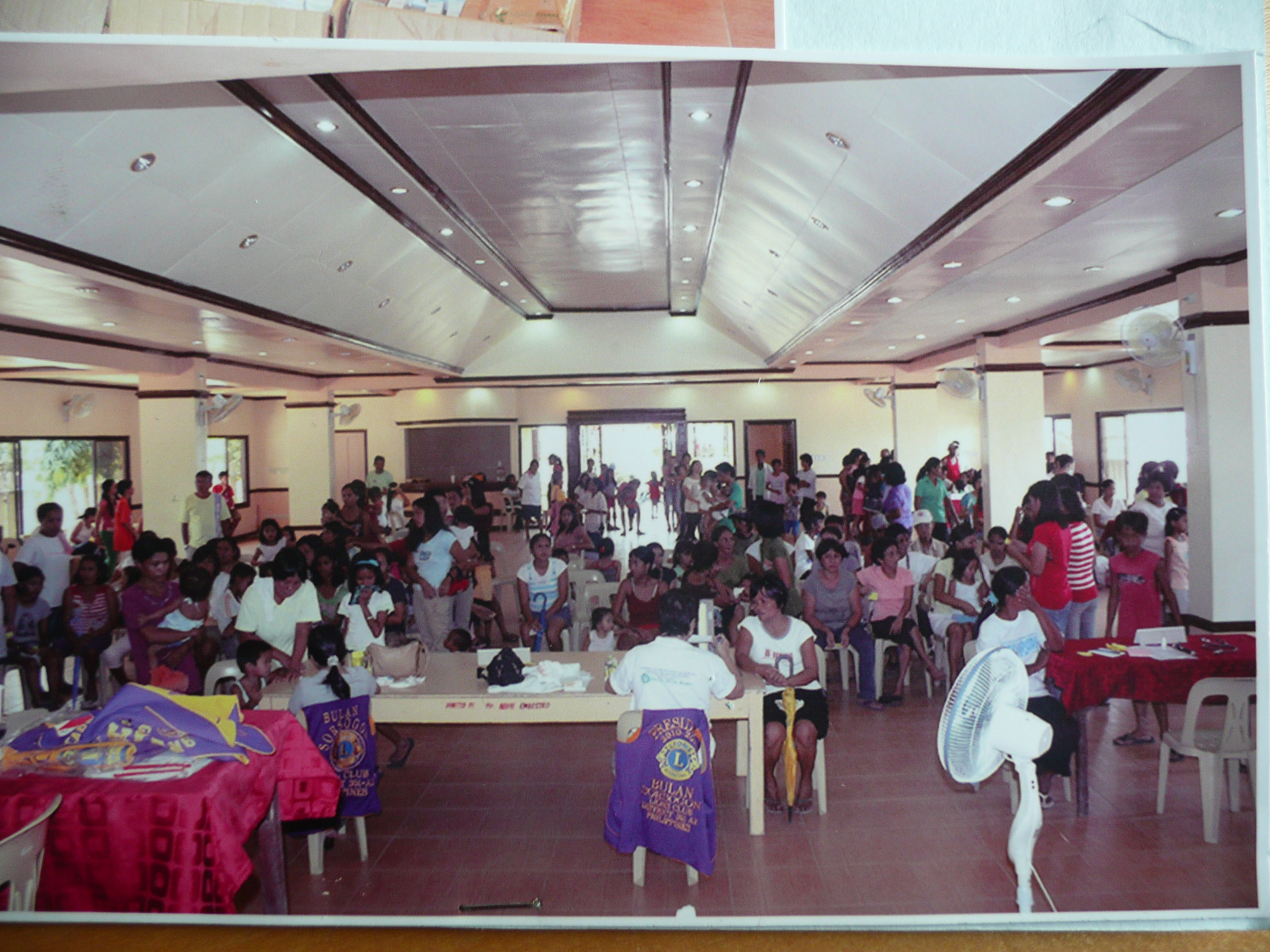
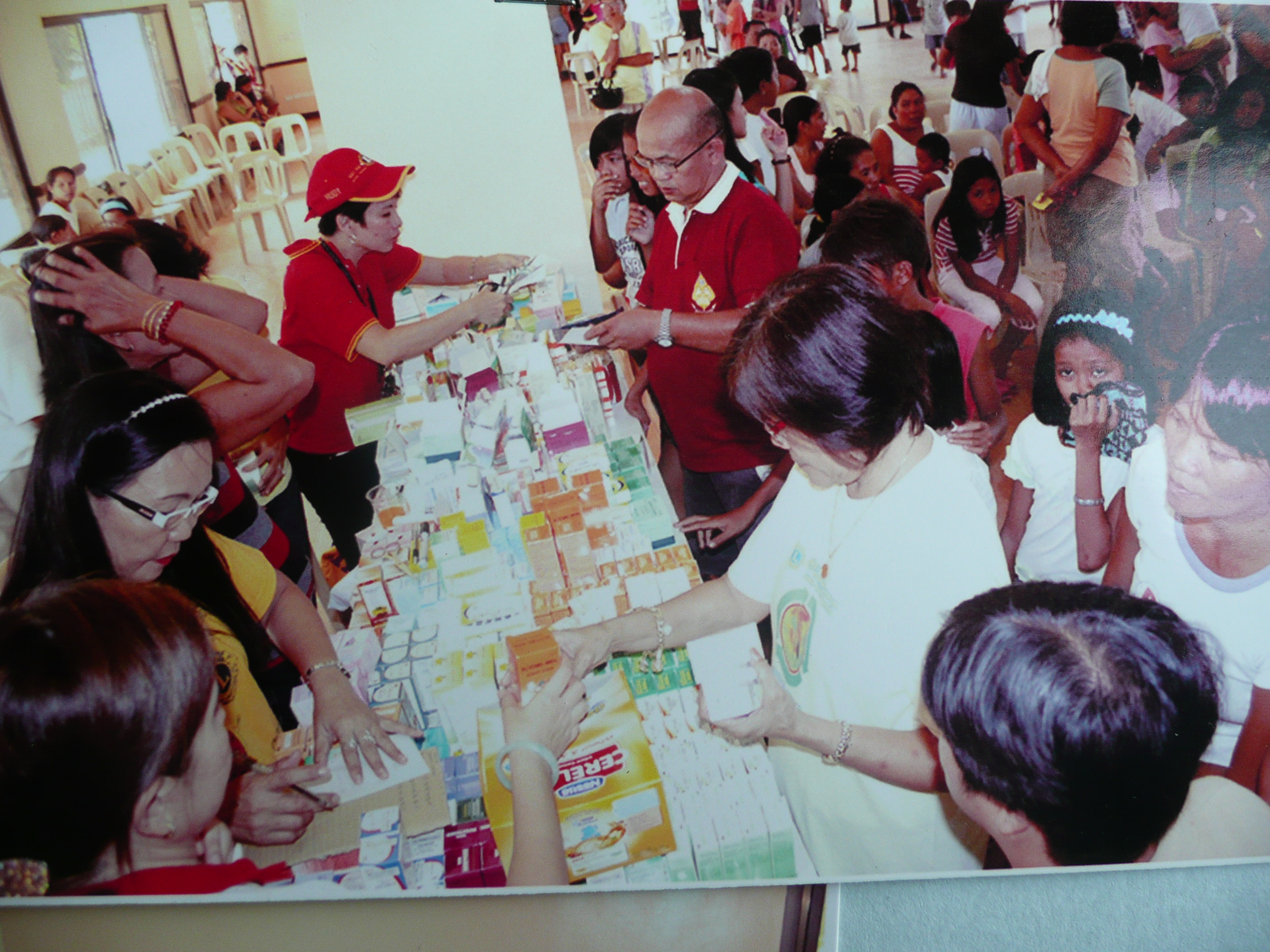














 Bulan Observer